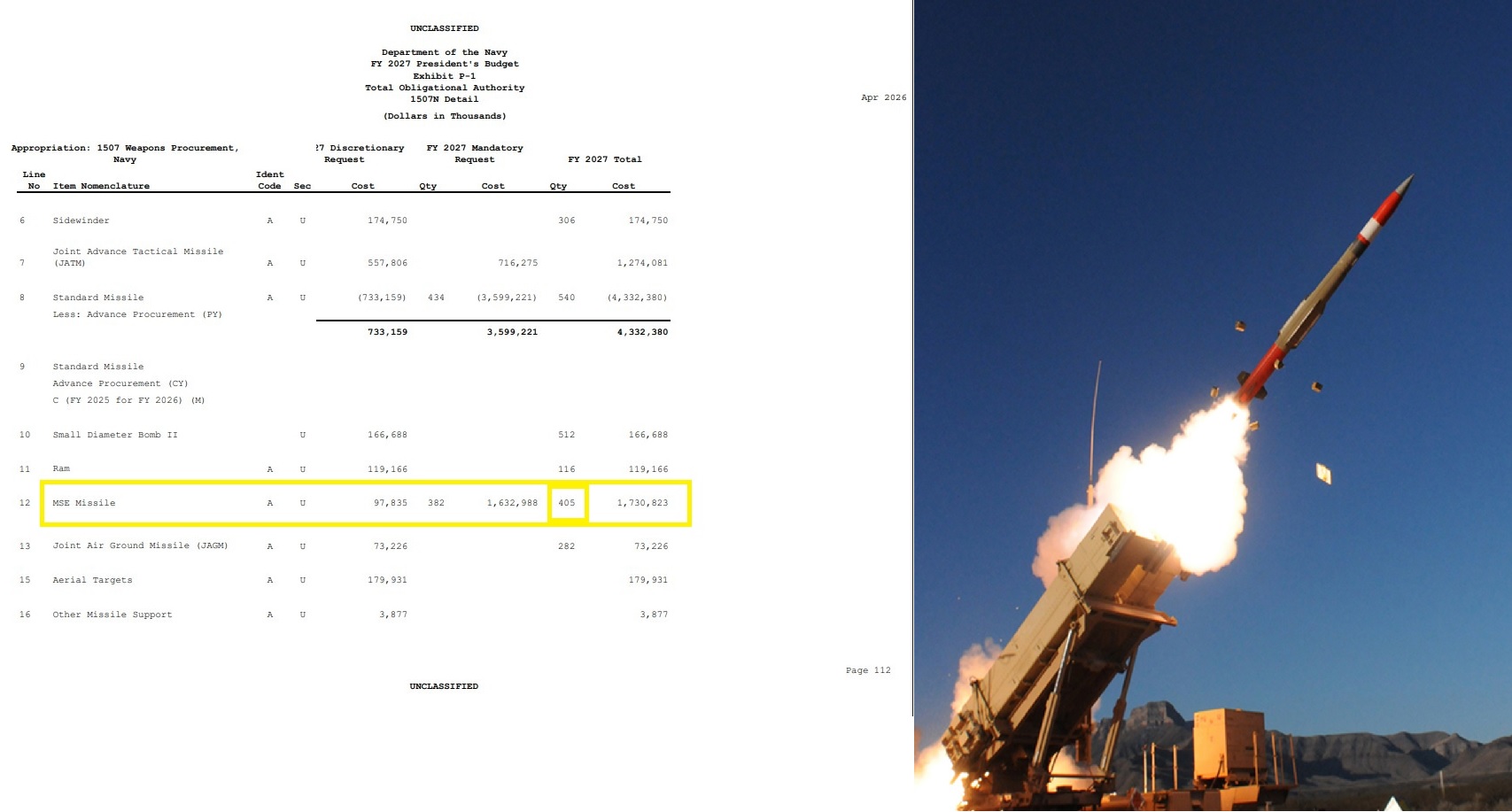
WASHINGTON, — April 6, 2026 The United States Navy has requested approximately $1.7 billion in its fiscal year 2027 budget proposal to procure 405 Patriot Advanced Capability-3 Missile Segment Enhancement (PAC-3 MSE) interceptors, marking a significant step toward integrating land-based missile defense technology into its surface fleet.
The request, detailed in U.S. Department of Defense budget documents released in April 2026, was first identified by open-source intelligence account VirtualBayonet on X (formerly Twitter). The procurement is intended to support the adaptation of the PAC-3 MSE interceptor for use in the Mk 41 Vertical Launching System (VLS), which is deployed across U.S. Navy surface combatants, including Arleigh Burke-class guided-missile destroyers equipped with the Aegis combat system.
Addressing a Capability and Cost Gap
The Navy’s interest in the PAC-3 MSE reflects an effort to address a specific gap in its layered air and missile defense architecture, particularly in countering ballistic missile threats at a lower cost per interceptor.
Current naval air defense systems rely on the RIM-162 Evolved SeaSparrow Missile (ESSM), which is designed primarily to intercept aircraft and cruise missiles at ranges of up to 50 kilometers, and the Standard Missile family, including the SM-2 and SM-6, which provide engagement ranges exceeding 150 kilometers. However, Standard Missiles typically cost more than $2 million to $3 million per unit.
By comparison, the PAC-3 MSE is positioned within a lower cost bracket of approximately $1 million to $2 million per interceptor, while offering hit-to-kill kinetic interception capability against ballistic targets. The system uses a direct body-to-body impact approach rather than proximity-based fragmentation, increasing effectiveness against high-speed threats.
In addition to cost considerations, production capacity is a key factor. Standard Missile production is currently estimated at around 125 units annually, with gradual expansion planned. In contrast, Lockheed Martin is scaling PAC-3 MSE production to between 650 and 750 units per year, providing a more readily available supply base for increasing interceptor inventories.
Integration with Naval Systems
The U.S. Navy does not operate Patriot air defense batteries, making integration a central component of the program. In the fiscal year 2026 budget, the Navy requested approximately $416 million to support engineering and integration efforts for adapting new interceptors to shipboard systems, including the Aegis combat system. Additionally, $65 million in FY2026 reconciliation funding was allocated specifically for integrating the PAC-3 MSE with Aegis systems on Arleigh Burke-class destroyers.
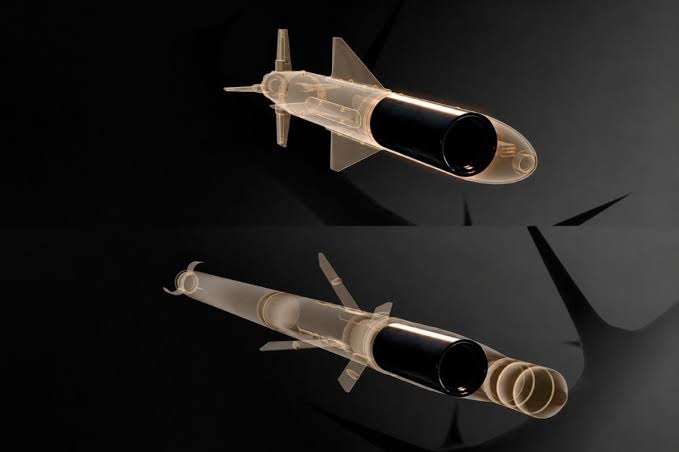
Lockheed Martin has been developing the naval integration concept for several years. In January 2023, during the Surface Navy Association symposium, the company presented a full-scale mock-up of a PAC-3 MSE interceptor configured for insertion into a Mk 41 VLS cell.
A key technical requirement has been enabling communication between the missile and shipboard sensors. The PAC-3 MSE datalink has been modified to operate on S-band frequencies, ensuring compatibility with the AN/SPY-1D radar, the primary sensor used in the Aegis combat system. The AN/SPY-1D is a passive phased-array radar capable of detecting aerial targets at ranges of up to 400 kilometers, although its full operational parameters remain classified.
In the summer of 2023, Lockheed Martin confirmed successful integration of the PAC-3 MSE with the SPY-1D radar. This was followed by a live-fire test in May 2024, in which a PAC-3 MSE interceptor was successfully launched vertically from a Mk-70 containerized launcher, a modular variant of the Mk 41 VLS. The test employed a virtualized Aegis Weapon System and resulted in the successful interception of a cruise missile target.
Technical Characteristics and Limitations
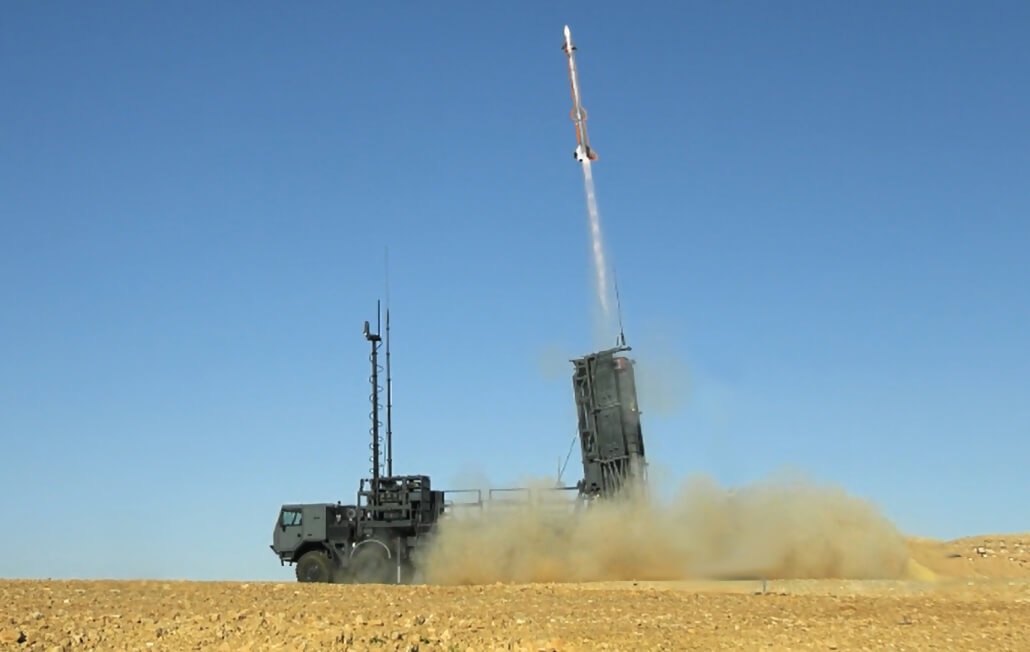
The PAC-3 MSE is a hit-to-kill interceptor originally developed for the U.S. Army’s Patriot system. It incorporates a dual-pulse rocket motor to enhance maneuverability and engagement envelope, enabling high-probability intercepts against both aerodynamic and ballistic threats.
When adapted for naval use, the missile would expand the range of interceptors available within the Mk 41 VLS without requiring structural modifications to the launcher itself. However, unlike smaller interceptors such as the ESSM, the PAC-3 MSE cannot currently be multi-packed within a single VLS cell, limiting the number of missiles that can be carried per ship.
Future launcher developments, including the proposed 34-inch Growth Vertical Launch System (G-VLS), may enable multi-packing configurations, although no confirmed integration timeline has been provided.
Future Integration and Operational Outlook
While integration efforts have focused on compatibility with the legacy AN/SPY-1 radar, it remains unclear whether the PAC-3 MSE will be fully integrated with next-generation radar systems such as the AN/SPY-6 and AN/SPY-7 active electronically scanned array (AESA) radars. These systems are planned to replace the SPY-1 series on newer U.S. Navy surface combatants.
The FY2027 procurement request forms part of broader Department of Defense efforts to expand PAC-3 MSE availability and diversify interceptor options across services. No additional details have been released regarding unit-level pricing breakdowns, delivery timelines, or expansion to other ship classes beyond Arleigh Burke-class destroyers.
——— End of Article ———