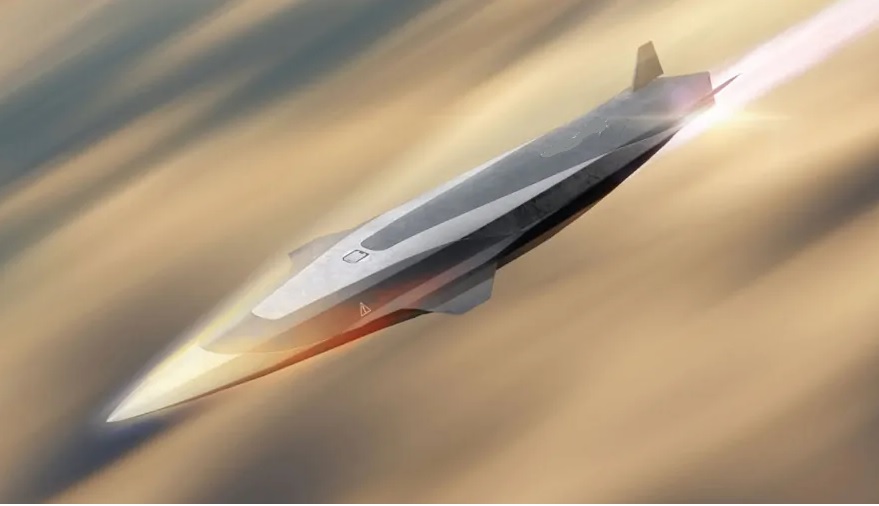
WASHINGTON : The U.S. Navy’s Offensive Anti-Surface Warfare Increment 2.0 (OASuW 2.0) program has resumed following a restructuring that shelved the originally planned Hypersonic Air-Launched Offensive (HALO) missile in favor of lower-cost, more readily available weapon options. A Northrop Grumman executive confirmed the program’s renewed momentum to Naval News this month at the Surface Navy Association’s National Symposium.
The Navy first confirmed HALO’s cancellation in April 2024, but the broader OASuW effort was not terminated. Instead, the missile then in development was cancelled while the program was re-evaluated to address affordability, production scalability, and accelerated fielding timelines. The revised approach reflects a wider reassessment of the Navy’s hypersonic and long-range strike portfolio.
Propulsion Focus Shifts to Practical Solutions
Gordon LoPresti, Senior Director of Propulsion Systems and Controls at Northrop Grumman, outlined how the company’s propulsion work could inform future OASuW 2.0 solutions, even as the original HALO missile concept has been set aside. Central to those discussions is Northrop Grumman’s family of solid rocket motors, including its recently certified 21-inch motor.
“The baseline SM-6 uses a 14-inch second-stage rocket motor, and the 21-inch motor can significantly extend range, increase velocity, and increase engagement altitude,” LoPresti said. He added that the Navy is pursuing a “workhorse” propulsion solution adaptable across multiple weapon types rather than a single highly specialized system.
The 21-inch motor, originally designed for the hypersonic SM-6 Block IB, completed successful testing in late 2024, including a static fire test on November 21, 2025, in Elkton, Maryland. The competitive phase concluded in November, with Northrop Grumman selected as the qualified supplier following a competition that also included Anduril.
Applicability to OASuW 2.0
While Northrop Grumman does not expect the 21-inch motor itself to be directly applied to OASuW 2.0, LoPresti said solid rocket motors are likely to remain part of the propulsion mix under consideration. He noted that the 21-inch motor may be too large for a revived HALO-class concept, but the propulsion philosophy aligns with current Navy priorities.
In surface- or air-launched configurations, the 21-inch motor delivers roughly twice the range and twice the engagement altitude of legacy 14-inch motors, along with a much higher burnout speed. Despite these performance gains, Navy officials have emphasized that affordability and scalable production are now the primary drivers for OASuW 2.0, steering the program away from complex and costly propulsion architectures.
SM-6 Block IB and Program Reviews
The SM-6 Block IB program, which originally drove development of the 21-inch motor, is currently under a “strategic pause.” LoPresti declined to comment on the Navy’s future plans, deferring questions on program intent and progress to the service. The pause reflects broader Navy efforts to align advanced weapon programs with budgetary constraints and near-term operational needs.
Alternative Candidates for OASuW Increment 2
As part of the restructured OASuW 2.0 effort, the Navy is evaluating multiple weapon candidates capable of rapid development and deployment. One option is the Advanced Capacity Maritime Effector (ACME), which emphasizes new propulsion methods for time-sensitive strike missions. ACME capability documents outline plans for an engineering and manufacturing development phase in FY2030, with early operational capability in FY2031.
Another potential pathway involves the Navy’s internally developed Capacity High-Altitude Integrated Naval Strike Weapon (CHAINSAW), a testbed missile used to explore ramjet propulsion concepts. CHAINSAW was tested last year using a BQM-34 target drone, generating data without committing to a full acquisition program.
Lockheed Martin has also positioned its internally funded Mako missile as a potential OASuW 2.0 candidate. The company publicly unveiled Mako at Sea-Air-Space 2024 after seven years of internal research and development, emphasizing platform compatibility and manufacturability.
Program Outlook
The Navy’s renewed OASuW 2.0 effort reflects a broader shift toward weapons that can be produced in larger numbers and fielded more quickly, even if that requires accepting reduced performance compared to earlier hypersonic concepts such as HALO. By emphasizing solid rocket motors and mature propulsion technologies, the service aims to balance range, speed, cost, and production scale.
U.S. Navy officials continue to assess industry-led and government-developed options, with the objective of selecting systems that can transition into operational service in the coming years under the revised OASuW Increment 2.0 framework.
——— End of Article ———