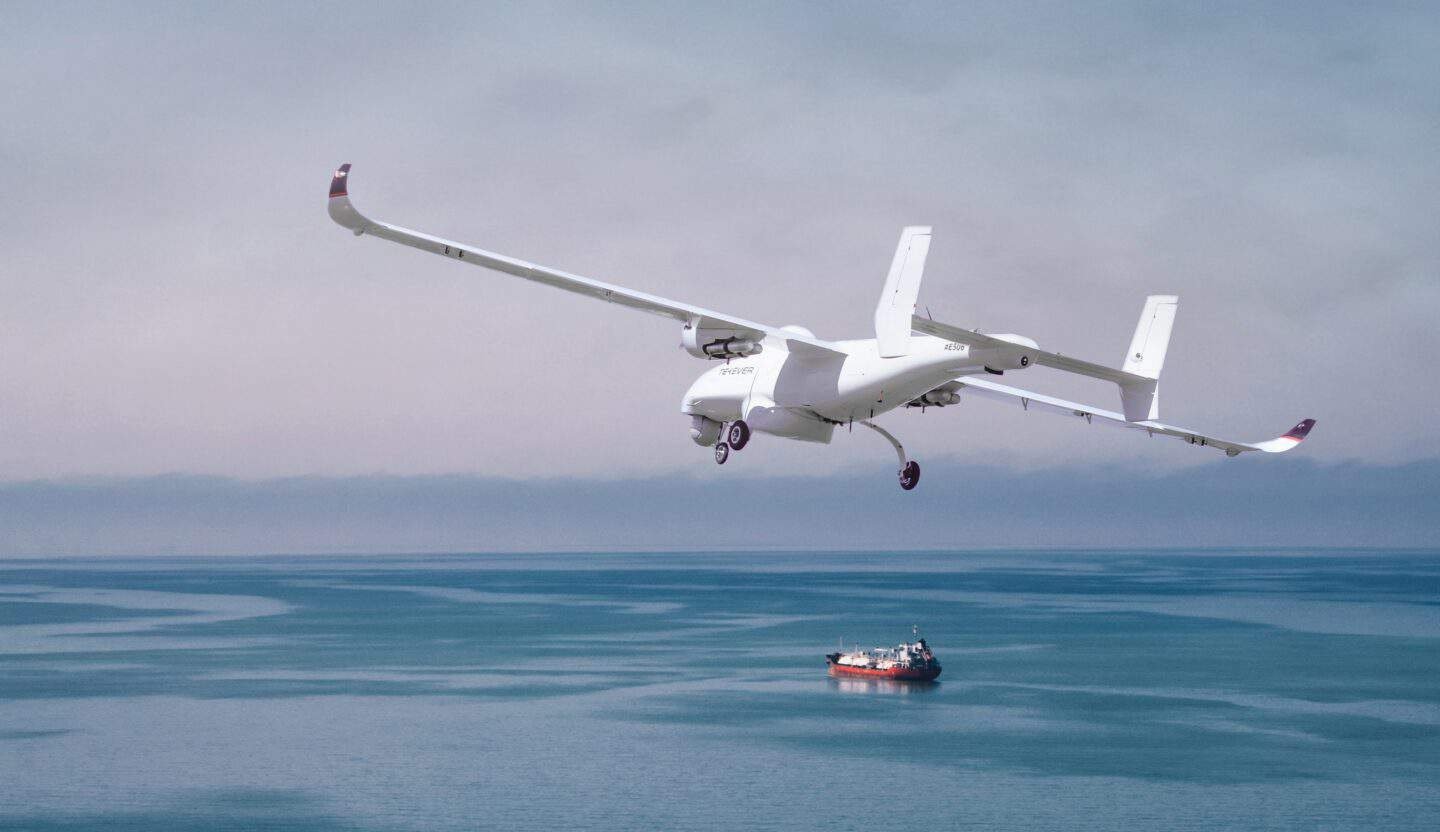
On 13 November 2025, the U.S. Department of War announced a major expansion of the U.S. Navy’s unmanned aviation capability with the formal establishment of Unmanned Patrol Squadron Eleven (VUP-11). The new unit becomes the Navy’s second operational squadron equipped with the MQ-4C Triton, a high-altitude, long-endurance (HALE) unmanned aircraft system designed to conduct maritime patrol and reconnaissance across vast ocean areas.
The activation of VUP-11 represents a significant milestone in the Navy’s transition toward unmanned intelligence, surveillance, and reconnaissance (ISR). As global maritime competition intensifies and operational theaters expand, the Navy is prioritizing platforms capable of delivering persistent situational awareness without exposing aircrews to risk. The MQ-4C Triton sits at the core of this evolving strategy.
MQ-4C Triton: A Platform Built for Persistent Maritime ISR
Developed by Northrop Grumman, the MQ-4C Triton is the most advanced unmanned maritime ISR platform in U.S. Navy service. While derived from the U.S. Air Force’s RQ-4 Global Hawk, the Triton has been extensively redesigned for maritime operations. Structural reinforcements, de-icing systems, lightning protection, and corrosion-resistant components enable sustained operations over open oceans and in harsh weather environments.
The Triton can operate at altitudes above 50,000 feet (15,240 meters) for more than 24 continuous hours, allowing a single aircraft to monitor enormous areas of sea space. This endurance provides persistent coverage that would otherwise require multiple manned aircraft, significantly improving operational efficiency and coverage.
Advanced Sensors for Maritime Domain Awareness
At the heart of the MQ-4C’s capability is its sophisticated sensor suite, optimized for theater-level maritime domain awareness (MDA). The aircraft is equipped with the AN/ZPY-3 Multi-Function Active Sensor (MFAS) radar, capable of scanning more than 2.7 million square miles (7 million square kilometers) in a single sortie. This radar can detect, classify, and track surface vessels across wide ocean areas, even in adverse sea conditions.
Supporting the radar are high-resolution electro-optical and infrared (EO/IR) sensors, along with advanced electronic support measures (ESM). These systems allow the Triton to intercept, classify, and geolocate electronic emissions, making it a critical asset for early warning, threat monitoring, and strategic intelligence collection.
Supporting Distributed Maritime Operations
The MQ-4C Triton is a key enabler of the Navy’s Distributed Maritime Operations (DMO) concept. DMO emphasizes dispersed forces, networked sensors, and rapid decision-making in contested environments. Persistent ISR from high-altitude unmanned platforms allows naval forces to remain connected and informed across vast distances.
Operationally, the Triton works in close coordination with the manned P-8A Poseidon Multi-Mission Maritime Aircraft. While the Poseidon conducts anti-submarine warfare (ASW), surface strike, and tactical missions, the Triton provides continuous wide-area ISR, enabling more efficient use of crewed assets and improving overall fleet awareness.
Strategic Importance of a Second Triton Squadron
Until now, operational MQ-4C missions were primarily conducted by Unmanned Patrol Squadron Nineteen (VUP-19) based at Naval Air Station Jacksonville, Florida, supporting operations across the Atlantic, Mediterranean, and Middle East.
The stand-up of VUP-11 at Naval Air Station Whidbey Island, Washington, extends Triton coverage to the Pacific and Arctic regions. These regions are increasingly critical to U.S. strategic interests amid rising naval activity by China and Russia, as well as growing attention to Arctic sea routes. A bi-coastal MQ-4C force structure enhances global ISR persistence and operational flexibility.
By relying more heavily on unmanned surveillance platforms, the Navy reduces strain on manned patrol aircraft and strengthens resilience against anti-access/area-denial (A2/AD) threats. High-altitude, long-endurance ISR remains essential for monitoring contested spaces and supporting joint and allied operations.
Heritage and Experience Behind VUP-11
The designation VUP-11 revives the legacy of the former Patrol Squadron Eleven (VP-11), known as the “Proud Pegasus,” which served the Navy for nearly five decades before its deactivation in 1997. The new squadron also incorporates experienced personnel from the recently decommissioned Fleet Air Reconnaissance Squadron One (VQ-1), the “World Watchers.”
This integration brings deep expertise in signals intelligence (SIGINT) and airborne reconnaissance to the new unmanned unit. Squadron leadership has emphasized that combining historical lineage with modern unmanned systems strengthens operational effectiveness and preserves critical institutional knowledge.
Path to Full Operational Capability
Initial flight operations for VUP-11 are expected to begin in 2026, with full operational capability (FOC) projected for 2027. The squadron’s growth will coincide with continued upgrades to the MQ-4C platform. The upcoming Increment 2 configuration is expected to expand Triton missions into multi-intelligence (Multi-INT) roles, including enhanced SIGINT, electronic intelligence (ELINT), and targeting support.
These enhancements will allow the MQ-4C Triton to assume missions traditionally flown by manned intelligence aircraft, further reducing risk to personnel while increasing persistence and coverage.
For the U.S. Navy, the activation of VUP-11 is more than the creation of a new squadron. It represents a decisive step in building a global unmanned ISR architecture designed to deliver maritime dominance, decision advantage, and continuous situational awareness in an increasingly contested maritime environment.
——— End of Article ———