WASHINGTON, D.C. — April 1, 2026 : The United States Navy has awarded Lockheed Martin a $1.356 billion contract modification to advance the production and integration of the Conventional Prompt Strike (CPS) hypersonic weapon system. Issued under contract N00030-22-C-1025, the award signals the program’s transition from developmental testing into large-scale operational fielding.
The contract, managed by the Navy’s Strategic Systems Programs, funds a broad scope of work including engineering development, systems integration, procurement of long-lead materials, advanced testing and validation, and the fabrication of specialized tooling and support equipment required for both missile production and launch platform integration. Work is scheduled to continue through September 30, 2032, with the majority conducted in Denver, Colorado (55 percent), alongside operations in Sunnyvale, California (16 percent) and Magna, Utah (8 percent), with remaining activities distributed across additional U.S. locations.
Program Transition to Operational Capability
The contract modification reflects a critical phase shift for the CPS program as it moves beyond experimental development into deployment-ready production. Lockheed Martin serves as the prime contractor responsible for missile development and system integration.
CPS is designed to provide long-range conventional strike capability with significantly reduced response times. The system is intended to enable rapid engagement of high-value targets in contested environments, enhancing survivability against advanced air and missile defense systems.
Technical Architecture of the CPS System
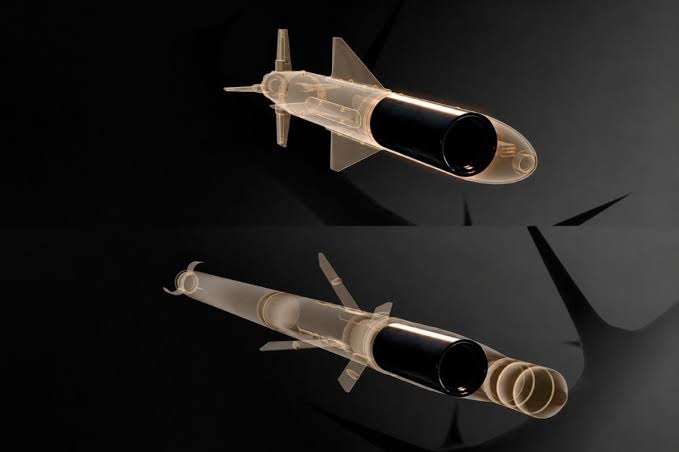
The CPS weapon employs a boost-glide mechanism. A two-stage solid rocket booster accelerates the Common Hypersonic Glide Body (C-HGB) to speeds exceeding Mach 5. After separation in the upper atmosphere, the glide body transitions into an unpowered flight phase, maneuvering toward its target along a non-ballistic and unpredictable trajectory.
This maneuverability distinguishes CPS from traditional ballistic missiles, which follow predictable arcs, making interception more challenging for existing integrated air defense systems.
Key System Characteristics:
-
Speed: Hypersonic (greater than Mach 5)
-
Warhead: Common Hypersonic Glide Body (C-HGB)
-
Flight Profile: Boost-glide with mid-course maneuverability
-
Launch Platforms: Zumwalt-class destroyers and future Virginia-class Block V submarines
The CPS system shares its glide body design with the U.S. Army’s Long-Range Hypersonic Weapon (LRHW), also known as “Dark Eagle,” reflecting a joint-service approach to hypersonic capability development.
Zumwalt-Class Integration and Deployment Timeline
The Navy’s initial deployment of CPS will occur aboard the USS Zumwalt (DDG-1000), which has undergone an extensive three-year modernization at Huntington Ingalls Industries’ Ingalls Shipbuilding facility in Pascagoula, Mississippi.
Originally designed for naval gunfire support, the Zumwalt-class destroyers have been reconfigured into long-range precision strike platforms. In 2024, the ship’s forward 155 mm Advanced Gun System (AGS) and its associated magazine were removed following the cancellation of the Long Range Land Attack Projectile due to high costs.
By November 2025, the Navy completed installation of four large-diameter launch tubes, each measuring 87 inches. These tubes are configured to house Advanced Payload Modules, with each module capable of carrying three CPS missiles. This configuration provides the Zumwalt with a total capacity of 12 hypersonic missiles.
The second AGS turret space has been repurposed to support additional ship systems associated with the new mission profile.
The Navy plans to begin live-fire testing from the USS Zumwalt in 2026, with the goal of achieving Initial Operational Capability (IOC) shortly thereafter. Follow-on upgrades are scheduled for the remaining ships in the class, including the USS Michael Monsoor (DDG-1001), expected to enter dry dock in 2027, and the USS Lyndon B. Johnson (DDG-1002).
Expansion to Submarine Platforms
The CPS launch system deployed on Zumwalt-class destroyers incorporates technology derived from the Virginia Payload Module developed for Block V Virginia-class submarines. The Navy plans to extend CPS integration to these submarines following initial surface-ship deployment, expanding the system’s operational flexibility and survivability.
Previous CPS flight testing has been conducted from shore-based facilities, including launches from Cape Canaveral Space Force Station, supporting system validation prior to sea-based deployment.
Funding Structure and Industrial Base Impact
The $1.356 billion contract modification is jointly supported by the U.S. Navy and U.S. Army, reflecting the shared development of the hypersonic glide body. Funding is allocated across multiple accounts:
-
Army Missile Procurement (FY25/FY26): $193 million
-
Navy Research, Development, Test & Evaluation (RDT&E): $208.6 million
-
Navy Procurement and Operations: $91.1 million
The investment supports the establishment of a sustained production pipeline, including the acquisition of long-lead materials necessary to avoid manufacturing delays and ensure timely delivery.
Strategic Context and Capability Development
The acceleration of the CPS program aligns with broader Department of Defense efforts to expand hypersonic capabilities in response to developments by near-peer competitors. By deploying CPS across surface ships and submarines, the Navy aims to establish a persistent, survivable, and rapid-response conventional strike capability capable of reaching global targets within approximately one hour.
The program represents a significant component of U.S. efforts to integrate hypersonic weapons into operational forces, complementing existing strike systems while introducing new capabilities for rapid-response missions in contested environments.
——— End of Article ———