WASHINGTON : The U.S. military is expanding long-range precision strike capabilities across rotary- and light fixed-wing aircraft through the integration of the Red Wolf miniature cruise missile developed by L3Harris Technologies. The system is being fielded by the U.S. Marine Corps for the Bell AH-1Z Viper and has recently completed a successful integration demonstration on the U.S. Air Force’s OA-1K Skyraider II.
The initiative reflects the Department of Defense’s emphasis on affordable, mass-producible stand-off munitions capable of operating in contested and high-intensity environments while remaining deployable across multiple aircraft platforms.
Red Wolf Weapon System
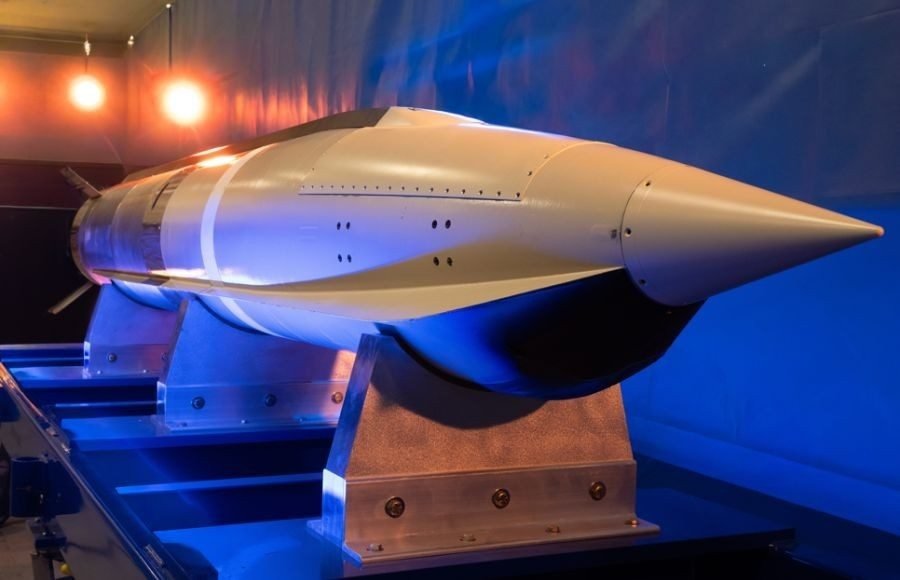
Development of the Red Wolf began in 2020, and the system was publicly unveiled in July 2025. The missile functions as a kinetic, multi-domain launched effects vehicle, classified as a long-range miniature cruise missile.
The Red Wolf has a demonstrated range exceeding 200 nautical miles (approximately 370 kilometers) at low altitudes and offers an in-flight endurance of more than 60 minutes. Designed for both maritime and land targets, the missile can be launched from platforms positioned outside the engagement range of advanced integrated air defense systems.
Weighing under 250 pounds, the system has an estimated unit cost of approximately $300,000, supporting high-volume procurement. Its relatively low weight and cost profile are intended to enable deployment across diverse aircraft fleets.
The Red Wolf was developed alongside a companion variant known as the Green Wolf, which carries an electronic warfare (EW) payload. The Green Wolf is configured for electronic attack and detect, identify, locate, and report (DILR) missions, enabling coordinated operations between kinetic and non-kinetic systems.
Integration with the AH-1Z Viper
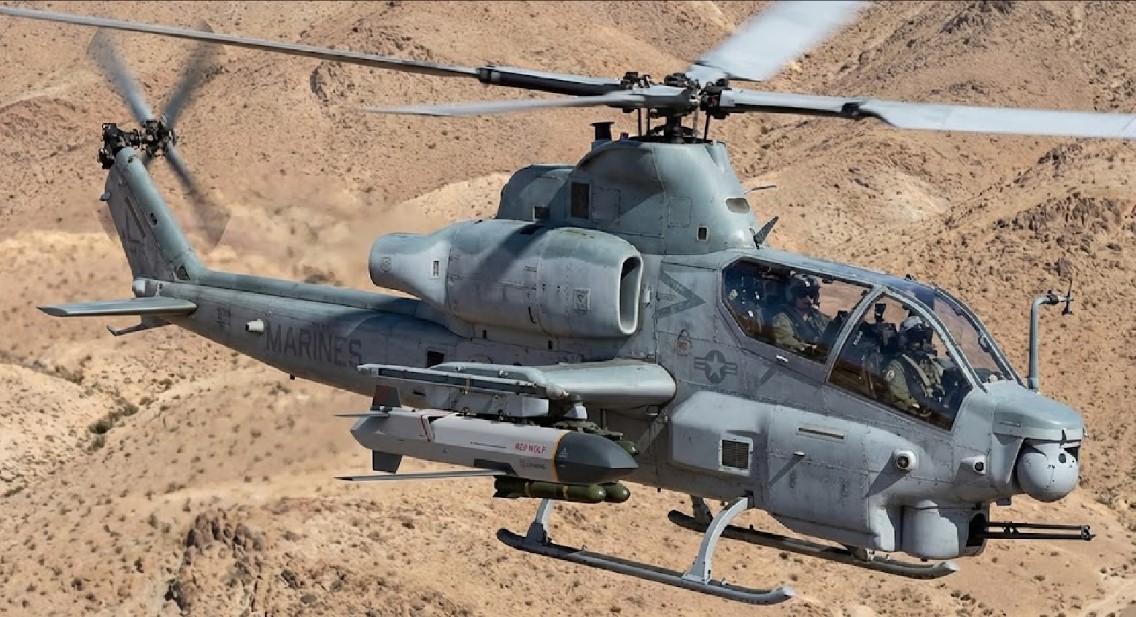
For the U.S. Marine Corps, integration of the Red Wolf on the AH-1Z Viper supports requirements under the Precision Attack Strike Munition (PASM) and Long Range Attack Missile (LRAM) initiatives.
Marine Corps attack helicopters previously relied on munitions such as the AGM-114 Hellfire and the AGM-179 JAGM, which provide engagement ranges of approximately 8 to 16 kilometers. The Red Wolf extends operational reach to more than 200 nautical miles, significantly increasing the aircraft’s engagement envelope.
Recent testing over the Atlantic Test Range demonstrated successful launches of the Red Wolf from the AH-1Z at very low altitudes against sea-based targets. The expanded range allows helicopter crews to conduct precision strikes beyond visual line of sight and outside the effective range of advanced adversary air defense systems.
OA-1K Skyraider II Integration
L3Harris has also demonstrated integration of the Red Wolf with the OA-1K Skyraider II. The aircraft is derived from the Air Tractor AT-802 platform and was previously designated Sky Warden during the competition phase.
The OA-1K won the 2022 Armed Overwatch competition conducted by U.S. Special Operations Command. The U.S. Air Force plans to acquire up to 75 OA-1K aircraft for units assigned to the Air Force Special Operations Command.
Originally designed for close air support, intelligence, surveillance, and reconnaissance (ISR) missions in permissive airspace, the aircraft’s operational profile expands with the addition of a stand-off strike capability. The Red Wolf enables the OA-1K to engage targets at extended distances while operating outside heavily defended areas.
The OA-1K features a payload capacity of up to 6,000 pounds across as many as eight underwing pylons. It is equipped with a robust suite of radios and datalinks, supporting both line-of-sight (LOS) and beyond line-of-sight (BLOS) communications, which are critical for networking and in-flight coordination with launched munitions.
Standardization and Industrial Perspective
According to L3Harris, deploying a single long-range miniature cruise missile across Marine Corps rotary-wing and Air Force Special Operations fixed-wing platforms supports shared investment efficiency and logistical commonality.
Jason Lambert, President for Intelligence, Surveillance and Reconnaissance, Space and Mission Systems at L3Harris, stated that pairing the Red Wolf with light aircraft platforms demonstrates rapid reconfiguration and customization of company capabilities to meet operational requirements.
By standardizing the Red Wolf across multiple services and aircraft types, the Department of Defense aims to enhance operational flexibility, expand stand-off strike options, and streamline procurement of cost-effective precision munitions suited for contested operational environments.
——— End of Article ———