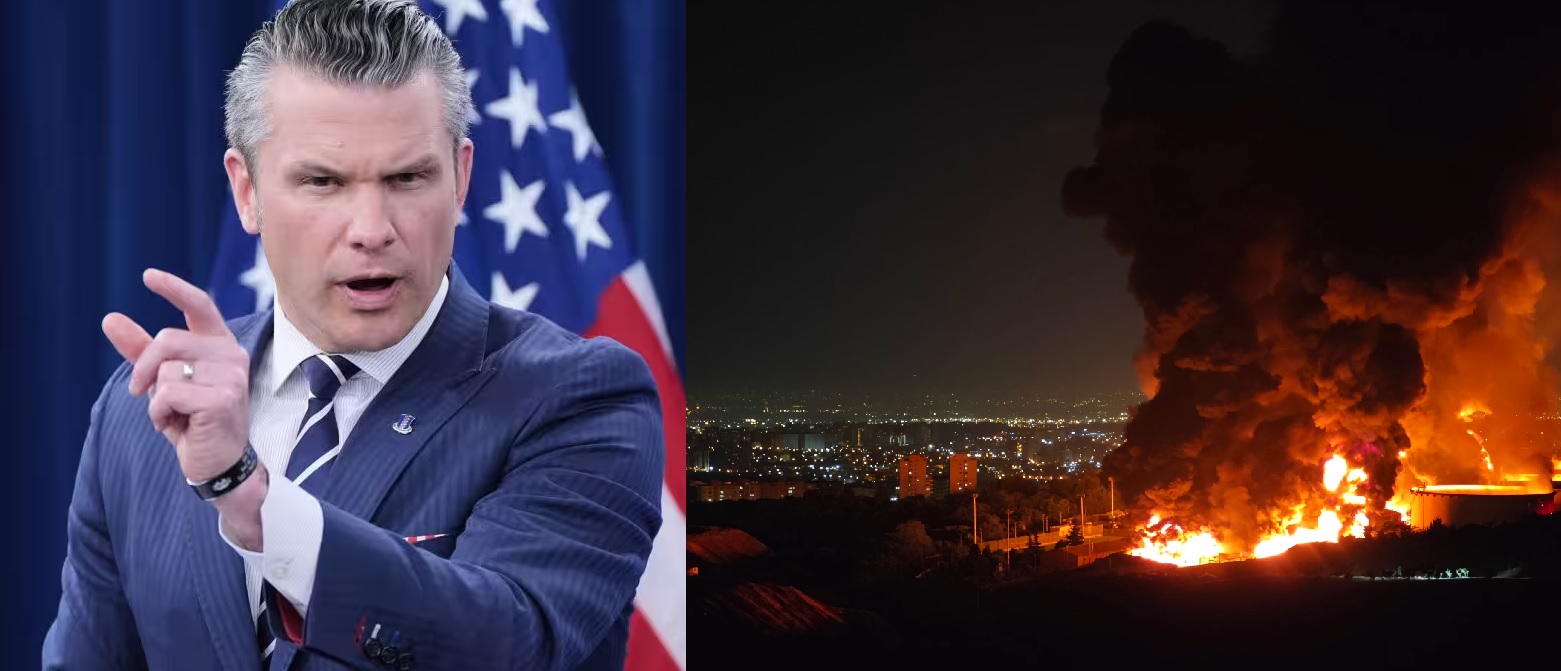
Washington / Tehran — The Trump administration has held early-stage discussions about how a potential military strike on Iran might unfold, according to The Wall Street Journal, as mass anti-government protests spread across the Islamic Republic of Iran and U.S. officials warn Tehran against a deadly crackdown.
People familiar with the conversations told the Journal that one option considered is a large-scale aerial campaign aimed at multiple Iranian military sites, a scenario designed to underscore President Donald Trump’s public threats that the United States could intervene if Iranian security forces continue killing demonstrators.
U.S. officials stressed the talks are preliminary, with no sign of an imminent strike and no reported movement of U.S. personnel or equipment to position for an attack, the Journal reported.
A Planning Exercise, Framed by a Widening Crisis
The deliberations come as Iran’s unrest—initially sparked by economic strain and currency turmoil—has intensified into open demands for sweeping political change, according to reporting from Reuters and other outlets. Iranian authorities have responded with a sharpened security posture, including arrests, violent dispersal tactics, and efforts to restrict communications.
Videos circulating online, despite internet disruptions, appear to show clashes in multiple cities. Iran’s leadership has blamed the turmoil on foreign adversaries, repeatedly pointing to the United States and Israel, while warning that disorder will be met with force.
In Washington, Trump’s rhetoric has added a military edge to the crisis. Reuters has reported that he has threatened intervention if peaceful protesters are violently killed, while also taking what officials described as a cautious, wait-and-see approach in recent days.
“Massive Aerial Campaign”: What the WSJ Says is Being Discussed
According to the Journal’s account, the internal conversations have focused on what targets could be struck—if the president ordered action—under a concept that relies on airpower rather than a ground operation. One option described by those familiar with the talks is a broad strike package hitting several Iranian military facilities.
Such planning, current and former officials often note, can range from routine contingency work to more active preparation, depending on political direction and force posture. In this case, the Journal said there was no indication of an imminent operation and no evidence of deployment steps that typically precede an attack.
Iran’s Warning: U.S. Bases and Regional Shipping Lanes at Risk
Iranian officials have responded publicly to the reporting and to Trump’s warnings with threats of retaliation. The Journal reported that Iran’s parliamentary speaker, Mohammad-Bagher Ghalibaf, warned that if the U.S. strikes first, Tehran could target American military bases in the region and also threaten key shipping routes.
The warning revives a long-running concern for U.S. military planners: that even limited airstrikes could trigger a regional response involving missiles, drones, proxy attacks, or maritime disruption—especially in corridors tied to global energy flows and commercial shipping.
The Shadow of June 2025: Recent Precedent for U.S. Strikes on Iran
The current planning chatter is also colored by the fact that the United States struck Iranian nuclear facilities in June 2025, a major escalation that U.S. and international outlets reported involved strikes on sites including Fordow, Natanz, and Isfahan.
That episode—and Iran’s retaliation against U.S. regional interests that followed—has become a reference point for how quickly a “limited” operation can widen, and for how Tehran signals deterrence by threatening U.S. bases and broader regional infrastructure.
What Happens Next
For now, the administration’s reported discussions sit at the intersection of three fast-moving dynamics: Iran’s internal unrest, Trump’s public threats to support demonstrators, and Tehran’s insistence on retaliation if the United States takes military action.
Whether the talks remain an internal contingency exercise—or evolve into a more concrete operational posture—may depend on how the crackdown unfolds on the ground in Iran and whether Washington concludes that deterrent signaling is failing.
——— End of Article ———