U.S. Military Boards Sanctioned Oil Tanker Veronica III in Indian Ocean
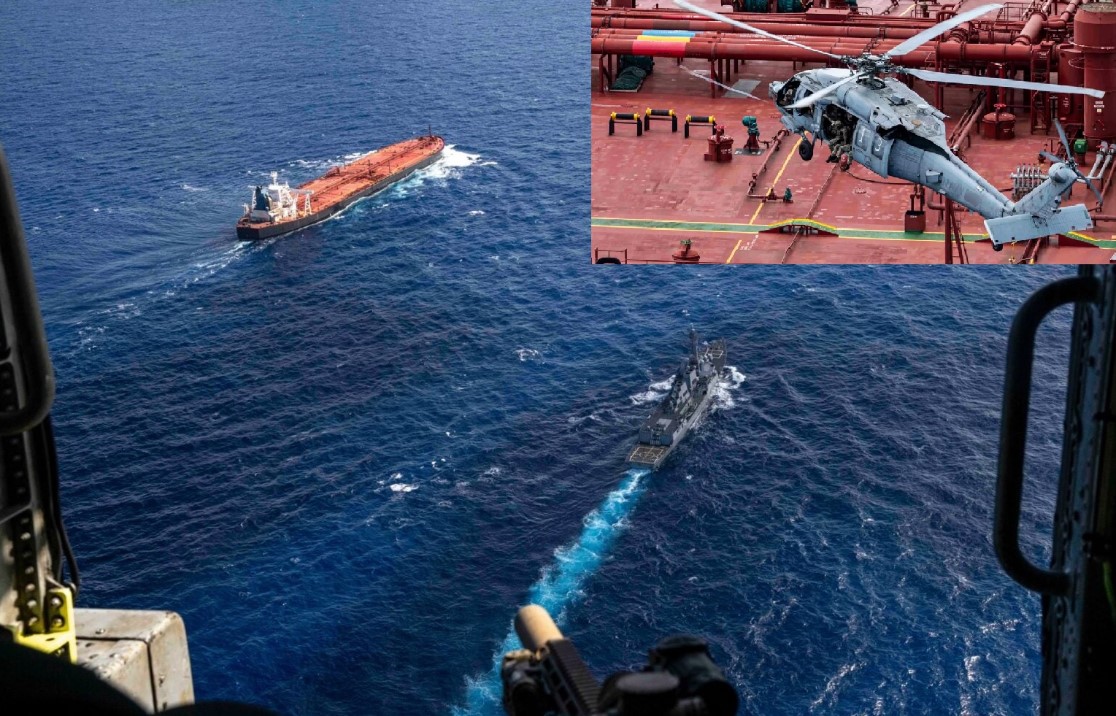
WASHINGTON : U.S. military forces have intercepted and boarded the oil tanker Veronica III in the Indian Ocean after tracking the vessel from the Caribbean Sea, the Pentagon confirmed on Sunday, February 15, 2026. The operation is part of ongoing U.S. actions to enforce international sanctions against illicit oil shipments linked with Venezuela and other sanctioned networks.
Tracking and Interdiction Effort
According to the U.S. Department of Defense, U.S. forces monitored Veronica III beginning in the Caribbean, where the tanker departed Venezuelan waters on January 3, 2026, with a large cargo of crude and fuel oil. The vessel was located and boarded overnight within the operational area of the U.S. Indo-Pacific Command (INDOPACOM).
Officials described the action as a “right-of-visit, maritime interdiction and boarding”, carried out without incident. The Pentagon also released video footage showing U.S. personnel boarding the tanker at sea, including via helicopter deployment.
In a public post on the social media platform X, the Defense Department stated that the Veronica III “tried to defy President Trump’s quarantine,” referencing a directive issued by the U.S. in December 2025 to enforce maritime restrictions on sanctioned vessels.
Vessel Profile and Cargo
The Veronica III is a large oil tanker registered under the Panamanian flag and is listed on the U.S. Treasury Department’s sanctions list for its involvement in transporting petroleum believed to violate U.S. sanctions regimes.
Analysts and maritime tracking data indicate that the vessel was transporting an estimated 1.9 million to 2 million barrels of crude and fuel oil when intercepted. The tanker’s movements and past cargoes have been associated with supply networks involving Venezuelan, Iranian, and Russian oil, part of what maritime analysts call a “shadow fleet” that frequently alters flags and tracking information to evade detection.
Context of Enforcement Activity
The boarding of Veronica III is aligned with broader U.S. strategies to disrupt sanctioned oil flows. In December 2025, the U.S. government ordered a maritime quarantine targeting sanctioned tankers as part of efforts to strengthen enforcement against illicit oil exports.
Earlier in January 2026, U.S. forces conducted Operation Southern Spear, a military action that included the capture of Venezuelan President Nicolás Maduro. Defense officials noted that Veronica III was among several tankers that departed Venezuelan waters on the same day as Maduro’s apprehension.
Last week, U.S. forces also intercepted another sanctioned oil tanker, Aquila II, in the Indian Ocean under similar circumstances. That vessel remains held as U.S. authorities determine its legal and logistical disposition.
Legal and International Response
Officials have not announced whether Veronica III will be formally seized or placed under U.S. control following the boarding. The Department of Defense stated the operation adhered to international maritime protocols and that it was executed without resistance from the vessel’s crew.
The enforcement of sanctions against oil shipments continues to draw attention from other governments and international maritime stakeholders, some of whom have differing interpretations of the legal and diplomatic implications of such interceptions in international waters.
——— End of Article ———