MIDDLE EAST : The United States has deployed a third aircraft carrier strike group to the Middle East, significantly expanding its naval posture as Washington increases military pressure on the Islamic Republic of Iran amid heightened regional tensions.
U.S. defense officials confirmed that the nuclear-powered aircraft carrier USS George H.W. Bush (CVN-77) has entered the U.S. Central Command (CENTCOM) area of responsibility, joining ongoing U.S. military operations linked to Iranian activities. The deployment places three American carrier strike groups simultaneously in or near the region, alongside the USS Abraham Lincoln and the USS Harry S. Truman, a configuration that is operationally uncommon and strategically consequential.
The arrival of the USS George H.W. Bush substantially enhances U.S. power projection capabilities across the Persian Gulf, the Arabian Sea, and adjacent waterways. Senior defense officials said the expanded naval presence is designed to provide commanders with greater operational flexibility, strengthen deterrence, and ensure maritime security in critical corridors such as the Strait of Hormuz.
Expanded Naval Posture and Strategic Signaling
The deployment of a third carrier strike group is widely interpreted as a signal of increased U.S. resolve toward Iran, particularly following U.S. intelligence assessments that have elevated concerns over Iranian drone operations, missile stockpiles, and swarm-style attack tactics. Pentagon officials indicated that recent analyses of potential conflict scenarios prompted adjustments in force posture, including the deployment of additional naval and air assets deemed necessary to counter evolving threats.
While U.S. officials have stopped short of describing the buildup as a formal blockade, the presence of three carrier strike groups provides the United States with the capability to exert sustained maritime pressure on Iran if required. Defense officials emphasized that the posture supports deterrence and defensive readiness, while also reinforcing U.S. leverage as Washington seeks to compel Tehran to return to negotiations and address U.S. security demands.
USS George H.W. Bush and Strike Group Capabilities
The USS George H.W. Bush, a Nimitz-class aircraft carrier, is among the most advanced warships in the U.S. Navy. Powered by two nuclear reactors, the carrier has virtually unlimited operational range and can sustain high-tempo flight operations for extended periods without refueling. The vessel displaces more than 100,000 tons and serves as a mobile air base at sea.
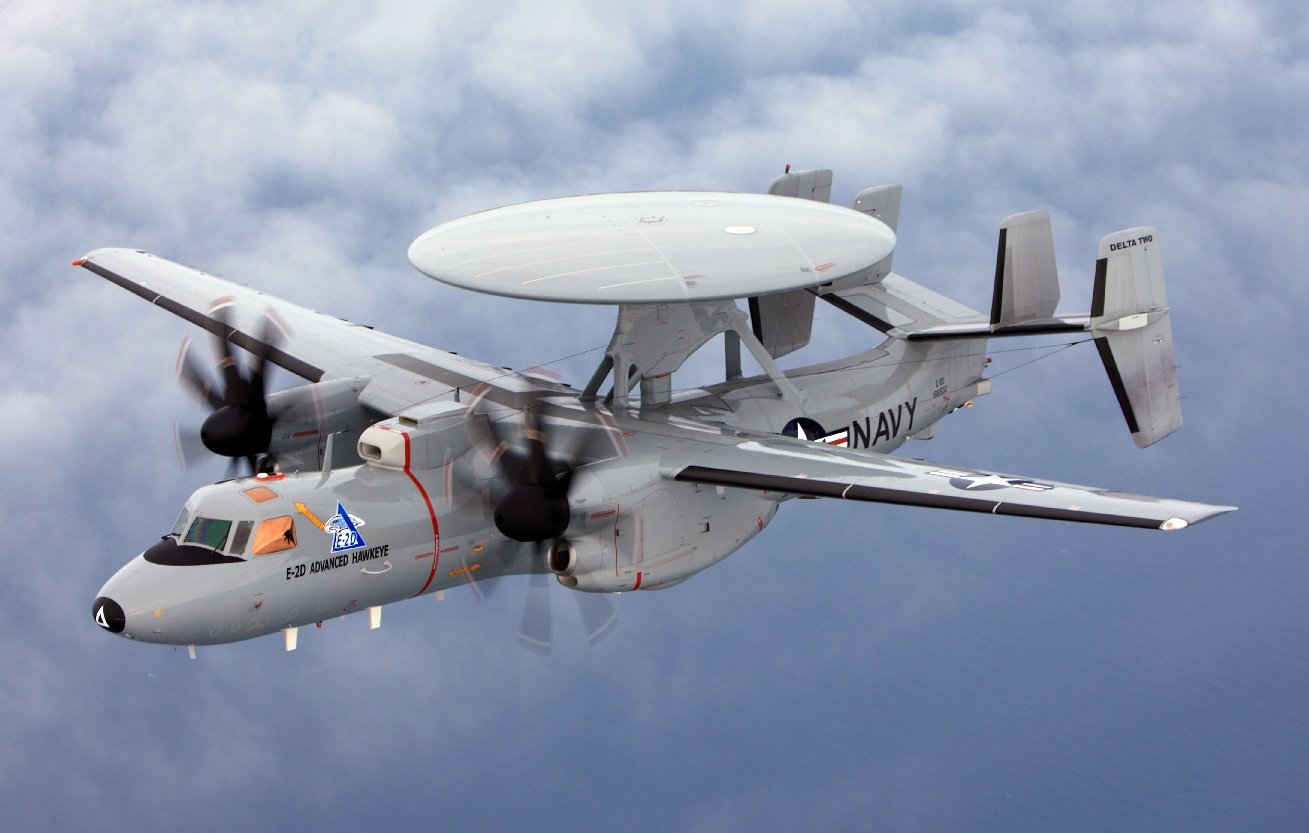
Embarked aboard the carrier is Carrier Air Wing Eight, which typically includes a mix of F/A-18E/F Super Hornet strike fighters, EA-18G Growler electronic warfare aircraft, E-2D Hawkeye airborne early-warning aircraft, C-2A Greyhound logistics aircraft, and MH-60 Seahawk helicopters. Together, these platforms enable air superiority, precision strike, intelligence collection, electronic attack, and maritime surveillance missions.
The carrier is escorted by its full carrier strike group, which includes Ticonderoga-class guided-missile cruisers and Arleigh Burke-class guided-missile destroyers. These surface combatants are equipped with the Aegis combat system and are capable of launching Tomahawk land-attack cruise missiles, conducting ballistic missile defense, and performing anti-submarine and anti-surface warfare missions. The strike group also integrates undersea assets and logistics vessels to sustain prolonged operations.
Operational Focus and Regional Reactions
CENTCOM officials stated that the reinforced naval presence supports freedom of navigation operations and the protection of international shipping lanes, particularly amid concerns over potential Iranian interference with commercial traffic. The three-carrier configuration allows for continuous air and maritime coverage across a wide operational area.
Iranian officials, responding through state-affiliated media, criticized the U.S. buildup and described the deployment of multiple aircraft carriers as destabilizing. Tehran has maintained that its military posture is defensive, while warning that it would respond to any perceived threats to its sovereignty.
U.S. defense officials reiterated that the deployment is not tied to a single imminent operation but reflects a broader reassessment of regional risks. The additional carrier strike group, they said, ensures that U.S. forces are positioned to respond rapidly to contingencies, deter escalation, and protect U.S. interests and partners in the Middle East as diplomatic and military pressures on Iran continue to converge.
——— End of Article ———