WASHINGTON : The United States has deployed a 42-aircraft package focused on Suppression of Enemy Air Defenses (SEAD) to the Middle East, significantly increasing its electronic warfare and radar-destruction capabilities in the region. The force includes 18 U.S. Navy EA-18G Growlers and 24 U.S. Air Force F-16CJ “Wild Weasel” aircraft, platforms specifically designed to neutralize and dismantle integrated air defense systems.
According to defense analysts, the composition of the deployment indicates preparation for a large-scale and coordinated SEAD campaign aimed at degrading Iranian air defense infrastructure in the early phase of any potential military confrontation. The concentration of electronic attack and anti-radiation missile platforms suggests an operational objective centered on securing air superiority by systematically disabling radar coverage and surface-to-air missile (SAM) networks.
Composition and Operational Roles
The deployed aircraft represent two complementary mission sets within SEAD doctrine.
The 18 EA-18G Growlers, operated by the U.S. Navy, are dedicated electronic attack platforms derived from the F/A-18F Super Hornet. Equipped with ALQ-99 tactical jamming pods, the Growlers are designed to disrupt adversary radar systems, communications networks, and data links. By saturating radar frequencies with electronic interference, the aircraft reduce the ability of search and fire-control radars to detect, track, and guide missiles toward incoming aircraft.
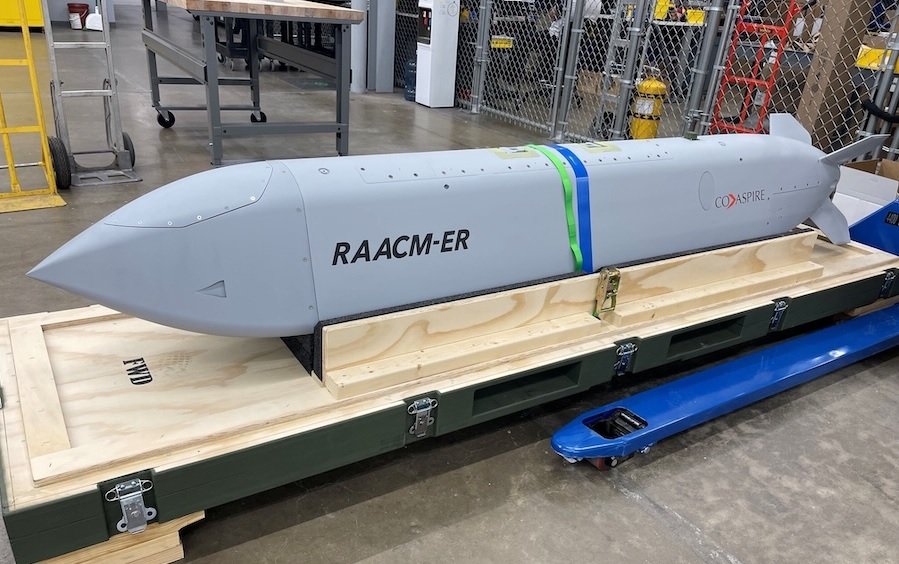
The 24 F-16CJ aircraft, known as “Wild Weasels,” are operated by the U.S. Air Force and specialize in the destruction of enemy radar emitters. These aircraft are fitted with the HARM Targeting System (HTS), which passively detects radio frequency emissions from hostile radar sites. Once a radar signal is identified and classified, pilots can launch AGM-88 High-Speed Anti-Radiation Missiles (HARM). These missiles home in on radar emissions and strike the source, physically destroying or disabling the transmitter.
Together, the Growlers and F-16CJs are intended to operate in coordination. Electronic jamming complicates adversary radar performance, while anti-radiation missiles target active emitters. The combination is designed to suppress, degrade, and ultimately dismantle layered air defense networks.
Structure of Iran’s Air Defense Network
Iran maintains a multi-layered and integrated air defense architecture composed of foreign-supplied and domestically developed systems. Contrary to earlier speculation, Iran does not operate the Russian S-400 system. Instead, its long-range coverage relies heavily on the Chinese-supplied HQ-9B surface-to-air missile system, alongside the domestically developed Bavar-373 system.
The HQ-9B is a long-range SAM platform advertised with engagement ranges exceeding 200 kilometers against certain aerial targets. It forms a central element of Iran’s high-altitude and extended-range air defense layer. Supporting systems include medium- and short-range platforms, as well as a network of surveillance and fire-control radars integrated through command-and-control nodes.
The Bavar-373, developed by Iran’s defense industry, is presented by Tehran as comparable in capability to advanced long-range missile defense systems. It is designed to engage aircraft, cruise missiles, and other aerial threats at extended ranges and high altitudes.
Performance Concerns Surrounding Chinese-Supplied Systems
Recent combat incidents involving Chinese-origin air defense hardware have drawn scrutiny from defense observers.
In May 2025, during “Operation Sindoor,” Pakistan’s air defense network—reportedly reliant on Chinese HQ-9 and HQ-16 systems—experienced significant degradation under Indian cruise missile strikes and air operations. Reports indicated electronic counter-countermeasure (ECCM) weaknesses and multiple system losses.
In January 2026, during a U.S. military operation in Caracas, Venezuela’s air defense grid, which incorporated Chinese JY-27A surveillance radars and Russian missile launchers, was disrupted through electronic warfare. U.S. EA-18G Growlers reportedly jammed radar and communication systems, preventing coordinated defensive responses.
Defense analysts caution that while these cases involved different operational contexts and integration environments, they have prompted renewed evaluation of how Chinese-supplied radar and missile systems perform under sustained electronic attack.
Technical Challenges in Resisting SEAD Operations
Military experts note that surviving a concentrated SEAD package involving 42 specialized aircraft presents significant challenges for any integrated air defense network.
Radar systems most resilient to SEAD pressure typically rely on decentralized, multi-static Active Electronically Scanned Array (AESA) configurations. Such networks distribute transmitters and receivers across multiple sites, reducing the vulnerability of single radar nodes. Rapid frequency agility, advanced signal processing, and strong ECCM capabilities enhance survivability.
In addition, integration with passive detection systems—such as long-range Infrared Search and Track (IRST) sensors—allows defenders to detect aircraft without emitting radar signals that could be targeted by anti-radiation missiles. Passive systems reduce exposure but may offer more limited targeting precision compared to active radar tracking.
To date, publicly available combat data has not demonstrated that the HQ-9B systems deployed by Iran have operated within fully decentralized, multi-static AESA frameworks under sustained electronic attack conditions.
System Survivability and Iranian Counter-Tactics
Surviving a coordinated attack by 42 aircraft equipped for electronic and kinetic warfare is highly complex. The radar systems most capable of withstanding such a combination are decentralized, multi-static Active Electronically Scanned Array (AESA) networks paired with passive Infrared Search and Track (IRST) sensors. These passive sensors do not emit radio signals, making them immune to anti-radiation missiles and difficult to jam.
Because the traditional radar architecture of the HQ-9B is vulnerable to a dedicated SEAD campaign, Iranian forces are expected to employ asymmetric tactics to protect their assets rather than relying on technological superiority:
-
Emission Control (Blinking): Radar operators will likely use strict emission control, turning their sensors on for only brief seconds to gather airspace data before shutting down. This prevents the 24 F-16 Wild Weasel fighters from achieving a sustained missile lock.
-
Mobility and Terrain Masking: Utilizing Iran's mountainous topography, mobile HQ-9B launchers can hide in deep valleys or tunnels, breaking the line-of-sight with airborne jammers and emerging only briefly to fire.
-
Decoys: Iran is equipped with radar decoys that broadcast false frequencies mirroring real SAM sites. These are intended to absorb the kinetic strikes from U.S. missiles, preserving the actual command-and-control infrastructure.
——— End of Article ———