AMMAN : The United States has deployed advanced electronic warfare aircraft to Jordan, underscoring a heightened level of military preparedness in the Middle East as regional tensions continue to shape U.S. force posture.
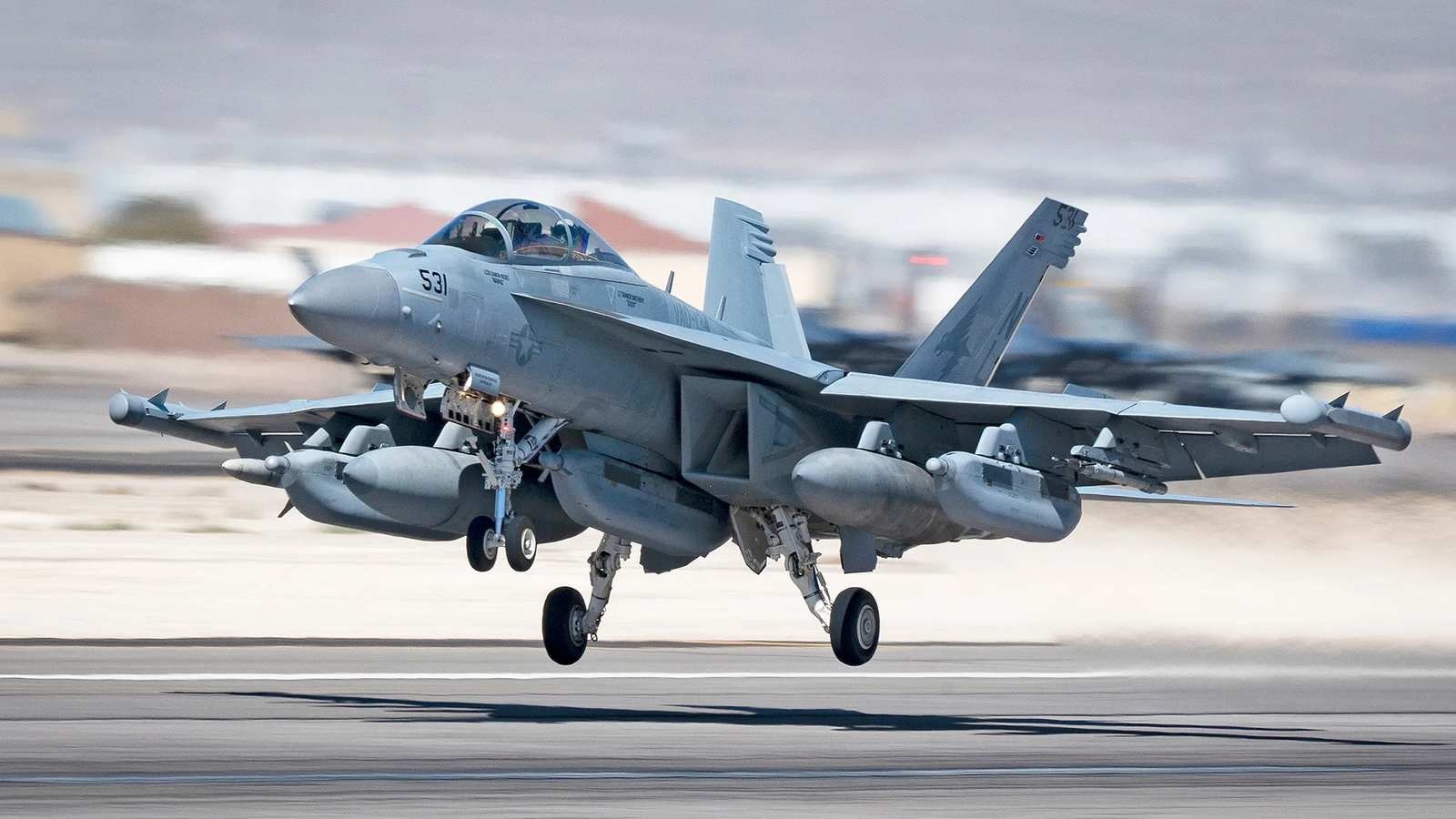
According to multiple defense sources and open-source observations, two U.S. Navy EA-18G Growler aircraft have recently arrived at Muwaffaq Salti Air Base, a key facility used by U.S. and coalition forces. The aircraft were observed carrying two different generations of electronic attack systems, indicating a deliberate and capability-focused deployment.
One Growler is equipped with the AN/ALQ-99 tactical jamming pod, a long-serving electronic warfare system designed to disrupt enemy radar, communications, and air-defense networks. The second aircraft is fitted with the AN/ALQ-249 Next Generation Jammer, a newer system intended to counter modern, digitally networked air defenses.
Dual-System Deployment Signals Operational Readiness
The simultaneous presence of both ALQ-99 and ALQ-249 systems is notable. The ALQ-99 remains effective across a wide range of frequencies and is optimized for broad-spectrum jamming of legacy radar and missile guidance systems. In contrast, the ALQ-249 employs Active Electronically Scanned Array (AESA) technology, allowing for more precise, higher-power jamming, faster threat identification, and the ability to engage multiple emitters at extended ranges.
Defense analysts note that deploying both systems together enables comprehensive coverage of the electromagnetic spectrum. This configuration is typically associated with preparations for operations against complex integrated air defense systems, where both older and newer radar technologies may be present.
Role in Suppression of Air Defenses
The EA-18G Growler is central to U.S. doctrine for the suppression of enemy air defenses. In potential strike scenarios, Growlers operate alongside fighter and strike aircraft to degrade radar coverage, disrupt command-and-control links, and reduce the effectiveness of surface-to-air missile systems.
Officials familiar with regional basing arrangements say the Jordan-based Growlers would be positioned to support operations involving U.S. Air Force F-15E Strike Eagle aircraft already stationed at Muwaffaq Salti Air Base, as well as stealth platforms such as the F-35 Lightning II operating from other regional locations. Unmanned aerial systems would likely provide additional intelligence, surveillance, and targeting support.
Jordan’s Expanding Strategic Role
Jordan has increasingly become a central hub for U.S. air operations in the Levant. Its geographic position provides operational reach into Iraq and Syria while remaining outside the Persian Gulf, and Amman has maintained close security cooperation with Washington for decades.
The current deployment reflects broader U.S. efforts to ensure flexibility and readiness across multiple potential contingencies. With some Gulf partners cautious about hosting offensive operations, Jordan’s established infrastructure and existing U.S. presence make it a critical node for planning and support activities.
Broader Regional Context
The arrival of advanced electronic warfare assets in Jordan comes amid continued U.S. military movements across the region, including naval and air deployments intended to reinforce deterrence and protect U.S. personnel and partners. U.S. officials have not publicly linked the Growler deployment to any specific operational plan, and no announcement has been made regarding imminent military action.
However, defense planners emphasize that electronic warfare capabilities are typically positioned in advance of, rather than during, major operations. The presence of both legacy and next-generation jamming systems in Jordan indicates a focus on readiness and the ability to respond rapidly should conditions require.
The U.S. Department of Defense and Jordanian authorities have not issued formal statements detailing the scope or duration of the deployment.
——— End of Article ———