WASHINGTON, — March 5, 2026 : The administration of U.S. President Donald Trump has held direct discussions with Kurdish political leaders from Iraq and Iran regarding potential military coordination in western Iran, according to a report published by The Washington Post on March 5.
The conversations reportedly included the possibility of the United States providing aerial support if Kurdish forces or opposition groups initiate operations against Iranian military infrastructure near the Iran-Iraq border.
U.S. Contacts With Kurdish Leadership
According to officials cited in the report, President Trump participated in several phone calls with key Kurdish figures during the past week.
One of the discussions took place with Bafel Talabani, head of the Patriotic Union of Kurdistan (PUK), one of the two main governing parties in Iraq’s semi-autonomous Kurdistan Region.
A senior Kurdish official familiar with the conversation stated that Trump told Talabani that Kurdish factions needed to determine their position in the ongoing regional conflict. According to the official, the message conveyed during the call was that Kurdish groups “must choose a side in this battle — either with America and Israel or with Iran.”
Trump also spoke with Masoud Barzani, the influential figure behind the Kurdistan Democratic Party (KDP). A KDP official indicated that a similar message was delivered during that conversation.
In addition, Trump held a call on March 3 with Mustafa Hijri, the head of the Democratic Party of Iranian Kurdistan (KDPI), one of the principal Kurdish opposition organizations operating against the Iranian government.
Proposed U.S. Military Support
Sources cited in the report indicated that the discussions involved the potential for “extensive U.S. aircover” and other assistance if Iranian Kurdish opposition groups attempt to seize or control territory in western Iran.
The proposal reportedly envisioned Kurdish forces advancing against Iranian strategic sites near the border while U.S. aircraft provide aerial support. The discussions also included the possibility that Kurdish authorities in northern Iraq could facilitate logistical access or transit routes for Iranian Kurdish groups operating from bases in the region.
No official commitments to such operations have been publicly confirmed.
Kurdish Opposition Groups and Coalition
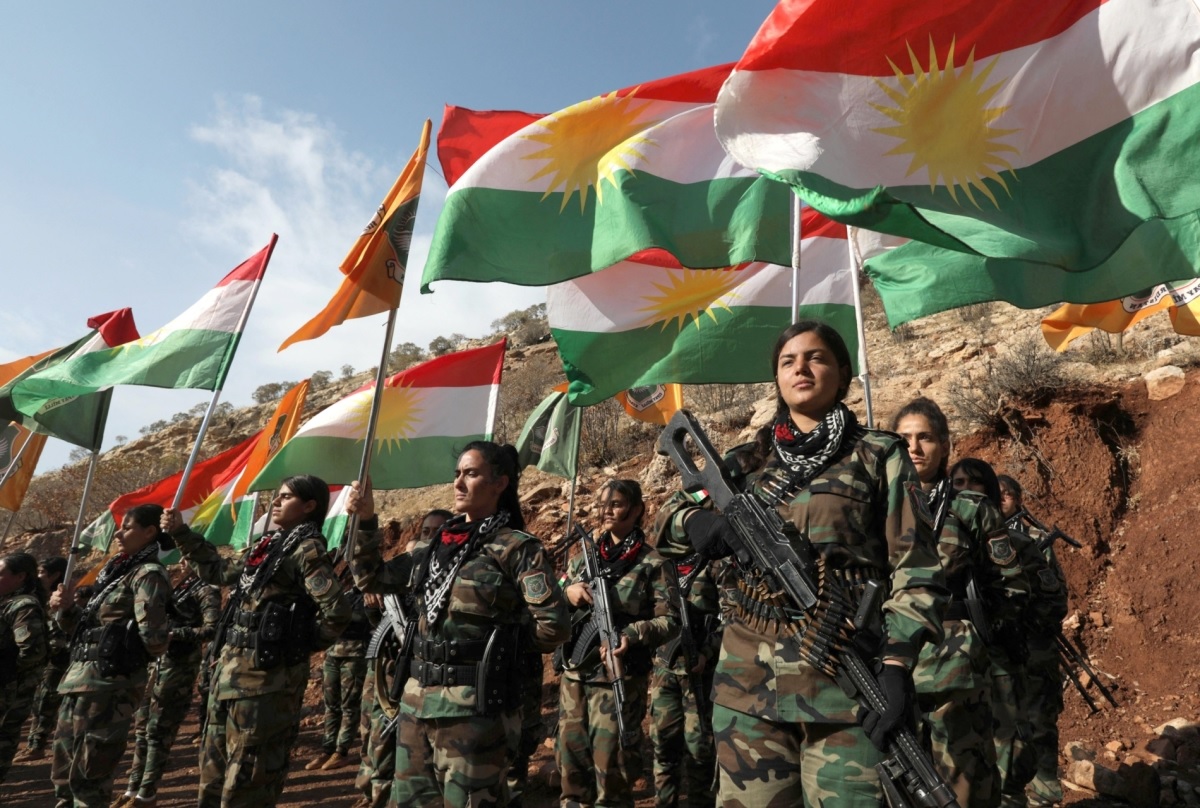
Several Iranian Kurdish opposition organizations are involved in the discussions or potential planning stages. These include:
- The Democratic Party of Iranian Kurdistan (KDPI)
- The Kurdistan Free Life Party (PJAK)
- The Kurdistan Freedom Party (PAK)
- The Khabat Organization
- Factions of Komala
On February 22, 2026, these groups formed a joint alliance called the Coalition of Political Forces of Iranian Kurdistan, aimed at coordinating political and military opposition to the government in Tehran.
Many of these organizations maintain bases within the Kurdistan Region of Iraq and maintain varying degrees of political and operational ties with Iraqi Kurdish parties.
Wider Strategic Context
The reported outreach to Kurdish leaders forms part of broader U.S. efforts to increase pressure on the Iranian government during the ongoing regional conflict that began on February 28, 2026, when U.S. and Israeli military operations against Iranian targets commenced.
According to officials familiar with the discussions, U.S. policymakers are exploring ways to involve internal Iranian opposition groups in order to stretch Iranian military resources and potentially create additional pressure on the Iranian government.
The Central Intelligence Agency has previously been involved in covert efforts to provide limited military assistance, including small arms, to certain Iranian Kurdish factions based in Iraq as part of earlier programs prior to the current conflict.
Responses From Kurdish Authorities
Officials within Iraq’s Kurdistan Region have expressed differing views regarding involvement in the conflict.
Nechirvan Barzani stated that the Kurdistan Region should avoid becoming part of the broader confrontation. His office has emphasized that the region should not be used as a platform for attacks against neighboring countries.
The PUK leadership, which is generally considered to maintain relatively closer political ties with Iran than the KDP, has also noted the sensitivity of the issue and has not publicly endorsed participation in any cross-border military activities.
Iranian Response and Security Developments
Iran has already conducted strikes against Kurdish opposition positions located inside Iraq. Around March 1–2, Iranian forces carried out drone and missile attacks targeting facilities associated with KDPI and Komala near the cities of Koya, Erbil, and Sulaymaniyah.
Iranian officials have previously stated that Kurdish militant organizations operating from Iraqi territory pose a security threat to the country.
White House Statement
White House Press Secretary Karoline Leavitt addressed reports concerning Kurdish involvement on March 4. She stated that claims suggesting finalized U.S. plans for a Kurdish-led insurgency inside Iran were “completely false.”
Neither the White House nor Kurdish regional governments have publicly confirmed any formal agreements regarding U.S. air support or coordinated ground operations.
Ongoing Discussions
Officials familiar with the contacts said the discussions remain exploratory and no specific timeline or operational plan has been publicly outlined.
The consultations come as the regional conflict enters its second week, with U.S. military planners assessing additional options for increasing pressure on Iran while monitoring the possibility of further escalation across the region.
——— End of Article ———