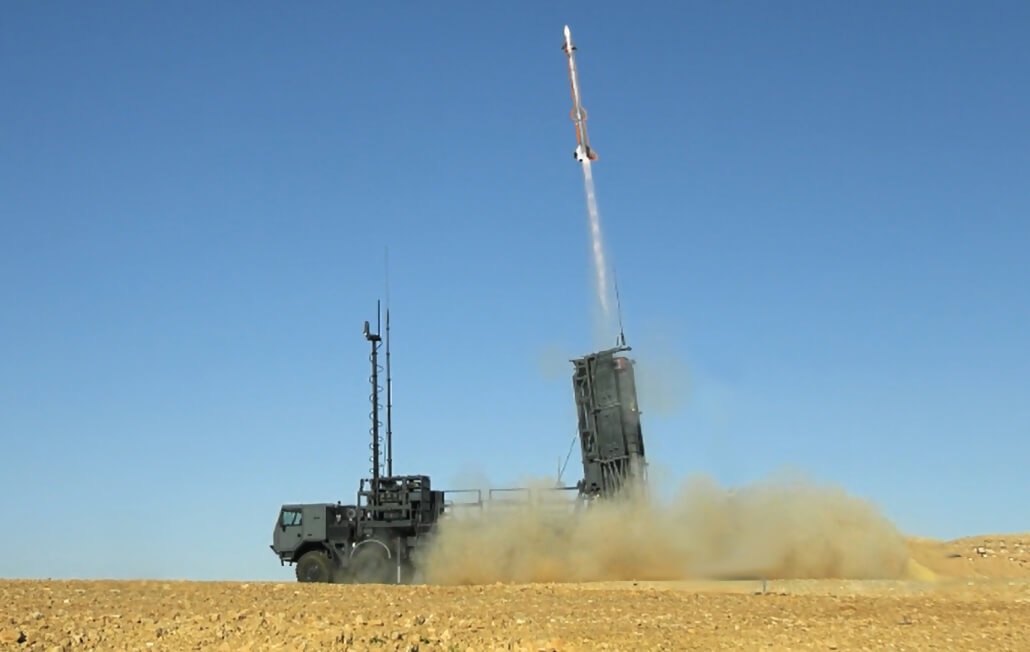
CAPE CANAVERAL, Fla. — March 27, 2026 : The United States military carried out an unannounced missile launch from Cape Canaveral Space Force Station on March 26, in what defense analysts assess to be a test of the Long-Range Hypersonic Weapon (LRHW), known as “Dark Eagle.” The event marks another step in the Pentagon’s ongoing effort to transition hypersonic systems from development into operational service.
The launch occurred at approximately 12:30 p.m. local time, with a rocket ascending from Florida’s Eastern Range and leaving a visible white contrail across the sky. According to Notices to Air Missions (NOTAMs) and maritime advisories issued in advance by the U.S. Coast Guard and the Department of Homeland Security, the missile traveled approximately 2,000 kilometers over the Atlantic Ocean before completing its flight.
While the Department of Defense has not formally confirmed the nature of the launch, the structure of the test—including pre-established exclusion zones and the observed trajectory—closely aligns with previous hypersonic flight activities associated with the Dark Eagle program.
Test Profile and Observational Evidence
Restricted airspace and maritime safety corridors were established several days prior to the launch, indicating a controlled test window consistent with Department of Defense procedures. Observers on the ground, including aerospace photographer Jerry Pike, captured imagery suggesting a flight path similar to earlier LRHW trials conducted from Cape Canaveral.
The event follows a pattern of limited-disclosure hypersonic tests conducted over the past two years. Comparable navigational warnings preceded joint U.S. Army and U.S. Navy tests in December 2024 and April 2025. These launches have increasingly reflected a shift from experimental validation toward pre-operational testing, focusing on repeatability, reliability, and integration within joint force structures.
Cape Canaveral remains a preferred test site due to its controlled launch corridors over the Atlantic and the availability of advanced tracking instrumentation suited to high-speed maneuvering vehicles.
System Design and Technical Characteristics
The Dark Eagle system is a conventional, surface-to-surface hypersonic weapon developed jointly by the U.S. Army and U.S. Navy, with Lockheed Martin serving as the prime contractor. It is designed to deliver a maneuverable glide vehicle at hypersonic speeds over long distances.
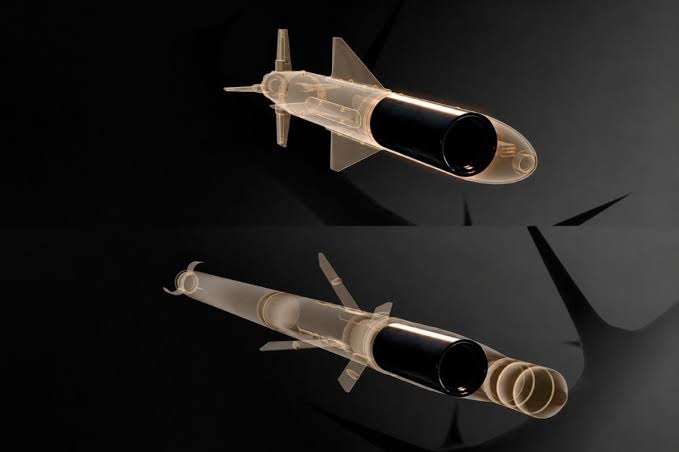
The system uses a boost-glide architecture. A two-stage solid-fuel rocket booster accelerates the payload to the required altitude and velocity before separation. Once released, the payload—known as the Common Hypersonic Glide Body (C-HGB)—continues flight without propulsion, using aerodynamic lift to sustain high speeds.
The glide body is engineered to withstand extreme thermal stress, with surface temperatures reaching approximately 3,000 degrees Fahrenheit during flight. Depending on the trajectory, the system is capable of exceeding speeds of 3,800 miles per hour and may reach velocities up to Mach 15, placing it well within the hypersonic category (above Mach 5).
Unlike traditional ballistic missiles, which follow predictable parabolic trajectories, the C-HGB can maneuver both laterally and vertically during flight. This capability reduces predictability and complicates interception by existing missile defense systems.
Guidance is based primarily on an inertial navigation system, with GPS updates likely used during the early phases of flight. In the terminal phase, onboard sensors refine targeting accuracy. The system is designed to operate in contested electromagnetic environments, with hardened components to resist jamming and interference.
Launcher Configuration and Operational Structure
The ground-based LRHW system is built for mobility and survivability. It is deployed using a Transporter Erector Launcher (TEL) mounted on a modified M870 trailer and towed by a Heavy Expanded Mobility Tactical Truck (HEMTT). Each launcher carries two missile canisters.
Operations are coordinated through a Battery Operations Center (BOC), which manages command, control, and targeting functions. This modular configuration allows the system to operate independently or as part of a broader network integrating space-based and airborne sensors.
The shared use of the Common Hypersonic Glide Body between Army and Navy variants reflects a joint development approach aimed at reducing redundancy and accelerating deployment timelines.
Range, Cost, and Deployment Timeline
The LRHW system is designed to strike targets at ranges between approximately 2,700 and 3,500 kilometers. The missile tested on March 26 is estimated to have flown about 2,000 kilometers during the trial.
The U.S. Army is preparing to field its first operational Dark Eagle battery in the coming weeks. Personnel from Bravo Battery, 5th Battalion, 3rd Field Artillery Regiment, assigned to the 1st Multi-Domain Task Force, have been actively training with the system. Recent exercises include participation in Exercise Bamboo Eagle 24-3 at Nellis Air Force Base, where launcher operations were demonstrated.
The program has received more than $12 billion in development funding since 2018. Current production costs are estimated at approximately $41 million per missile, with manufacturing output presently limited to roughly one missile per month.
Strategic Role and Ongoing Testing
Dark Eagle is intended to engage high-value targets in environments characterized by Anti-Access/Area Denial (A2/AD) systems. These include advanced air defense networks, command and control centers, missile installations, and hardened infrastructure.
Due to the kinetic energy generated at hypersonic speeds, the weapon can achieve destructive effects without relying on large explosive payloads. Its mobility and rapid deployment capability support integration into multi-domain operations, including coordination with naval and air assets.
The recurrence of such tests reflects the priority placed by the United States on developing credible hypersonic strike capabilities. Current efforts are focused on validating system performance, improving production capacity, and ensuring operational integration.
The program is also part of a broader strategic context, as the United States continues to develop systems comparable to hypersonic weapons fielded by China and Russia. At this stage, testing activity is centered on demonstrating system maturity, reliability, and readiness for deployment within a joint operational framework.
——— End of Article ———