DETROIT ARSENAL, Mich., — April 8, 2026 : The 75th U.S. Army Reserve Innovation Command (USARIC) has completed a comprehensive, data-driven research effort to inform the requirements for the Small Multipurpose Equipment Transport (SMET) Increment 2 program. The study, conducted between May and October 2025, collected structured feedback from soldiers across the active-duty Army, Army National Guard, and Army Reserve, and is now being used to guide the next phase of the Army’s robotic ground vehicle development.
The research initiative was led by USARIC acquisition officers Lt. Col. Vikram Mittal and Lt. Col. Wesley Brown. The findings have been formally delivered to the Program Executive Office Ground Combat Systems (PEO GCS), which is responsible for refining requirements and advancing the acquisition strategy for SMET Increment 2. The effort reflects a deliberate shift toward incorporating direct operational feedback into capability development, ensuring that future systems align with real-world usage and soldier needs.
Structured Approach to Capturing Soldier Feedback
According to the report, the primary objective of the study was to establish a broad and representative understanding of how soldiers employ the SMET platform and what improvements are required. “The aim of this study was to gather user feedback to inform the development of SMET Increment 2,” Mittal stated, emphasizing the need to capture a wide range of operational perspectives.
To achieve this, USARIC contacted every unit fielded with SMET Increment 1 across all Army components. Participating units were divided into two categories based on operational experience. Units with limited exposure to the platform completed a structured survey derived from the SMET Capability Development Document, ensuring alignment with the system’s intended design and functions. The survey used a five-point Likert scale ranging from “Strongly Agree” to “Strongly Disagree,” enabling statistical analysis, and included open-ended questions for additional context.
Units with extensive hands-on experience participated in virtual and in-person interviews. These sessions focused on detailed operational insights, including mission context, employment methods, system strengths, and limitations. The research team also gathered unit-level training materials and after-action reports. Notes from interviews and documentation reviews were consolidated into the survey dataset to support both quantitative and qualitative analysis.
Key Operational Questions and Data Outcomes
The study was guided by four central questions: which features of the current SMET system soldiers find most useful; how units are employing the platform in tactical environments; what improvements would increase user acceptance; and which additional capabilities would provide the greatest operational value in future missions.
Data collection resulted in 80 individual responses, which were consolidated into 48 company-level datasets. The report notes that this sample size exceeds the threshold required for statistical significance. Importantly, the dataset is based on feedback from soldiers with direct operational experience, providing an empirical foundation for requirements development rather than relying solely on engineering assumptions.
Role and Performance of SMET Increment 1
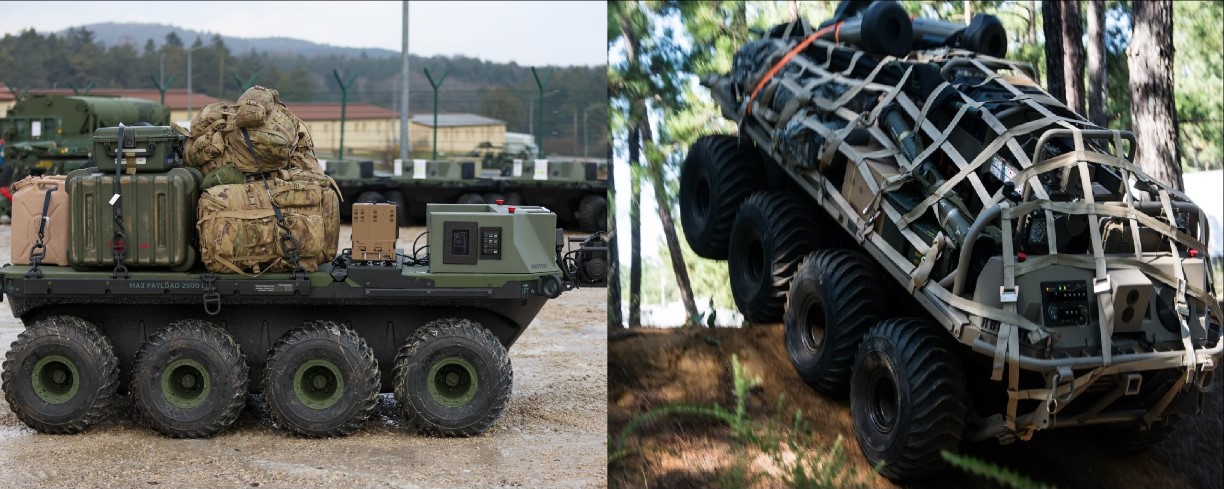
SMET Increment 1 is an eight-wheeled, autonomous robotic ground vehicle designed to reduce the physical burden on dismounted infantry. Soldiers routinely carry combat loads exceeding 100 pounds, including weapons, ammunition, communications equipment, water, and body armor. These loads can negatively affect mobility, increase the risk of musculoskeletal injuries, and limit endurance during extended operations.
The SMET platform addresses these challenges by carrying up to 1,000 pounds of equipment and autonomously following dismounted units through complex terrain or operating via radio control. In addition to load carriage, the system functions as a mobile power source, enabling soldiers to charge batteries and sustain the growing number of electronic systems used in modern operations.
The platform has been fielded across multiple unit types, including Infantry Brigade Combat Teams, Explosive Ordnance Disposal units, and Security Force Assistance Brigades, spanning active-duty, National Guard, and Reserve formations.
Transition to SMET Increment 2
As part of the program’s next phase, the Army awarded Other Transaction Authority Engineering and Manufacturing Development contracts in September 2024 to American Rheinmetall Vehicles, LLC, and HDT Expeditionary Systems, Inc. Each company is producing eight prototypes for SMET Increment 2 under contracts with a combined value of $22 million.
The recommendations generated by the USARIC study are being incorporated into the refinement of SMET Increment 2 requirements. These recommendations focus on improving system capability, reducing user burden, and enhancing operational effectiveness based on observed field use.
Mittal summarized the outcome of the research in the report’s conclusion, stating that the process resulted in “data-driven recommendations focused on improving SMET capability, reducing user burden, and informing future requirements and acquisition planning.”
Integration into Army Modernization Efforts
The SMET Increment 2 initiative forms part of the Army’s broader modernization strategy to integrate autonomous and robotic systems into combat formations. By leveraging direct soldier feedback from SMET Increment 1 operations, the Army aims to ensure that future systems enhance operational capability while reducing the physical demands placed on personnel.
With the completion of the study, PEO GCS will continue refining formal requirements for SMET Increment 2, using the collected data to guide system design, capability prioritization, and acquisition decisions. The effort represents a structured approach to aligning technology development with operational realities across the Army’s active-duty and reserve components.
——— End of Article ———