The U.S. Army is moving closer to fielding its next-generation Sentinel A4 air defense radar in an operational homeland security role, with plans to deploy the system as part of the National Capital Region Integrated Air Defense System (NCR-IADS). The decision marks a major milestone in the modernization of the air defense architecture protecting Washington, D.C., as the threat posed by small, low-flying, and hard-to-detect aerial systems continues to grow.
Army officials say the AN/MPQ-64A4 Sentinel A4, which entered operational testing at White Sands Missile Range in April 2023, is designed to significantly improve detection and tracking under Operation Noble Eagle, the continuous air defense mission launched after the September 11, 2001 attacks. Once operational in the capital region, the radar will support one of the most demanding and sensitive air defense missions in the United States.
A Complex Air Defense Environment
The National Capital Region Integrated Air Defense System is the product of more than two decades of layered development. Built after 9/11, the system combines ground-based radars, command-and-control nodes, airborne sensors, and missile defense systems to counter low-altitude, low-airspeed threats in one of the most congested and tightly regulated airspaces in the world.
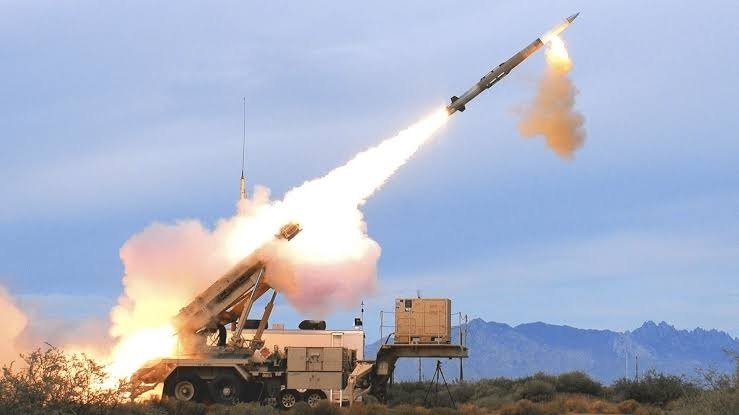
National Guard air defenders, rotating through the Joint Air Defense Operations Center, continuously fuse radar data with other sensor inputs while balancing tactical readiness with heavy civilian air traffic. Since 2005, the NASAMS (National Advanced Surface-to-Air Missile System) has been a central component of this architecture, traditionally paired with Sentinel-family radars to generate engagement-quality tracks. The Sentinel A4 is now positioned to replace the long-serving Enhanced Sentinel A3 radars.
Sentinel A4 Capabilities and Design
The AN/MPQ-64A4 Sentinel A4 is a mobile, three-dimensional, 360-degree X-band phased array radar designed for multi-mission air defense operations. Unlike earlier Sentinel variants, which often required operators to prioritize specific threat types, the A4 can simultaneously detect and track aircraft, cruise missiles, unmanned aerial systems (UAS), and rockets, artillery, and mortars (RAM).
The radar is mounted on a modified M1095 Medium Tactical Vehicle trailer, allowing for rapid deployment and relocation. A two-person crew can emplace and operate the system while integrating it into broader air defense command-and-control networks. Compared with the Sentinel A3, the A4 offers a substantial increase in effective range, improved target discrimination, and higher refresh rates, enabling reliable tracking of small and slow-moving targets in cluttered urban environments.
Addressing Emerging and Low-Observable Threats
In the National Capital Region, the most dangerous threats are often those that produce minimal radar signatures. Small drones can blend into ground clutter and urban reflections, while low-flying cruise missiles sharply compress detection timelines and place stress on the kill chain.
The Sentinel A4 is optimized for persistent 360-degree surveillance, early track generation, and the rapid distribution of high-quality data to command-and-control systems, enabling air defense commanders to cue interceptors earlier and with greater confidence. The radar also incorporates advanced electronic protection features, improving resilience against jamming, deception, and electronic attack in contested spectrum environments.
Program Development and Operational Testing
The Sentinel A4 program began with a contract award in 2019 and has been shaped by the Army’s emphasis on digital engineering and open architecture design. These approaches have accelerated development timelines while simplifying integration into the broader Integrated Air and Missile Defense (IAMD) framework.
By late 2021, multiple radars were already in production for Soldier evaluations, with testing focused not only on sensor performance but also on network integration and operational usability. The program has since entered low-rate initial production, with operational deliveries planned for the second half of the decade.
Operational Deployments Beyond Test Ranges
In parallel with domestic testing, Sentinel A4 prototypes and associated air and missile defense capabilities have been deployed to forward locations including Guam and South Korea. These deployments expose the radar to real-world air pictures, environmental stress, and joint and combined operations, allowing the Army to refine software, tactics, and procedures before full-scale fielding.
This approach reflects a broader shift toward “learning by doing,” ensuring new systems mature under realistic operational conditions rather than exclusively on test ranges.
Replacing a Long-Serving Sensor
As the Sentinel A4 enters service, it is expected to gradually replace the Enhanced Sentinel A3, which has served as the backbone of U.S. short- and medium-range ground-based air defense for years. While the A4 offers a dramatic increase in detection range, Army officials emphasize that the upgrade is primarily about multi-mission relevance, not just seeing farther.
The radar is designed to remain effective as the threat spectrum expands to include traditional aircraft, cruise missiles, drones, and indirect fire threats appearing simultaneously.
Position in the Global Air Defense Radar Landscape
Within the global market for modern mobile air defense radars, Sentinel A4 sits alongside systems such as Saab Giraffe 1X, Thales Ground Master 200, HENSOLDT TRML-4D, and Leonardo KRONOS LAND. While these systems vary in range, mobility, and capacity, Sentinel A4’s key advantage lies in its deep integration with U.S. Army command-and-control networks and its role in a live homeland defense mission.
Strengthening Homeland Air Defense
The planned deployment of Sentinel A4 within the National Capital Region Integrated Air Defense System highlights a broader shift in U.S. air defense priorities, driven by the rapid proliferation of drones, cruise missiles, and other asymmetric aerial threats.
By introducing a radar designed for multi-mission performance, electronic resilience, and networked operations, the Army aims to ensure that the air defense shield over Washington, D.C. remains credible and effective well into the future. As Sentinel A4 transitions from testing to operational service, it represents not only a technological upgrade, but a critical reinforcement of one of the nation’s most visible and strategically important defense missions.
——— End of Article ———