SAN DIEGO : Rafael Systems Global Sustainment (RSGS) has been selected for Phase 1 of the U.S. Army’s Indirect Fire Protection Capability Increment 2 (IFPC Inc 2) Second Interceptor effort, positioning a Tamir-derived missile as a contender for the Army’s future mid-tier air and missile defense architecture. The company confirmed the selection on February 11, 2026.
The IFPC Inc 2 program is a central component of the Army’s layered air defense framework. It is designed to defend fixed and semi-fixed sites against cruise missiles, unmanned aircraft systems (UAS), and rockets, artillery and mortars (RAM). The effort complements existing short-range air defense systems and addresses emerging threats that require faster engagement timelines and improved interception performance.
Program Background and Operational Requirement
The U.S. Army is currently fielding the Enduring Shield launcher developed by Dynetics, a subsidiary of Leidos. The launcher was initially paired with the ground-launched variant of the AIM-9X Sidewinder interceptor.
While the AIM-9X provides short-range capability against unmanned systems and subsonic cruise missiles, the Army identified the need for a second interceptor optimized to counter low-flying, supersonic cruise missiles. Such threats reduce reaction time and require high-performance seekers, improved kinematics, and robust guidance systems capable of operating in contested environments.
The second interceptor initiative aims to expand the interceptor portfolio available for the Enduring Shield system, while increasing magazine depth and improving cost efficiency in engagements involving massed aerial threats.
Rafael’s Proposal: Tamir-Derived Interceptor
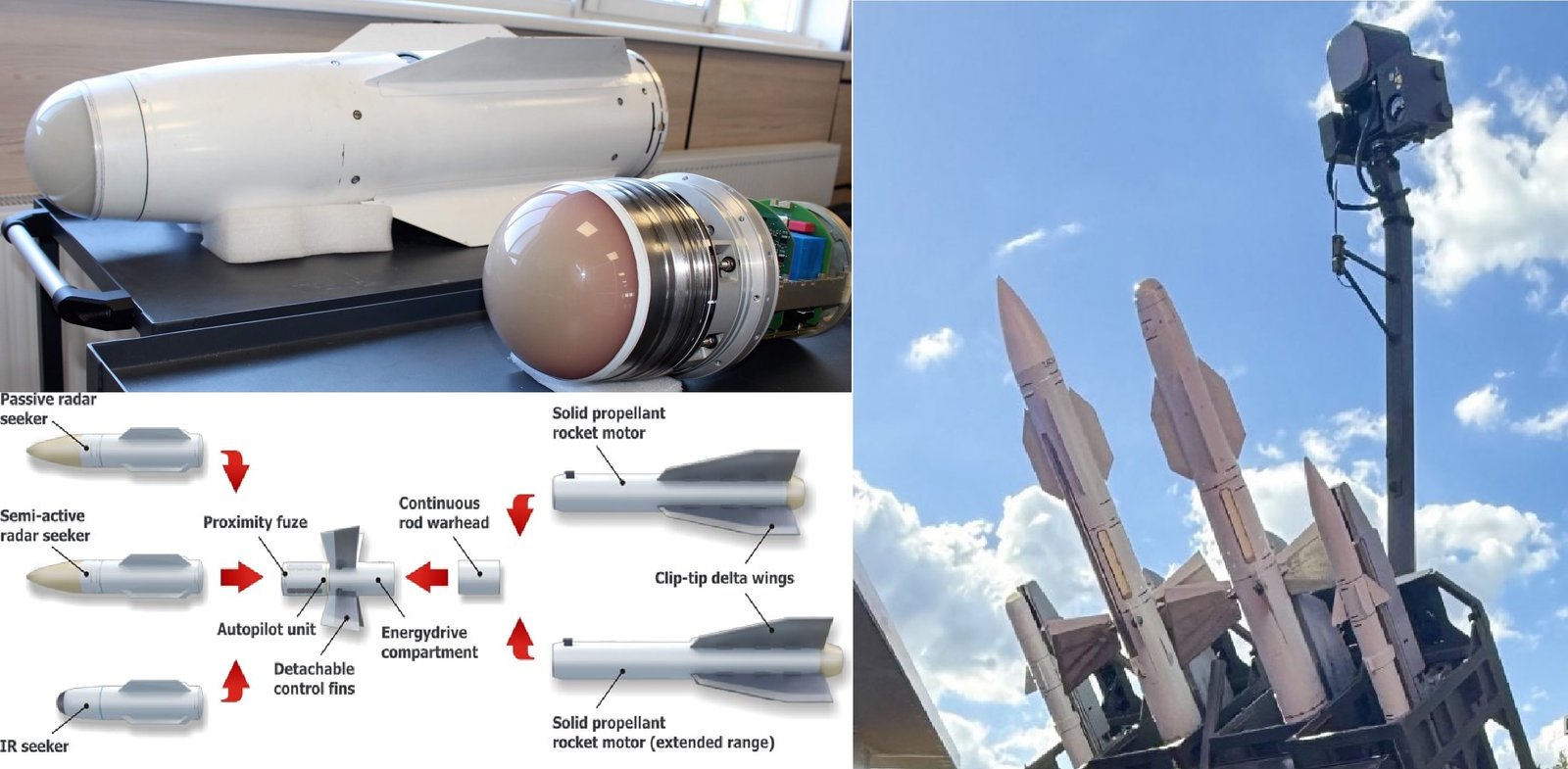
RSGS has proposed a U.S.-adapted version of the Tamir interceptor, originally developed by Rafael Advanced Defense Systems for use in Israel’s Iron Dome system.
The baseline Tamir is an all-weather interceptor with an engagement range of approximately 4 to 70 kilometers. It employs electro-optical sensors, command-and-control data links, and a proximity-fuzed blast fragmentation warhead. The missile has accumulated extensive operational data in active service.
Under the IFPC Inc 2 framework, the Tamir-derived interceptor will be adapted to meet U.S. Army requirements and integrated into American command-and-control and sensor networks, rather than operating as a standalone Iron Dome battery.
Competitive Landscape
Rafael is one of three teams selected for Phase 1 of the second interceptor competition.
Lockheed Martin, partnered with AeroVironment, received its Other Transaction Authority (OTA) award in October 2025.
Boeing, partnered with Anduril Industries, announced their partnership and Phase 1 selection in late 2025.
Phase 1 activities focus on design adaptation, system integration planning, risk reduction, and preparation for technology demonstrations.
Industrial Base and U.S. Manufacturing
Although Tamir originates from Israel, its U.S. production and integration are supported through R2S, a joint venture between Rafael and RTX (formerly Raytheon Technologies).
R2S recently opened a manufacturing facility in East Camden, Arkansas, dedicated to producing Tamir and its U.S. variant, SkyHunter.
The establishment of U.S.-based production capacity is intended to ensure supply chain security, scalability, and compliance with domestic procurement requirements.
Integration with Army Architecture
The Tamir-derived interceptor will be integrated into the Army’s Integrated Battle Command System (IBCS). This integration enables the missile to be launched from the Enduring Shield platform using targeting data from multiple U.S. sensors, including the Sentinel A4 radar.
By connecting the interceptor to IBCS, the Army ensures interoperability across its air and missile defense network, allowing sensor data from distributed assets to support engagement decisions.
Technical Comparison
Under IFPC Inc 2, the currently fielded and proposed interceptors differ in operational focus and guidance approach.
The AIM-9X Sidewinder serves as a short-range interceptor effective against UAS and subsonic cruise missiles. It uses infrared (IR) guidance and is already in production and fielding with the Army.
The Tamir-derived interceptor is designed for mid-tier engagements, including supersonic cruise missiles and RAM threats. It employs electro-optical guidance and data link connectivity and is currently in Phase 1 development for IFPC Inc 2 adaptation.
Both interceptors are compatible with the Enduring Shield launcher, which is configured to carry approximately 15 to 18 rounds, supporting high magazine depth for sustained defensive operations.
Timeline and Next Steps
The Army’s SHIELD Project Office will work with Rafael and other competitors during Phase 1 to adapt their respective technologies to U.S. operational requirements.
The program is expected to move toward a technology demonstration during the FY2026–FY2027 timeframe, with a final production decision for the second interceptor potentially occurring toward the end of the decade, depending on technical performance, integration results, and funding allocations.
Retired Lt. Gen. Joe Anderson, CEO of Rafael Systems Global Sustainment, stated that the selection reflects the Army’s intent to adapt mature interceptor technology to counter evolving supersonic threats while accelerating deployment timelines.
The IFPC Inc 2 second interceptor effort aligns with broader Army objectives to enhance protection of critical operational hubs, including those in the Indo-Pacific region, where cruise missile and drone proliferation remains a key operational consideration.
——— End of Article ———