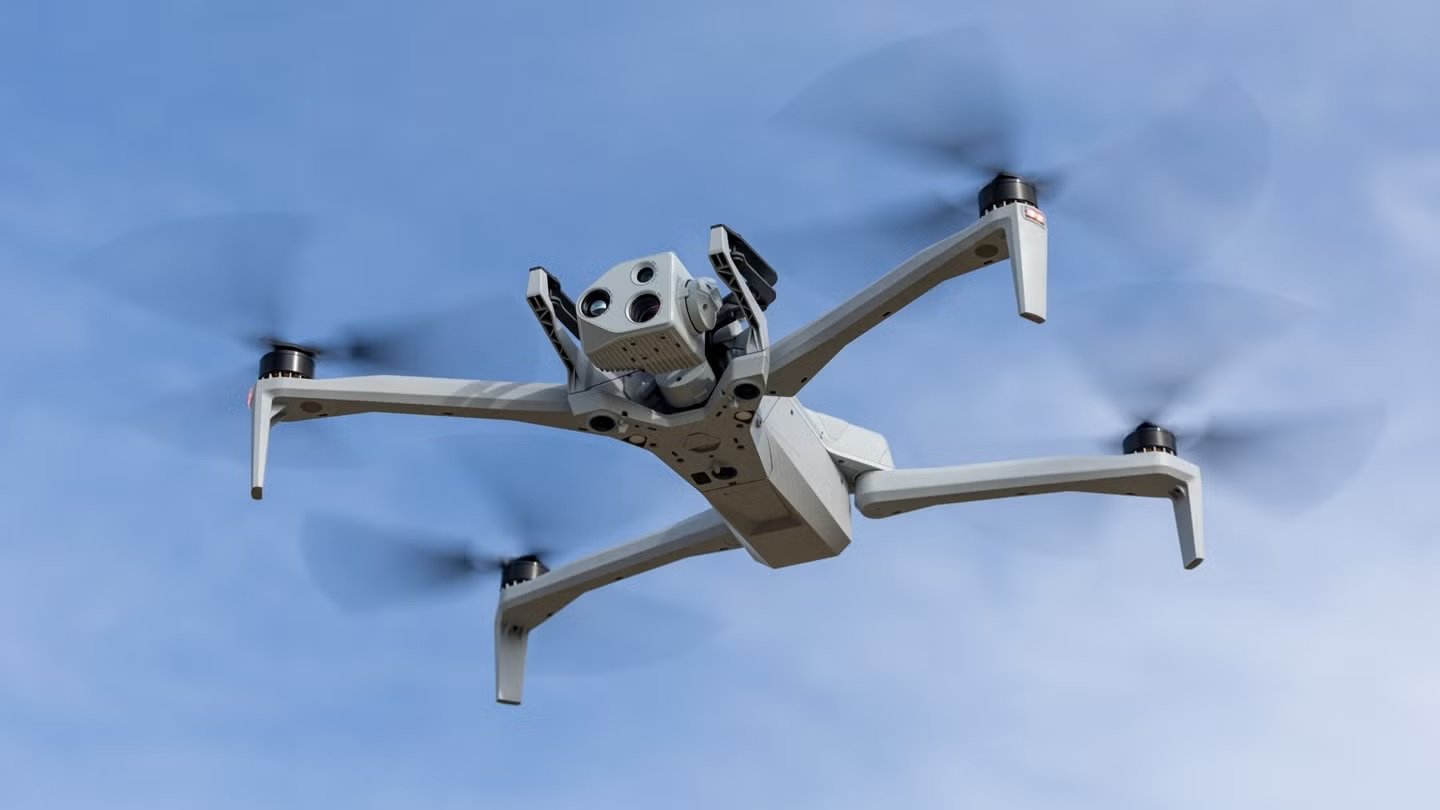
WASHINGTON : The U.S. Army has taken another step toward transforming close-range precision strike capabilities for frontline troops with the selection of the Hero-90 loitering munition for participation in the service’s Low Altitude Stalking and Strike Ordnance (LASSO) programme, according to a statement by U.S.-based defence technology firm Mistral Inc.
The LASSO initiative, overseen by the Army’s Program Executive Office Soldier, is designed to rapidly equip Brigade Combat Teams (BCTs) with a man-portable, low-altitude precision weapon capable of defeating armoured threats. Officials have described the programme as an urgent operational requirement, reflecting battlefield lessons that highlight the growing need for organic, dismounted anti-armour strike options.
A Rapid-response Precision Weapon
At the centre of the programme is the Hero-90, a loitering munition developed by Israel-based defence company UVision and supported in the U.S. market by Mistral. The system is designed for single-operator use and can reportedly be deployed in under two minutes, giving infantry units the ability to respond quickly to emerging armoured threats without relying on heavier platforms or external fire support.
The Hero-90 combines extended operational range with a compact, highly portable design. Once launched, the munition can loiter over the battlefield, allowing operators to identify, track and engage targets with precision. Its top-attack profile is specifically intended to exploit the most vulnerable areas of armoured vehicles, increasing lethality against modern armour.
Designed for Modern Combat Environments
According to programme details, the Hero-90 supports multiple configurable warhead options, including high-explosive variants optimised for anti-armour missions. The system features man-in-the-loop control, enabling operators to retain decision authority throughout the engagement, as well as mission abort and re-engagement capabilities that reduce the risk of unintended damage.
Advanced electro-optical (EO) and infrared (IR) sensors provide day-and-night targeting, while AI-assisted tracking is intended to improve target acquisition in cluttered or contested environments. Secure, beyond-line-of-sight communications allow the munition to operate at extended ranges while maintaining reliable operator control.
A key focus of the LASSO programme is integration. The Hero-90 is designed to align with the Army’s Common Control architecture and Modular Open Systems Approach (MOSA), allowing it to plug into existing command-and-control networks and sensor-to-shooter kill chains at the Brigade Combat Team level.
Industry and Army Alignment
Yoav Banai, Senior Vice President at Mistral Inc., said the selection underscores the Army’s priorities as it modernises infantry strike capabilities. “Selection of Hero-90 reflects the Army’s focus on portability, lethality and MOSA-ready integration,” Banai said, adding that Mistral will support the Army’s precision targeting efforts with a solution that integrates seamlessly across brigade-level operations.
UVision executives echoed that assessment, describing LASSO as a fast-moving programme aimed at delivering overmatch to dismounted soldiers. Jarmin Blanton, Vice President of Business Development, Sales and Marketing at UVision, said the Hero-90 was engineered specifically for the mission set the Army is now prioritising. “Fast to deploy, lethal at range and adaptable through open architectures,” he said, characterising the system as a transformational capability for infantry units facing armoured threats.
Broader Implications
The Hero-90’s inclusion in the LASSO programme highlights a broader shift in U.S. Army doctrine toward lighter, more flexible precision weapons at the tactical edge. As armoured vehicles, fortified positions and mobile targets continue to shape modern battlefields, the Army is increasingly looking to loitering munitions to bridge the gap between traditional anti-tank weapons and larger, more expensive strike systems.
While participation in LASSO does not guarantee full-scale procurement, the selection positions the Hero-90 as a strong contender in the Army’s push to field rapidly deployable, soldier-centric precision strike capabilities. For dismounted units operating at low altitude and close contact, the programme represents a potential leap forward in organic firepower and battlefield autonomy.
——— End of Article ———