WASHINGTON : The United States Army briefly published and then removed official photographs of its Long Range Hypersonic Weapon (LRHW), commonly referred to as the “Dark Eagle,” without providing a public explanation. The images, which were posted through official channels, were subsequently deleted but circulated widely across defense-focused online platforms and social media.
The incident has drawn attention within defense circles because the LRHW represents one of the Pentagon’s most advanced conventional long-range strike capabilities. Public release of imagery related to operational hypersonic systems is typically tightly managed, particularly as such programs transition from developmental testing to active fielding.
Images Linked to Exercise Talisman Sabre 25
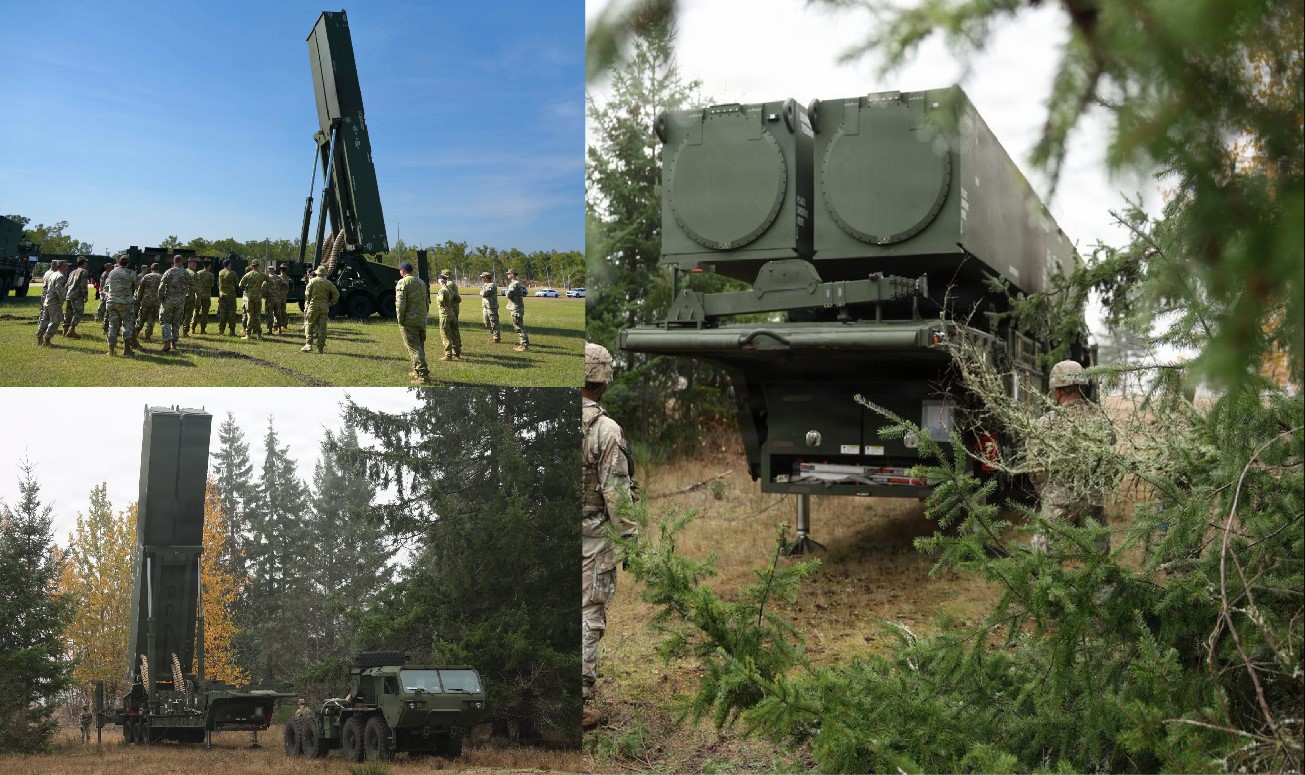
According to the original captions accompanying the photographs, credited to photographer Perla Alfaro, the images documented a capabilities briefing on the LRHW system held in the Northern Territory of Australia on July 9, 2025. The event occurred during Exercise Talisman Sabre 25, a major bilateral military exercise between the United States and Australia focused on combined high-end warfighting operations and allied interoperability.
The photographs reportedly showed personnel from B Battery (Dark Eagle), 5th Battalion, 3d Field Artillery Regiment (Long Range Fires Battalion). The imagery appeared to include launcher components and system configurations associated with preparations for operational deployment.
The presence of the LRHW during Talisman Sabre 25 indicated its integration into joint operational planning and multinational exercises. The exercise is designed to enhance coordination between U.S. and Australian forces across air, land, sea, cyber, and space domains.
System Overview and Technical Specifications
The Long Range Hypersonic Weapon, designated “Dark Eagle,” is a trailer-mounted, surface-to-surface hypersonic strike system developed to engage heavily defended, high-value, and time-sensitive targets at extended ranges.
Unlike traditional ballistic missiles that follow a predictable parabolic trajectory, the LRHW employs a boost-glide mechanism. A solid-propellant rocket booster carries the system into the upper atmosphere. After separation, the booster releases the Common-Hypersonic Glide Body (C-HGB), which then travels unpowered toward its target at hypersonic speeds. The glide body maneuvers within the atmosphere, complicating detection, tracking, and interception by current air and missile defense systems.
The primary contractors for the system are Lockheed Martin, responsible for the booster and overall missile assembly, and Dynetics, which develops the Common-Hypersonic Glide Body.
The system is reported to achieve speeds exceeding Mach 5, equivalent to more than 3,800 miles per hour (approximately 6,100 kilometers per hour). Recent statements from Army modernization officials indicate that the operational range has been updated to approximately 3,500 kilometers (about 2,175 miles), an increase from earlier figures of approximately 2,775 kilometers.
The weapon relies primarily on kinetic energy generated by hypersonic impact. It carries a relatively small warhead, described as under 30 pounds, designed to disable or destroy targets such as radar installations, air defense nodes, and command infrastructure through high-velocity impact and fragmentation effects.
The estimated unit cost per missile is approximately $41 million.
Battery Structure and Mobility
The LRHW is structured as a mobile ground-based system designed to operate across dispersed environments and reposition quickly to enhance survivability.
A standard LRHW battery consists of four Transporter Erector Launchers (TELs). Each TEL is mounted on a modified M870A4 trailer and towed by an M983 heavy expanded mobility tactical truck. Each launcher carries two All-Up Round plus Canister (AUR+C) missiles, for a total of eight missiles per battery.
The battery also includes a Battery Operations Center (BOC) for command and control, along with a dedicated support vehicle for the operations center.
The mobile configuration is intended to allow rapid deployment, relocation, and integration into multi-domain operations, supporting the Army’s broader modernization strategy.
Program Costs and Procurement Plans
The development and fielding of hypersonic systems require substantial financial investment due to the technological complexity involved in advanced propulsion, precision guidance, and materials engineered to withstand extreme aerodynamic heating.
According to data from the U.S. Government Accountability Office (GAO), the cost of fielding the first operational Dark Eagle battery is estimated at approximately $2.7 billion. This figure includes both the missiles and associated ground support equipment.
Following the equipping of the 1st Multi-Domain Task Force at Joint Base Lewis-McChord, the Department of Defense awarded Lockheed Martin a $756 million contract modification to provide ground support equipment for a second LRHW battery. That second battery is projected for fielding by 2026.
The Army has outlined a long-term procurement objective of up to 300 hypersonic strike missiles.
No Official Explanation for Deletion
The U.S. Army has not issued a clarifying statement regarding whether the removal of the photographs was the result of an administrative error or a deliberate action tied to operational security considerations.
The brief publication and subsequent deletion of the images occurred as the Army continues to advance the deployment of the Dark Eagle system as part of broader efforts to expand long-range precision strike capabilities within the U.S. military’s conventional deterrence framework.
——— End of Article ———