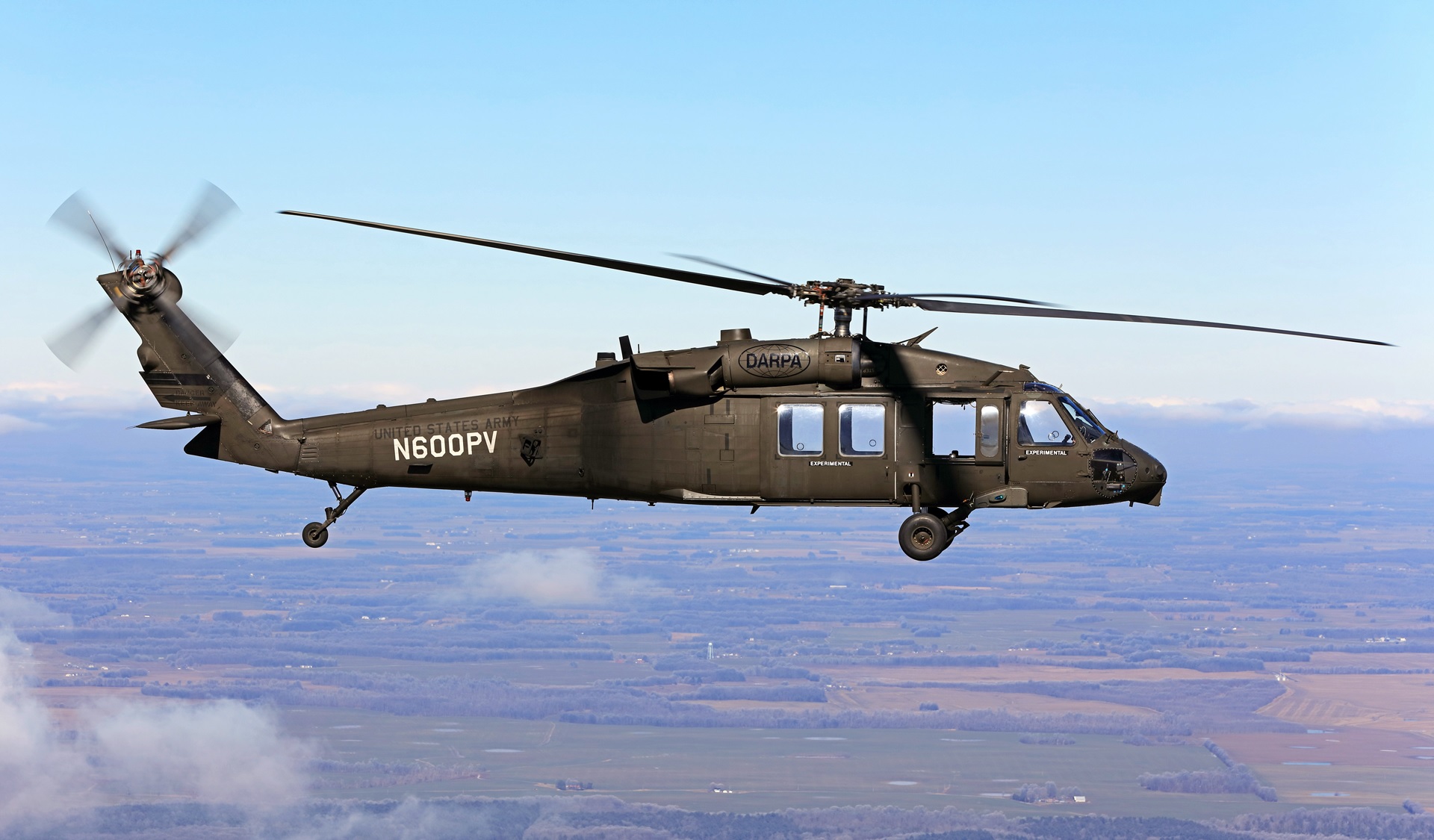
FORT EUSTIS, Virginia, — March 21, 2026 : The U.S. Army has taken delivery of its first H-60Mx Black Hawk helicopter, a modified UH-60M variant configured for autonomous and optionally piloted operations. The aircraft was received on March 19 and will now enter a structured testing phase to evaluate its performance across crewed, reduced-crew, and fully uncrewed mission profiles.
The platform represents a transition of more than a decade of autonomy research into an operational test asset and will be used by the Army Combat Capabilities Development Command (DEVCOM) as a flying laboratory.
Development Background and Program Origins
The H-60Mx is based on technology developed under the Defense Advanced Research Projects Agency (DARPA) Aircrew Labor In-Cockpit Automation System (ALIAS) program. The initiative focused on creating a modular system that could be installed on existing aircraft to enable autonomous operations while reducing pilot workload and improving safety.
Through this program, Sikorsky, a Lockheed Martin company, developed the MATRIX autonomy system, advancing it from early experimental stages to a deployable capability. The program achieved a key milestone in 2022, when a Black Hawk helicopter completed its first uninhabited flight.
A subsequent $6 million DARPA contract in 2024 supported further modifications to integrate the system into the UH-60M platform. The technology was later transitioned to the U.S. Army under a formal agreement with the Project Manager for Utility Helicopters.
System Architecture and Capabilities
The H-60Mx is equipped with the ALIAS Optionally Piloted Vehicle (OPV) kit, which enables the aircraft to operate with or without onboard crew. At the center of the system is the MATRIX Autonomy Mission Manager, which functions as a digital flight control system capable of executing complex tasks from takeoff to landing.
The architecture includes a Software Development Kit (SDK) that allows integration of third-party applications and advanced sensor systems. This open-architecture approach is designed to support continuous upgrades while reducing the time and cost associated with deploying autonomous capabilities across existing fleets.
The system enables multiple operational modes, including fully crewed flight, reduced crew operations, and fully autonomous missions. The aircraft can also be controlled remotely from a ground station interface, including via touchscreen-based systems. Army officials indicated that the system is designed so that even non-aviators can direct the aircraft in autonomous mode under appropriate conditions.
Fly-by-Wire Conversion and Sensor Integration
A key structural modification in the H-60Mx is the replacement of traditional mechanical flight controls with a fly-by-wire system. This electronic control architecture improves aircraft stability and handling, particularly in low-visibility environments, and enables precise execution of automated flight maneuvers.
The helicopter is also equipped with an advanced sensor suite that feeds real-time data into the autonomy system. These sensors support navigation, obstacle detection, and mission execution, allowing the MATRIX system to manage flight operations with minimal or no human input.
By automating complex and physically demanding flight tasks, the system reduces pilot workload and allows onboard crews, when present, to focus on mission management rather than aircraft control.
Testing Phase and SAFE Program
The H-60Mx will undergo extensive testing by Army pilots and engineers to evaluate performance in autonomous, remote-control, and crewed configurations. The trials will focus on system reliability, integration with mission-specific equipment, and effectiveness in realistic operational scenarios.
The aircraft will serve as the primary test platform for the Army’s Strategic Autonomy Flight Enabler (SAFE) program. The objective of SAFE is to develop a scalable and modular autonomy kit that can be integrated across the Army’s existing Black Hawk fleet, as well as adapted for future rotary-wing platforms.
Testing will also assess how the technology can improve flight safety, reduce operational risk, and enhance mission effectiveness for ground forces.
Operational Role and Future Integration
The H-60Mx is intended to support a range of missions, including logistics resupply, casualty evacuation, and other operations in contested environments where reducing crew exposure is a priority. The platform retains the ability to operate with a conventional crew configuration of two pilots and one crew chief when required.
The modifications to the aircraft were carried out at Sikorsky’s facility in Stratford, Connecticut, and are designed to align with the Army’s existing fleet of approximately 2,300 UH-60 Black Hawk helicopters.
Officials indicated that the program represents a step toward broader integration of autonomous systems in military aviation, with the goal of increasing operational flexibility, improving survivability, and enabling new mission concepts across the Army’s aviation portfolio.
——— End of Article ———