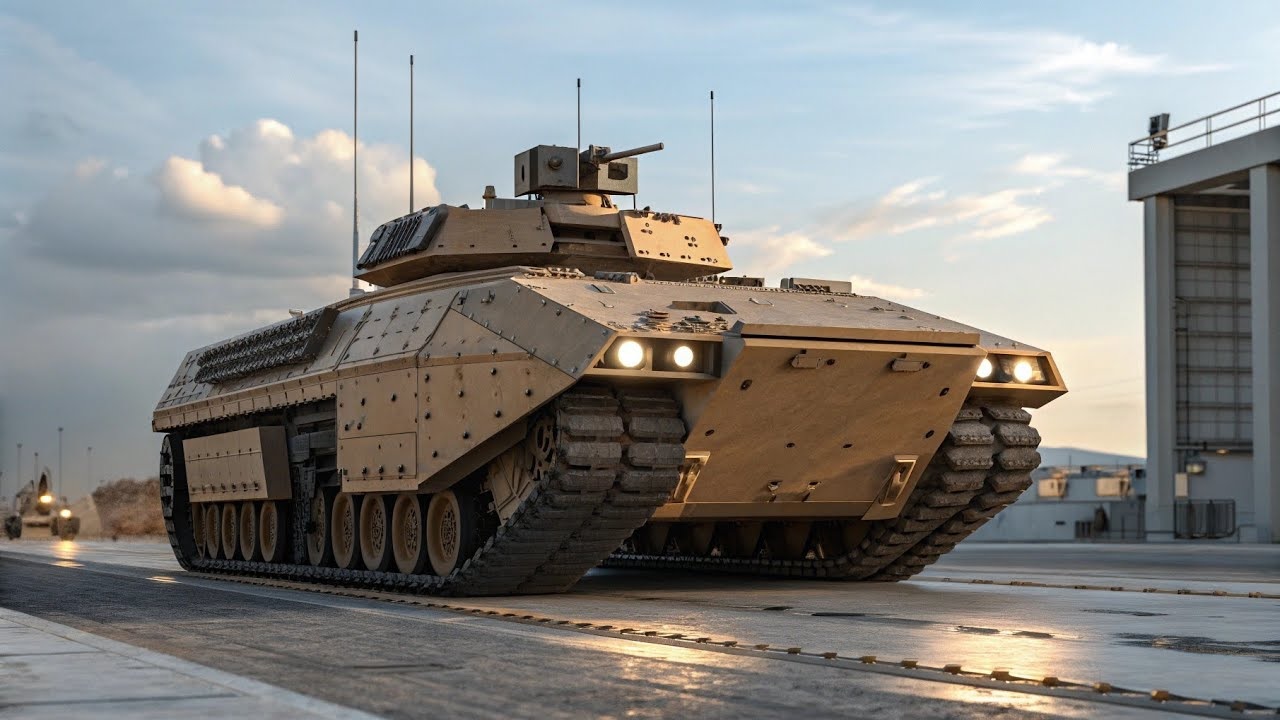
WASHINGTON, — April 7, 2026 : The U.S. Army has initiated the procurement phase of the XM30 Mechanized Infantry Combat Vehicle (MICV), requesting $547 million in its Fiscal Year 2027 budget to acquire an initial batch of 19 vehicles. The funding request, detailed in the Army’s FY2027 P-1 procurement documents released in April 2026, formally transitions the program from a research and development effort into a production-relevant acquisition program intended to replace the M2 Bradley Infantry Fighting Vehicle.
Transition From Development to Procurement
The FY2027 request follows the program’s Milestone B approval in June 2025, which authorized entry into engineering and manufacturing development. Until FY2026, the XM30 program was funded exclusively through Research, Development, Test, and Evaluation (RDT&E) accounts, receiving approximately $386.4 million that year without any procurement of vehicles.
The introduction of a procurement line in FY2027 bridges the transition from digital design and prototype maturation to physical production and manufacturing readiness. The funding supports the acquisition of representative vehicles, continued testing, and industrial preparation ahead of a planned Milestone C decision in the first quarter of FY2028, which will determine entry into low-rate initial production.
The XM30 procurement is part of a broader expansion in Army funding. The FY2027 budget request raises total Army procurement accounts to approximately $60.5 billion, compared to about $30.7 billion in FY2026 enacted and spend-plan resources.
System Design and Combat Capabilities
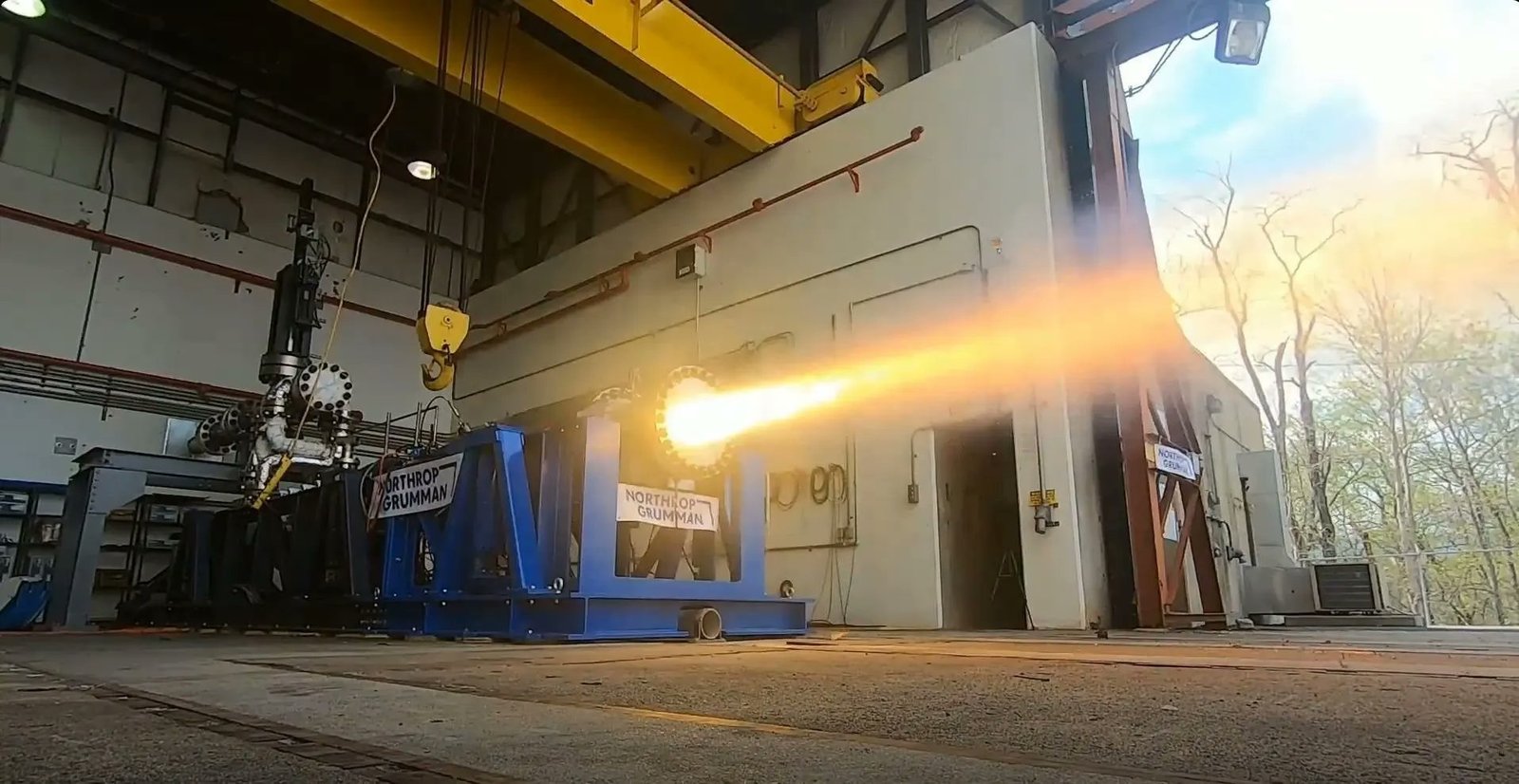
The XM30, previously known as the Optionally Manned Fighting Vehicle (OMFV), is designed for operations in high-intensity conflict environments against advanced adversaries. The vehicle introduces a new armament architecture centered on the XM913 50mm Bushmaster chain gun, produced by Northrop Grumman.
The weapon system fires 50x228mm ammunition at a rate of 100 to 200 rounds per minute and incorporates dual-feed and first-round-select functionality. It supports programmable high-explosive air-bursting munitions and armor-piercing fin-stabilized discarding sabot rounds, expanding the range of target engagement compared to legacy infantry fighting vehicles.
The vehicle is configured with a two-soldier crew and capacity for six dismounted infantry personnel. Competing designs include an uncrewed or remotely operated turret, anti-tank guided missiles, machine guns, third-generation forward-looking infrared sensors, advanced fire control systems, modular armor, and integrated active protection systems. Signature management features are also incorporated to reduce detectability.
The XM30 employs a Modular Open Systems Approach (MOSA), enabling faster integration of software updates, survivability improvements, and mission systems. It also incorporates hybrid-electric propulsion elements to reduce onboard power strain and support future capabilities such as electronic warfare payloads, counter-drone systems, and advanced sensors.
Operationally, the vehicle is designed to defeat dismounted infantry in cover, light and medium armored vehicles, missile teams, and drone-enabled threats while maintaining mobility compatible with Abrams-equipped armored brigade combat teams.
Replacement of the M2 Bradley
The XM30 program addresses limitations identified in the M2 Bradley platform, whose baseline design dates to the Cold War. The Bradley’s armament includes the 25mm M242 Bushmaster chain gun, TOW anti-tank missiles, and a 7.62mm coaxial machine gun. While the Bradley A4 variant improves mobility, power management, and onboard systems, Army assessments indicate diminishing returns from further upgrades.
Constraints in electrical power generation, internal volume, protection integration, and turret lethality have driven the requirement for a new platform. The XM30’s larger 50mm ammunition system, digital engineering framework, and increased onboard power capacity are intended to provide greater standoff range and support future system integration.
Industrial Base and Competitive Structure
The Army continues to maintain competition within the XM30 program to reduce technical and production risk. In 2023, prototype contracts valued at approximately $1.6 billion were awarded to General Dynamics Land Systems and American Rheinmetall Vehicles.
Each contractor is required to deliver prototype vehicles, ballistic hulls and turrets, armor test articles, and associated digital engineering data. These prototypes are scheduled for delivery and testing during 2026. A final downselect is expected near the Milestone C decision in early FY2028.
The $547 million procurement request for 19 vehicles serves as an initial production signal to the defense industrial base. It supports suppliers involved in subsystems, armor manufacturing, weapons integration, and electronic systems, while requiring contractors to demonstrate manufacturing readiness before full-scale production commitments.
Program Outlook
The inclusion of the XM30 as a dedicated procurement line in FY2027 reflects its status as a central element of Army modernization efforts. The initial procurement quantity is limited but establishes the program within the acquisition system and supports continued testing and validation.
With prototype deliveries scheduled for 2026 and a Milestone C decision planned for the first quarter of FY2028, the XM30 program is positioned to transition toward low-rate initial production as part of a broader effort to modernize the Army’s tracked combat vehicle fleet.
——— End of Article ———