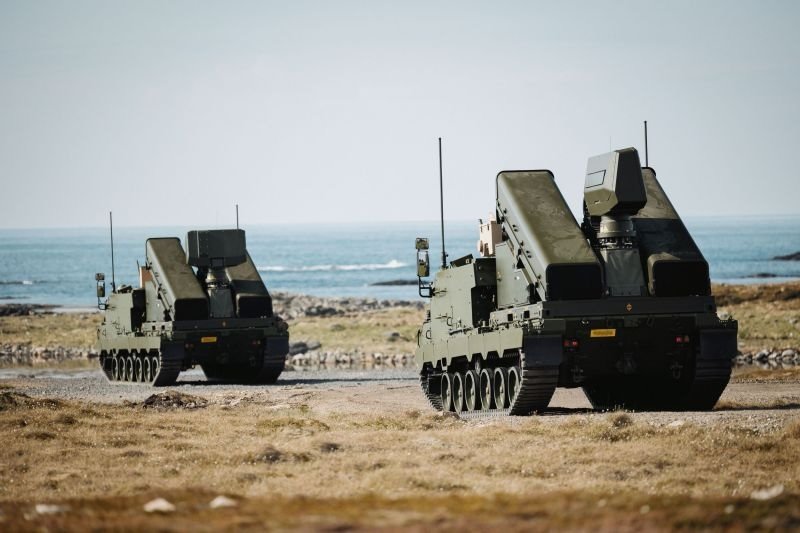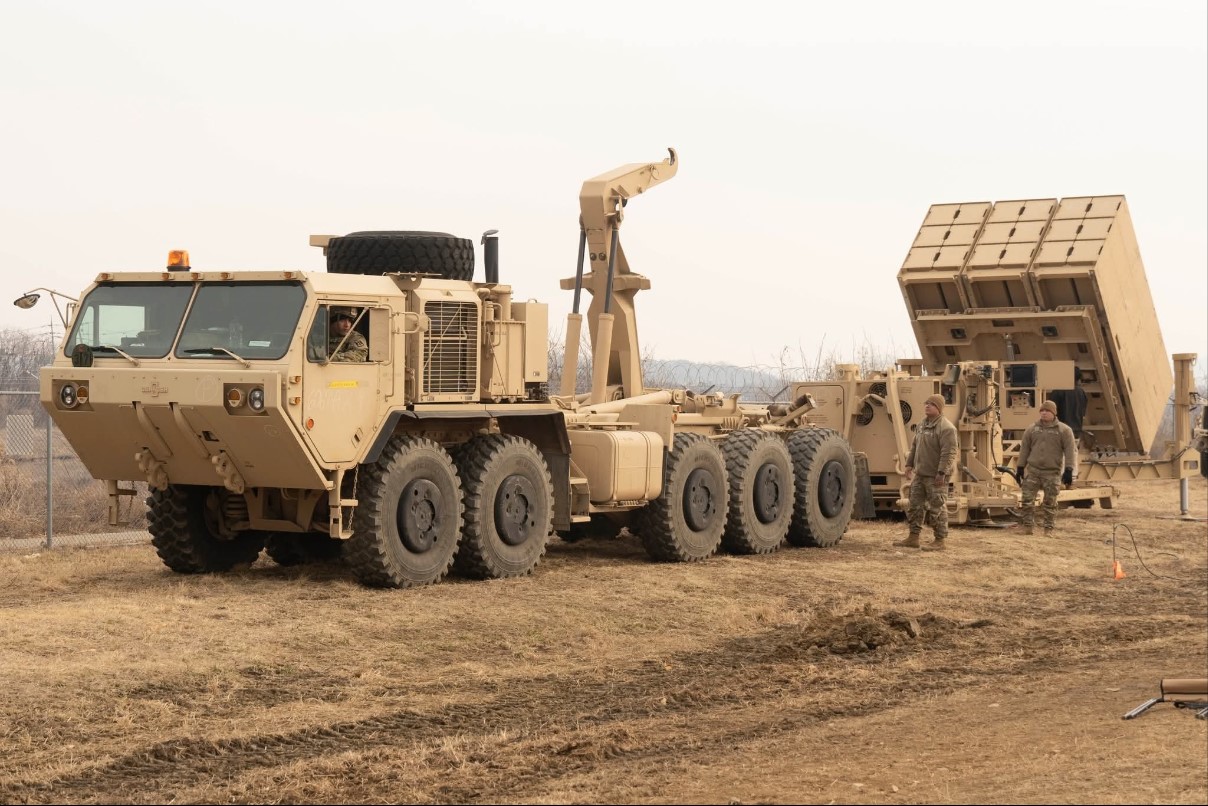
CAMP HUMPHREYS, South Korea — March 17, 2026 : The United States Army’s 35th Air Defense Artillery Brigade deployed the Indirect Fire Protection Capability Increment 2 (IFPC Inc 2) system to Camp Humphreys on March 16 as part of the ongoing Freedom Shield 2026 exercise, according to confirmation from Eighth Army. The deployment forms part of a broader effort to evaluate next-generation, network-integrated air and missile defense systems under operational conditions.
Freedom Shield 2026, conducted from March 9 to March 19, is an annual combined defensive exercise between the United States and the Republic of Korea, supported by United Nations Command. The exercise incorporates live, virtual, and field-based training across multiple domains, including ground, air, naval, cyber, space, and information operations, with a focus on improving interoperability and readiness against evolving regional threats.
Deployment and Operational Context
The IFPC Inc 2 system was deployed to a training site within Camp Humphreys to support testing of layered air defense concepts against complex, multi-vector threats. The system is designed to counter a range of aerial threats, including subsonic cruise missiles, unmanned aerial systems (UAS), rockets, artillery, and mortars, while providing protection to critical infrastructure and forward-deployed forces.
The deployment follows earlier joint drills conducted on March 11 at Osan Air Base, where Echo Battery, 6th Battalion, 52nd Air Defense Artillery Regiment coordinated with the 7th Air Force. These drills integrated Patriot and Avenger air defense systems to establish a layered defense framework aimed at improving response time, engagement coordination, and coverage against simultaneous threats.
Role Within Layered Air Defense Architecture
The IFPC Inc 2 system is intended to address a capability gap between short-range air defense (SHORAD) systems and higher-tier systems such as the Patriot and Terminal High Altitude Area Defense (THAAD). According to a March 2026 report by the Congressional Research Service, the system provides an intermediate layer capable of engaging low-altitude and low-signature threats that are not optimally handled by existing systems.
Operationally, the layered architecture demonstrated during Freedom Shield 2026 consists of three primary tiers. The long-range layer is provided by the MIM-104 Patriot system, which is capable of intercepting ballistic missiles, cruise missiles, and aircraft at extended ranges and is supported by the AN/MPQ-65 radar for multi-target tracking. The IFPC Inc 2 serves as the medium-range layer, focusing on cruise missiles and drone threats. The short-range layer is provided by the Avenger system, mounted on High Mobility Multipurpose Wheeled Vehicles (HMMWV), using FIM-92 Stinger missiles for close-in defense against low-altitude targets.
System Design and Interceptor Capabilities
The IFPC Inc 2 is built on an open system architecture and employs the “Enduring Shield” launcher, mounted on a Family of Medium Tactical Vehicles (FMTV) chassis. This modular design allows the system to integrate multiple interceptor types depending on mission requirements.
The system is compatible with the AIM-9X Sidewinder missile, which uses an imaging infrared seeker and has an engagement range of approximately 20 to 30 kilometers. The launcher utilizes an All-Up-Round Magazine (AUR-M) capable of carrying up to 18 AIM-9X interceptors, enabling rapid reload and sustained operations without direct handling of individual munitions.
In addition, the IFPC Inc 2 can deploy the AGM-114L Longbow Hellfire missile, adapted for air defense roles. This flexibility allows the system to address a diverse threat set using different engagement profiles.
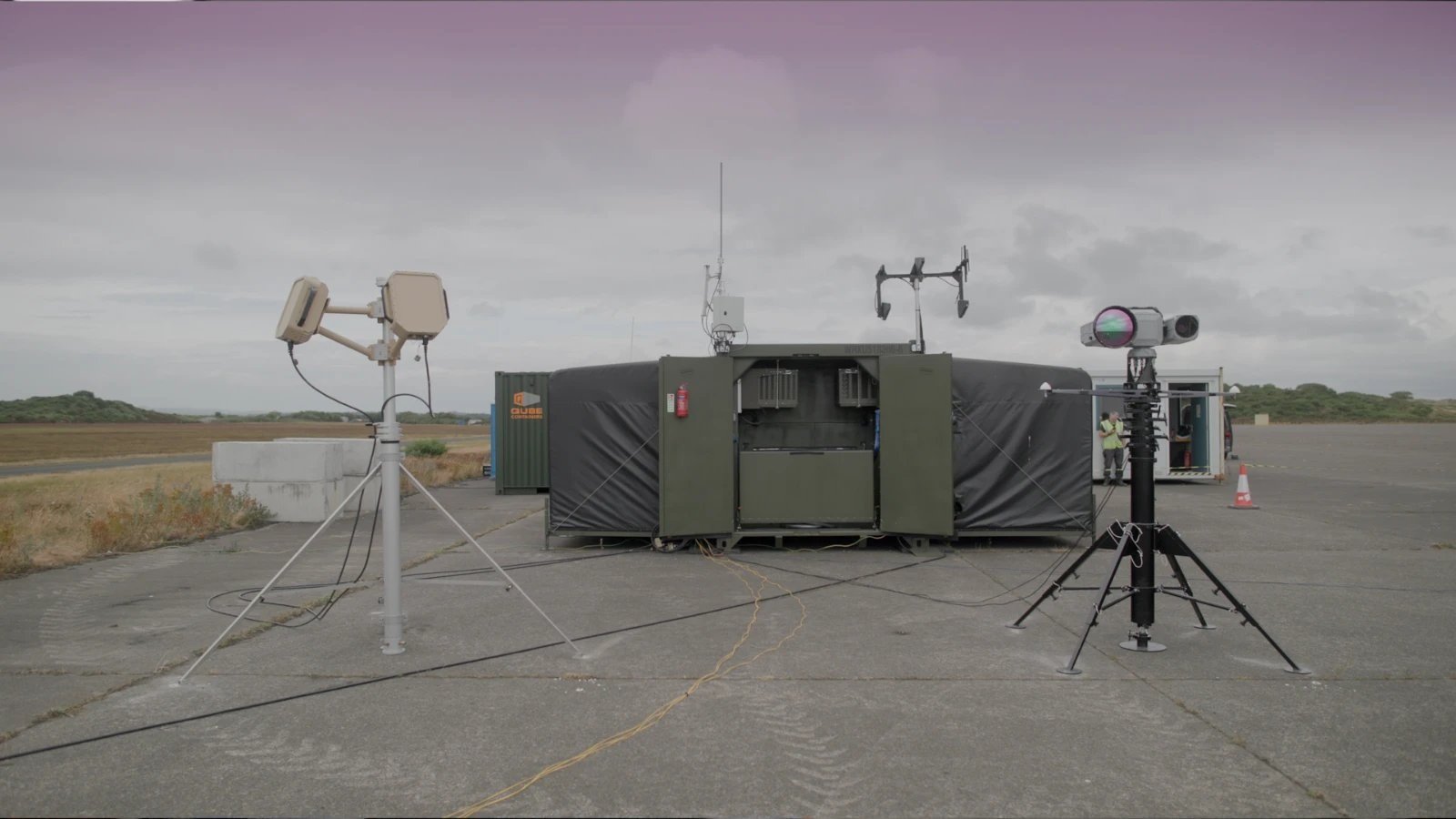
Target detection and tracking are supported by 360-degree surveillance radars such as the AN/MPQ-64 Sentinel, which can identify and track low-flying aerial threats, including small drones and cruise missiles, at ranges of several tens of kilometers.
Integration With Integrated Battle Command System
A central component of the IFPC Inc 2’s operational effectiveness is its integration into the U.S. Army’s Integrated Battle Command System (IBCS). The IBCS connects sensors, command nodes, and launchers into a unified digital network, enabling real-time data sharing across the battlespace.
The system operates on an “any-sensor, best-shooter” principle, allowing a radar or sensor to detect a target and transmit tracking data to the most appropriate interceptor system, regardless of its location. This approach reduces reliance on individual systems, shortens reaction times, and improves interceptor allocation during high-density or saturation attacks.
Strategic and Operational Significance
The deployment of the IFPC Inc 2 during Freedom Shield 2026 reflects an ongoing shift toward countering increasingly complex and layered aerial threats in the Indo-Pacific region. The system is designed to improve defense against simultaneous attacks involving drones, cruise missiles, and indirect fire systems, which present challenges to traditional air defense structures.
Recent operational experiences, including high-intensity engagements involving combined drone and missile salvos, have highlighted the importance of managing interceptor costs and availability. By assigning lower-cost interceptors to high-volume, lower-altitude threats, the IFPC Inc 2 helps preserve more advanced and limited systems such as Patriot for high-priority targets, including ballistic missiles.
The exercise at Camp Humphreys and Osan Air Base demonstrates how integrated, layered defenses supported by real-time data sharing can enhance resilience and effectiveness in contested environments. U.S. and South Korean forces continue to evaluate these systems to refine operational concepts and maintain a coordinated defense posture on the Korean Peninsula.
No additional details regarding specific test outcomes or interceptor usage during the exercise were released by Eighth Army.
——— End of Article ———