WASHINGTON — March 14, 2026 : The United States Army has deployed approximately 10,000 Merops AI-powered interceptor drones to the Middle East as part of a broader effort to counter Iranian one-way attack drones and reduce the cost burden of air defense operations during the ongoing conflict involving U.S. and Israeli forces against Iran.
U.S. Army Secretary Dan Driscoll confirmed that the systems were transferred to the region within five days after the start of joint U.S.–Israeli military operations against Iran on February 28, 2026. The deployment reflects a rapid adaptation by the Pentagon to Iran’s extensive use of low-cost unmanned aerial vehicles in regional attacks.
Cost Imbalance in Drone Warfare
The decision to deploy the Merops interceptor system is closely linked to the growing cost disparity between offensive drones and traditional air defense interceptors.
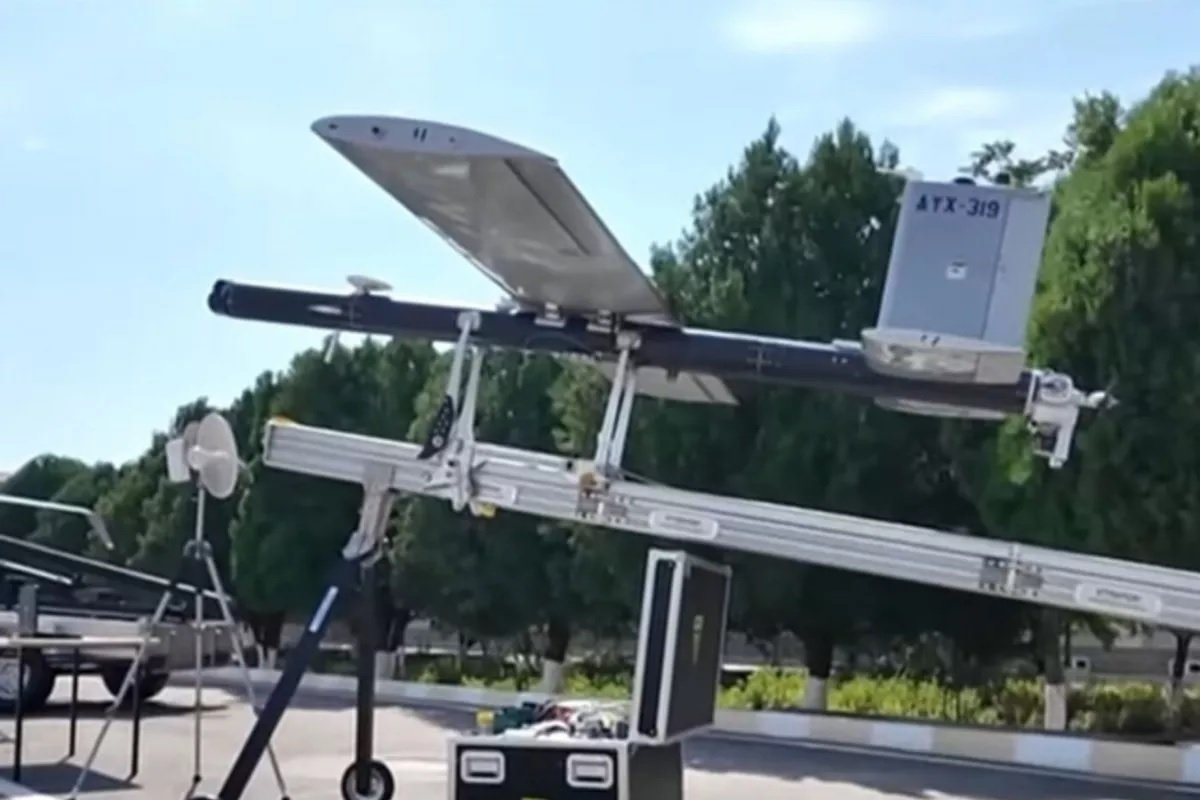
Iran and its regional partners have widely used Shahed-type one-way attack drones, which are relatively inexpensive to manufacture. Estimates place their production cost at approximately $20,000 to $50,000 per unit.
In contrast, defending against these drones with conventional missile-based systems has proven significantly more expensive. Advanced interceptors used in systems such as the Patriot air defense system can cost around $4 million per missile, while other high-tier interceptors deployed in layered air defense networks are similarly costly.
The Merops interceptor offers a lower-cost alternative. Each unit currently costs between $14,000 and $15,000, according to U.S. Army officials. With larger production orders and expanded manufacturing capacity, the cost could decline to between $3,000 and $5,000 per drone, potentially reversing the financial imbalance that has characterized recent drone engagements.
Development Under Project Eagle
The Merops system was developed under Project Eagle, a defense technology initiative supported by Eric Schmidt, the former chief executive of Google. The program focuses on scalable counter-drone technologies designed to defeat large numbers of slow-moving unmanned aircraft.
Project Eagle’s approach emphasizes rapid production, low unit cost, and mobility. The Merops system is built around a propeller-driven interceptor drone that can be transported and deployed with minimal logistical requirements.
The system is compact enough to be carried by a single soldier or transported in the rear of a midsize pickup truck, enabling flexible deployment across dispersed operational locations.
Technical Characteristics of the Merops Interceptor
The Merops interceptor is designed to engage and destroy incoming drones through autonomous targeting and interception.
The drone can reach maximum speeds of approximately 173 to 186 miles per hour, allowing it to rapidly close the distance to slow-moving targets such as Shahed-style drones. It is equipped with onboard artificial intelligence that enables it to identify, track, and intercept hostile drones even in environments where GPS or communications signals are jammed.
Sensors integrated into the system can include thermal, radar, and radio-frequency detection technologies, allowing the interceptor to locate and pursue aerial targets with minimal human control.
During engagement, the interceptor can destroy the target through direct kinetic impact or by detonating a small onboard explosive payload.
The drone is also designed with a recovery mechanism. If it fails to intercept its target, the system can deploy a parachute for controlled descent, allowing it to be recovered and reused.
Operational Experience in Ukraine
Before its deployment to the Middle East, the Merops interceptor was tested and operationally deployed in Ukraine beginning in 2024.
During combat operations against Russian forces, the system proved effective in countering Shahed-type drones used by Russia. Ukrainian forces reportedly used the interceptors to destroy more than 1,000 incoming drones, providing operational data that helped refine the system’s targeting algorithms and flight control software.
The battlefield experience in Ukraine played a significant role in the U.S. Army’s decision to expand the program and deploy the drones to other theaters facing similar threats.
In addition to Ukraine, elements of the system have also been distributed to NATO member states such as Poland and Romania to strengthen counter-drone defenses along the alliance’s eastern flank.
Rapid Deployment to the Middle East
The transfer of 10,000 interceptor drones to the Middle East occurred as the United States and Israel intensified military operations targeting Iranian military infrastructure.
Iran has relied heavily on mass drone attacks as part of its strategy in the current conflict, using relatively inexpensive unmanned aircraft to overwhelm air defenses and force opponents to expend high-value interceptors.
The Merops deployment provides an additional defensive layer intended to intercept these drones before they reach critical infrastructure, military installations, or naval forces.
According to U.S. defense officials, the Merops system can become operational within days of arriving in theater, allowing rapid integration into existing air defense networks.
Integration with Other Counter-Drone Systems
The Merops deployment is part of a broader U.S. effort to expand counter-UAS (unmanned aerial system) defenses in the region.
Alongside the interceptor drones, the United States has also deployed additional counter-drone technologies, including:
-
Bumblebee counter-drone systems, manufactured by Perennial Autonomy, which use explosive quadcopters designed to collide with hostile drones. The U.S. Army acquired these systems under a $5.2 million contract awarded in January 2026.
-
Coyote interceptor drones, produced by RTX Corporation, which are already used by U.S. forces for short-range drone defense.
These systems operate alongside traditional air defense platforms such as Patriot missile batteries and other layered air defense systems, allowing commanders to reserve high-cost missiles for more advanced threats such as ballistic or cruise missiles.
Strategic Implications
U.S. defense officials describe the deployment of the Merops interceptor as part of a broader shift toward low-cost, scalable air defense solutions designed for modern drone warfare.
The increasing use of inexpensive attack drones by multiple actors has forced militaries to reconsider the economics of air defense. By introducing relatively inexpensive interceptor drones capable of autonomous operation, the U.S. military aims to create a more sustainable defensive architecture against large-scale drone attacks.
The Middle East deployment marks the largest operational rollout of the Merops system to date, and it represents one of the most significant examples of combat technology developed in Ukraine being integrated into U.S. military operations elsewhere.
——— End of Article ———