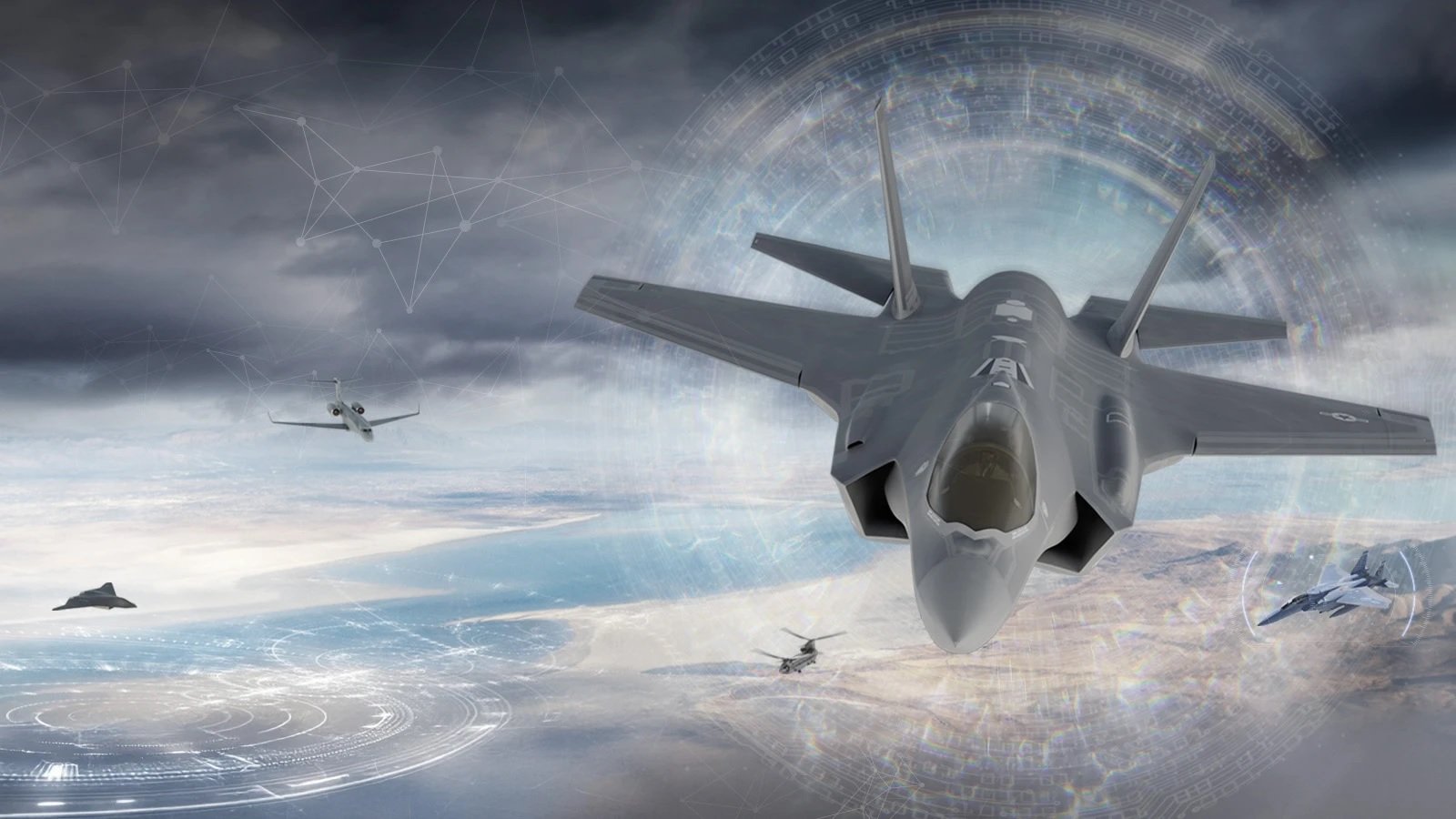
Austin, Texas — BAE Systems has delivered more than 1,500 electronic warfare (EW) systems for the F-35 Lightning II and is now shipping production systems for the fighter's Block 4 upgrade. Amber Dolan, BAE Systems' vice president of F-35 Solutions, confirmed that development and testing continue alongside production deliveries.
Block 4 Upgrades AN/ASQ-239 Electronic Warfare Suite
The Block 4 upgrade introduces new hardware and software for the F-35's AN/ASQ-239 electronic warfare suite. The system monitors radar and radio-frequency activity, helping pilots identify threats and protect the aircraft from hostile electronic and missile threats.
It supports both defensive and offensive electronic warfare, allowing the F-35 to detect, identify and monitor enemy radar and other emitters while supporting its stealth-focused operations. These capabilities are increasingly important as modern air defence systems become more advanced.
New Contract Covers F-35 Lots 20–22
In October 2026, Lockheed Martin awarded BAE Systems a contract to supply AN/ASQ-239 systems for F-35 production Lots 20 through 22, along with retrofit kits for older aircraft. The contract value and exact number of systems were not disclosed.
Previous related awards included $493 million in 2021 for Block 4 hardware development and $491 million in 2023.
BAE Systems handles the system's design, testing, integration, upgrades and long-term support. More than 1,900 employees work on the programme with Lockheed Martin and the F-35 Joint Program Office.
Expanding Production and Future Development
The systems are produced at BAE facilities in Austin, Texas, and Manchester, Merrimack and Nashua, New Hampshire. The company is expanding manufacturing capacity through factory automation and digital engineering tools to speed up production, integration and testing.
BAE is also researching long-range sensing, broad-spectrum coverage, advanced algorithms and machine learning to help the system respond to emerging radar and communication threats.
With the F-35 expected to remain in service for decades, the company is also focusing on improving the suite's reliability and simplifying maintenance.
“We’re focused on accelerating the delivery of new capabilities to the warfighter for their operational readiness,” Dolan said.
——— End of Article ———