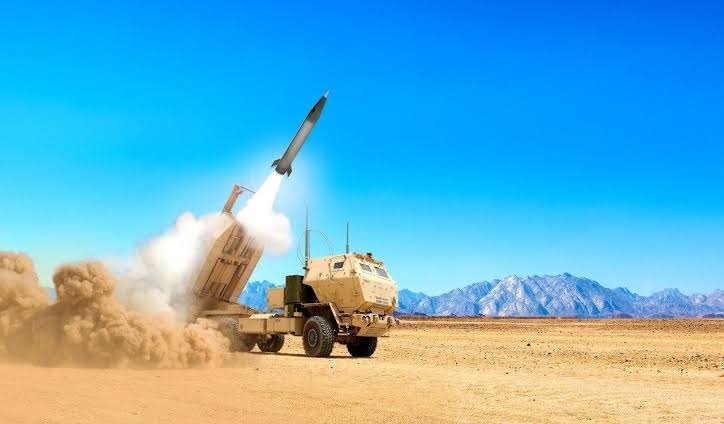
REDSTONE ARSENAL, Alabama — February 23, 2026 : The U.S. Army’s Portfolio Acquisition Executive (PAE) Fires office has announced an Industry Day for the Precision Strike Missile (PrSM) Increment 4 rapid prototyping program, initiating a competitive development effort that will culminate in a missile fly-off in the fourth quarter of fiscal year 2028.
The announcement was issued through a Special Notice published on SAM.gov on February 20, 2026. The notice outlines the Army’s plan to evaluate industry-developed prototype solutions for an extended-range precision strike capability exceeding 1,000 kilometers. The program is structured to assess flight-demonstrated performance under operationally representative conditions, including contested electromagnetic environments.
Industry Day and Solicitation Timeline
The Industry Day is scheduled for March 23–24, 2026, at Redstone Arsenal, Alabama. The event will provide classified briefings at the Secret level on technical, structural, and operational requirements for Increment 4. Due to the sensitivity of the material, personal electronic devices will be prohibited inside briefing areas. Registration responses are due by March 13, 2026.
Following the Industry Day, the Army expects to release a formal Request for Solutions (RFS) in April 2026. The Special Notice clarifies that the Industry Day is informational and does not constitute a formal solicitation or contract award.
The selection process will follow a two-step competitive approach. The first phase will require submission of high-level technical concepts. Selected participants will then submit comprehensive prototype proposals. Developers of successful prototypes may receive follow-on production awards without additional competition, consistent with statutory authorities governing prototype programs.
Development Phases and Fly-Off Evaluation
The Increment 4 program is organized into four phases:
Phase I will focus on architectural research and concept refinement, funded through fiscal year 2026 research and development accounts.
Phase II will involve operational prototype demonstrations during the competitive fly-off in late FY 2028. Participants must flight-demonstrate a closed-loop lethal extended-range capability, validating targeting accuracy, seeker performance, and system viability.
Phase III will cover system qualification testing.
Phase IV may result in production awards for successful performers.
The FY 2028 fly-off will serve as the central evaluation event, requiring full flight demonstrations rather than paper-based technical assessments.
Range Expansion and Propulsion
PrSM Increment 4 is designed to more than double the range of Increment 1, which currently exceeds 500 kilometers and is in full-rate production. The Increment 4 requirement establishes an operational reach beyond 1,000 kilometers.
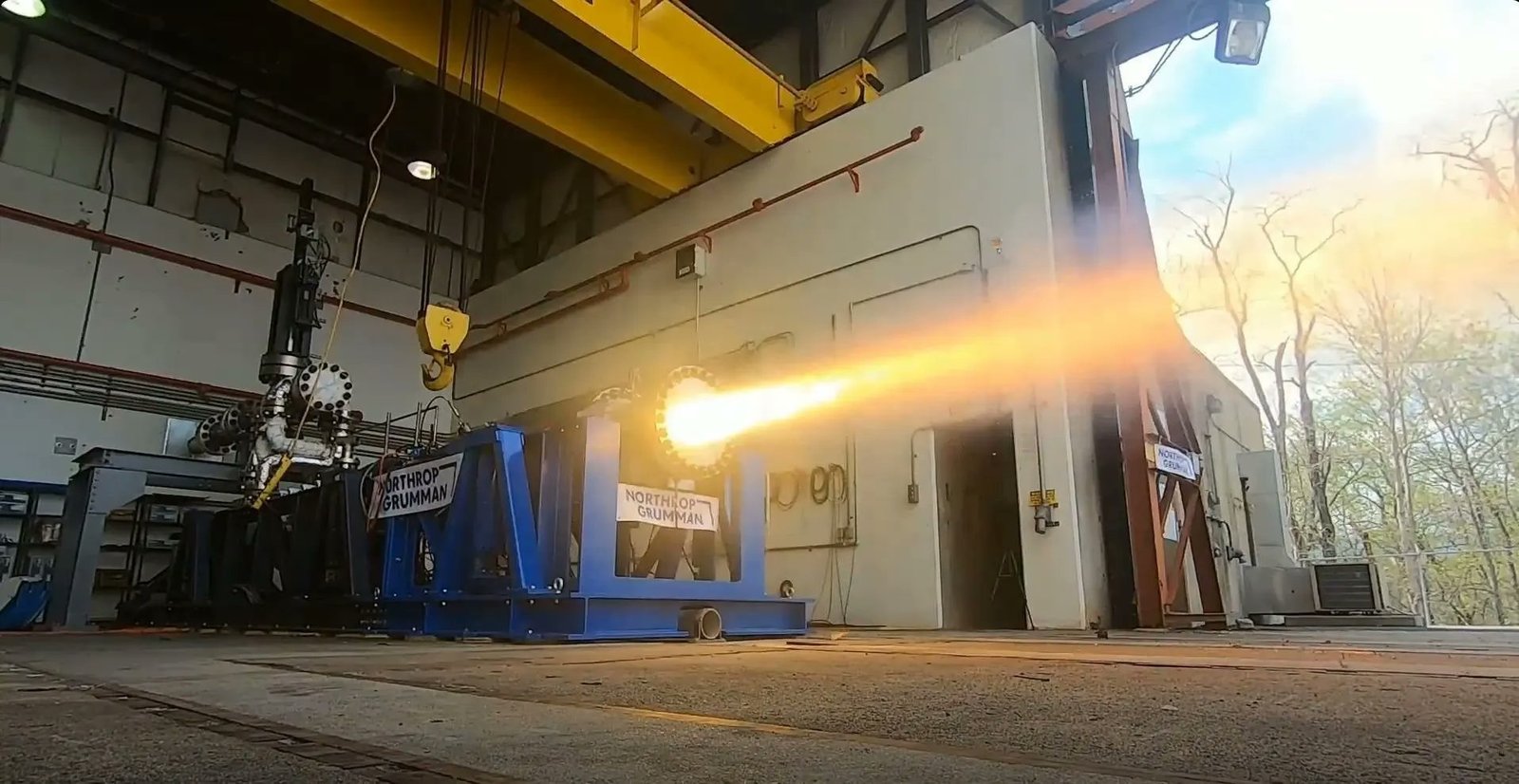
To achieve this extended range without altering external missile dimensions, the design incorporates advanced propulsion technologies, including consideration of dual-mode ramjet systems. The missile must retain compatibility with existing launcher pod missile containers, maintaining two rounds per Launcher Pod Missile Container (LPMC).
The first flight test for Increment 4 is planned for 2026. Testing may include long-range demonstrations in Australia to validate extended-distance performance.
Targeting Requirements and Seeker Technology
Increment 4 is intended to engage stationary, relocated, and moving targets across both maritime and land domains. The system must operate effectively in anti-access/area denial environments where GPS signals may be jammed, degraded, or denied.
The missile will incorporate a multi-mode seeker combining radio frequency and imaging infrared technologies. The requirement specifies independent targeting capability without reliance on standard Global Positioning System (GPS) guidance. A terminal seeker is included for moving target prosecution, and the design emphasizes greater velocity and responsiveness compared to earlier increments.
The Army has mandated adoption of a Modular Open Systems Approach (MOSA) for Increment 4. The architecture must provide open interface standards with government purpose rights for interface data to enable rapid technology upgrades and prevent vendor lock-in.
Launcher Compatibility
Increment 4 must remain compatible with current Army launch platforms, including:
-
M142 HIMARS
-
M270 Multiple Launch Rocket System
-
Autonomous Multi-Domain Launcher
Despite extended range and advanced propulsion, the missile must not require changes to launcher dimensions or pod configurations.
Relationship to Earlier Increments
The Precision Strike Missile program serves as the successor to the Army Tactical Missile System, replacing the legacy deep-strike capability with a modular, longer-range system.
Increment 1 features a range of 499+ kilometers with a unitary warhead and is currently in full-rate production. The Army plans to procure 3,986 Increment 1 missiles.
Increment 2, also referred to as the Land-Based Anti-Ship Missile, extends range up to 1,000 kilometers and incorporates a multi-mode seeker for moving maritime and relocatable land targets. Procurement of Increment 2 begins in fiscal year 2026, with initial operational capability targeted for fiscal year 2030. The Army Acquisition Objective for Increment 2 is 1,589 missiles.
Increment 3 is focused on increased lethality enhancements, while Increment 4 extends range beyond 1,000 kilometers and integrates advanced propulsion and terminal guidance technologies.
Budget and Procurement Details
In the fiscal year 2026 budget request, the Army allocated $363.662 million for procurement of 45 PrSM missiles, including 35 Increment 1 and 10 Increment 2 units, along with associated launcher pod missile containers.
This represents a reduction from the fiscal year 2025 allocation of $457.509 million due to lower procurement quantities. The unit cost for Increment 2 is approximately $5.353 million, covering recurring and non-recurring production costs, system engineering, support equipment, and related expenses.
Production capacity for Increment 1 and Increment 2 shares a maximum throughput of 400 missiles annually. Lockheed Martin, based in Dallas, Texas, serves as the manufacturer for earlier increments.
Additional funding includes $54.005 million for HIMARS modifications to support PrSM integration. These upgrades address system obsolescence, enhance fire control compatibility with current and future munitions, and include procurement of retrofit kits, GPS jamming protection, and adapter groups.
Operational Context
The PrSM Increment 4 initiative supports the Army’s objective to field extended-range land-based precision fires capable of influencing maritime operations and holding distant targets at risk without forward deployment of naval or air assets. The capability is aligned with Joint All-Domain Operations requirements and is intended to operate in regions characterized by advanced air defenses and contested electromagnetic environments.
The rapid prototyping structure, competitive fly-off evaluation, and MOSA-based architecture are designed to accelerate capability delivery while maintaining open-system flexibility for future upgrades.
——— End of Article ———