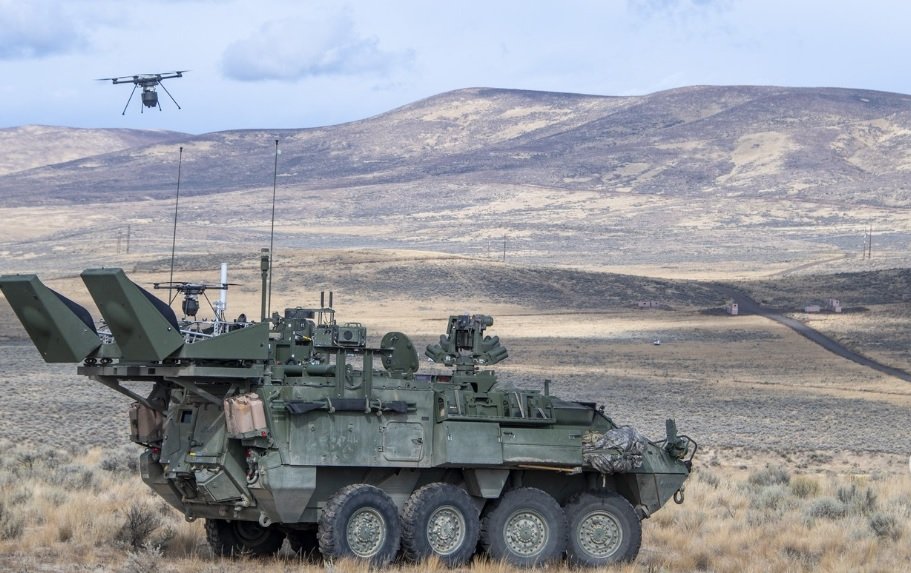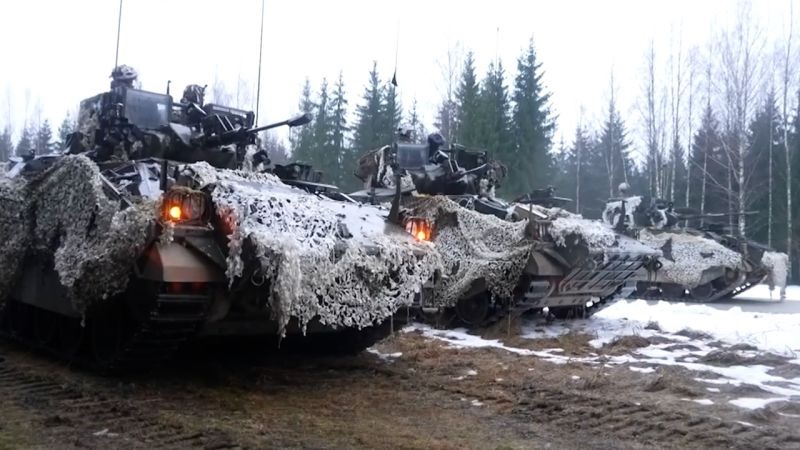
TAPA, Estonia : U.S. Army cavalry units assigned to the U.S. Army’s 1st Cavalry Division conducted mounted maneuver operations at Estonia’s Tapa Training Area on January 31, 2026, as part of NATO’s annual Winter Camp exercise, according to official military statements.
The activity took place at the Tapa Training Area, one of the Baltic region’s primary multinational training facilities. Soldiers from the 6th Squadron, 9th Cavalry Regiment participated in vehicle-based tactical maneuvers designed to support Winter Camp, a recurring NATO exercise focused on interoperability and operational readiness in cold-weather environments.
The January 31 operation was conducted under winter conditions typical of northern Europe, including snow-covered ground, sub-freezing temperatures, and limited daylight. These conditions were used to replicate the environmental challenges NATO forces would face during real-world operations in the region.
Role as Opposing Forces
For this iteration of Winter Camp, the U.S. cavalry squadron was assigned the role of opposing force (OPFOR). In this capacity, the unit acted as a simulated adversary for allied formations from France and the United Kingdom also participating in the exercise.
According to the U.S. Army, the OPFOR mission required the cavalry unit to conduct mounted reconnaissance-style movements, rapid repositioning, and tactical engagements intended to test allied responses. French and British forces were tasked with detecting, tracking, and responding to these maneuvers while maintaining coordination across national command structures.
Interoperability and Command Coordination
A central objective of Winter Camp is improving interoperability among NATO members. During the exercise, allied units practiced integrated command and control procedures, shared communications systems, and synchronized maneuver planning. The interaction between U.S., French, and British forces was structured to ensure compatibility at the tactical level, particularly in fast-moving, vehicle-centric operations.
Military officials noted that the exercise placed emphasis on standardized NATO procedures, including reporting formats, engagement protocols, and battlefield coordination, all conducted under the constraints imposed by cold-weather operations.
Cold-Weather Operations Focus
Winter Camp is specifically designed to enhance NATO’s ability to operate in severe winter climates. The mounted maneuvers conducted at Tapa included movement over frozen and uneven terrain, vehicle recovery drills, and sustainment planning under cold conditions.
The U.S. Army stated that these activities were intended to confirm that personnel, vehicles, and support systems remain effective during winter operations in the Baltic region. Particular attention was given to vehicle mobility, maintenance requirements, and crew endurance in low temperatures.
U.S. Command Structure in Europe
U.S. participation in the exercise was conducted under the authority of V Corps, which maintains a forward headquarters in Europe. V Corps is responsible for providing command and control for U.S. Army forces operating across the continent and supporting NATO missions.
Officials indicated that the involvement of V Corps in Winter Camp reflects ongoing U.S. efforts to maintain readiness and support allied forces through regular multinational training events.
Estonia’s Role in NATO Training
Estonia continues to serve as a key location for NATO training and readiness activities. The Tapa Training Area, located roughly 80 kilometers east of the capital, Tallinn, regularly hosts rotational forces from multiple NATO member states.
The facility is used to train multinational battle groups and is positioned to support exercises focused on collective defense and rapid reinforcement. Its frequent use underscores Estonia’s role in facilitating allied training near NATO’s eastern border.
Military officials stated that exercises such as Winter Camp are intended to ensure that NATO forces can integrate effectively, operate under challenging environmental conditions, and maintain consistent readiness across all seasons.
——— End of Article ———