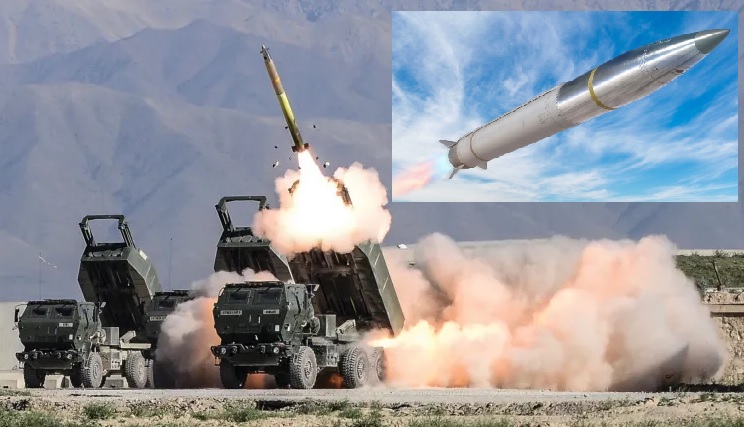
WASHINGTON, — April 2, 2026 : The U.S. Department of State has approved a possible Foreign Military Sale (FMS) to the Government of Singapore involving Guided Multiple Launch Rocket System (GMLRS) Alternative Warhead munitions and associated support equipment, with an estimated value of $83.14 million. The approval was formally notified to Congress on April 1.
The proposed package includes forty-five (45) M30A2 GMLRS Alternative Warhead pods, each containing six rockets, bringing the total number of munitions to 270. In addition to the rockets, the sale covers telemetry kits, engineering services, technical assistance, and other elements of logistics and program support. The principal contractor for the program is Lockheed Martin, based in Bethesda, Maryland.
Procurement Scope and Structure
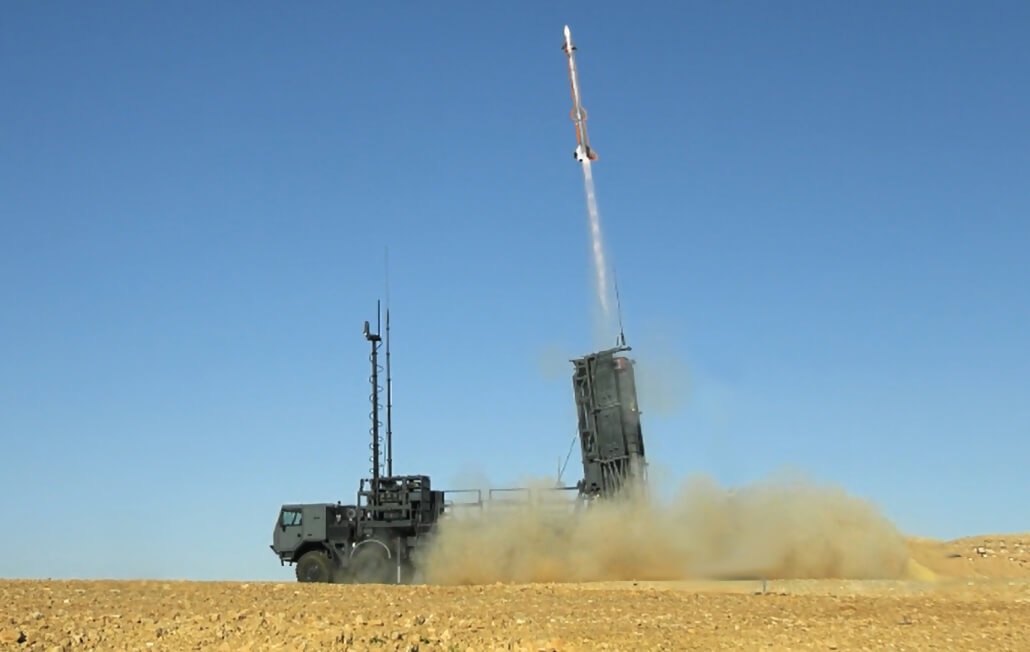
The acquisition is focused on expanding Singapore’s existing inventory of precision-guided rockets without increasing the number of launch platforms. The Singapore Armed Forces will integrate the new munitions into their current High Mobility Artillery Rocket System (HIMARS) fleet, maintaining the same operational structure while enhancing firepower.
The procurement consists of:
-
45 M30A2 Alternative Warhead rocket pods
-
270 total rockets ready for deployment
-
Supporting systems including telemetry, logistics, and technical services
This approach allows Singapore to increase its strike capacity without requiring new launcher procurement, infrastructure expansion, or additional personnel training.
Technical Characteristics of the M30A2
The M30A2 represents the current production configuration of the GMLRS Alternative Warhead (AW), which entered production in 2019 with the integration of the Insensitive Munitions Propulsion System (IMPS). The rocket has a range exceeding 70 kilometers and is designed to engage area targets or imprecisely located threats.
The munition uses a combination of inertial measurement unit (IMU) and GPS guidance, sharing the same rocket motor, control systems, and guidance architecture as the unitary GMLRS family, including the M31 series.
Unlike earlier cluster munition variants, the M30A2 employs a 200-pound high-explosive warhead containing approximately 160,000 to 182,000 preformed tungsten fragments. Upon detonation, the fragments produce a wide-area effect suitable for targeting dispersed formations such as troop concentrations, light vehicles, air-defense systems, and command posts. The design eliminates the risk of unexploded ordnance (UXO) associated with legacy Dual-Purpose Improved Conventional Munition (DPICM) systems.
Accuracy and Operational Testing
Testing data from U.S. military evaluations indicates that the M30A2 significantly exceeds required accuracy thresholds. Contractor specifications set a circular error probable (CEP) of less than 15 meters.
-
Production qualification testing recorded a median miss distance of 2.1 meters
-
Developmental and operational testing recorded a median miss distance of 2.7 meters
-
The system maintained mission effectiveness under GPS-jamming conditions
These results confirm the munition’s precision and resilience in electronically contested environments.
Integration with Singapore’s HIMARS Fleet
Singapore currently operates 24 M142 HIMARS launchers under the 23rd Battalion, Singapore Artillery. The systems were acquired through a 2007 Foreign Military Sale, with deliveries beginning around 2010 and full operational capability achieved by 2011.
The HIMARS platform is a mobile, networked artillery system capable of firing the full family of MLRS munitions. Operational characteristics include:
-
Readiness to fire in under 20 seconds
-
Launch of a full six-rocket pod within 45 seconds
-
Road mobility with speeds up to 94 km/h
The system’s “shoot-and-scoot” capability enables rapid engagement and repositioning, enhancing survivability and responsiveness. Integration with Singapore’s digital battlefield management systems allows coordinated targeting and rapid execution of fire missions.
Capability Expansion and Operational Role
The introduction of the M30A2 provides Singapore with a precision area-effects capability that complements its existing inventory of M31 unitary GMLRS rounds, which are optimized for point targets.
With both munition types available, a single HIMARS battery can engage a broader target set, including:
-
Dispersed troop formations
-
Artillery positions
-
Air-defense detachments
-
Staging and logistics areas
-
Command and control nodes
This layered capability aligns with Singapore’s operational doctrine, which emphasizes rapid, networked fires and decisive engagement due to limited strategic depth.
Acquisition History and Context
Singapore has developed its GMLRS capability incrementally over the past two decades. Key milestones include:
-
2007: Initial FMS approval for HIMARS launchers and early acquisitions of unitary rockets
-
2011–2012: Additional purchases of unitary GMLRS munitions
-
2013: Official notification for 88 M31 unitary high-explosive pods
-
2021: U.S. Selected Acquisition Reports (SAR) indicated production contracts supporting Singapore following the introduction of M30A2 and M31A2 variants
While earlier reports suggested Singapore may have been included in broader production batches, the April 2026 notification represents the first clearly documented public acquisition of the M30A2 Alternative Warhead variant.
Strategic and Program Implications
The proposed sale enhances Singapore’s defensive capabilities and supports its ability to address current and future threats. It also strengthens interoperability with U.S. forces by aligning munitions, logistics, and operational frameworks.
The transaction does not include the Extended-Range GMLRS (ER-GMLRS), which offers a range of approximately 150 kilometers and remains under a separate development and procurement track. By focusing on the standard GMLRS-AW variant, the acquisition maintains the existing range profile and avoids transitioning into longer-range missile categories such as the Army Tactical Missile System (ATACMS) or the Precision Strike Missile (PrSM).
The sale is structured to ensure seamless integration into Singapore’s existing HIMARS and GMLRS infrastructure. No additional basing, training, or system modifications are required, allowing for immediate operational utility upon delivery.
According to the U.S. government, Singapore is expected to have no difficulty absorbing the equipment and services into its armed forces. The transaction is also assessed as contributing to regional stability while maintaining the current balance of launcher capabilities in the region.
——— End of Article ———