WASHINGTON — March 7, 2026 : The United States has approved an emergency Foreign Military Sale to Israel valued at approximately $151.8 million, authorizing the transfer of 12,000 BLU-110A/B 1,000-pound general-purpose bomb bodies along with associated logistics and technical support. The decision was made under emergency provisions that allow the U.S. government to bypass the standard congressional review process.
The approval was formally announced by the U.S. Department of State and implemented through the Defense Security Cooperation Agency (DSCA), which manages U.S. foreign military sales programs.
Emergency Authorization and Congressional Waiver
According to the State Department notification, Marco Rubio determined that an emergency exists requiring the immediate sale of the munitions to Israel. The determination invoked emergency authorities under Section 36(b) of the Arms Export Control Act, allowing the administration to waive the normal 30-day congressional notification and review period that typically applies to major foreign arms transfers.
Officials stated that the accelerated approval was justified by ongoing regional security conditions and the need to support Israel’s defense requirements. The State Department said the sale is intended to improve the capabilities of a strategic regional partner, strengthen Israel’s homeland defense, and enhance deterrence against current and future threats in the Middle East.
The approval comes amid continuing regional hostilities involving Iran and affiliated armed groups across multiple theaters.
Composition of the Munitions Package
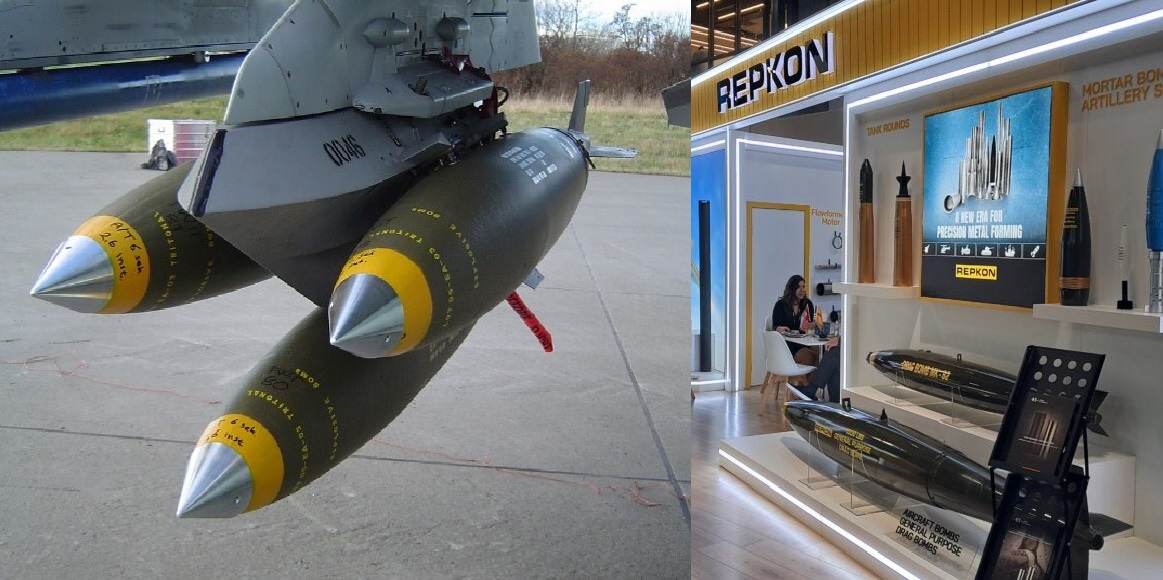
The central component of the package is the transfer of 12,000 BLU-110A/B general-purpose bomb bodies, which fall within the 1,000-pound class of air-delivered munitions. The BLU-110 is structurally similar to the Mark 83 bomb, a widely used member of the MK‑80 series bomb family, but it is filled with PBXN-109 thermally insensitive explosive designed to reduce the risk of accidental detonation during storage and handling.
The BLU-110 bomb body itself is an unguided free-fall munition component. In operational use it is typically integrated with precision guidance kits to form guided weapons. The bomb body can be paired with satellite-guided Joint Direct Attack Munition (JDAM) kits or laser-guided Paveway laser‑guided bomb kits, enabling aircraft to conduct precision strikes against ground targets.
The current sale package includes only the bomb bodies and does not include guidance kits, fuzes, or additional targeting components.
In addition to the munitions themselves, the $151.8 million package includes U.S. government and contractor engineering services, logistics support, and technical assistance, as well as other related program and sustainment support required for operational integration.
Supply Sources and Production Arrangements
Part of the 12,000-unit requirement will be supplied directly from existing U.S. military stockpiles, while the remaining bomb bodies will be manufactured specifically for the order.
The principal contractor responsible for producing newly manufactured units is Repkon USA, which operates a production facility in Garland, Texas.
Repkon USA is the American subsidiary of the Turkish defense engineering firm Repkon. The company acquired the Garland facility in March 2025, and the site is currently the only manufacturing facility in the United States capable of producing MK-80 series bomb bodies, including the BLU-110 variant.
The facility manufactures heavy steel bomb casings that are later filled with explosive material and integrated into complete air-delivered munitions.
Supply Chain Context and International Dimensions
The involvement of Repkon USA has drawn attention from defense observers due to its corporate ties to a Turkish parent company. Turkey has in recent years maintained diplomatic and economic restrictions affecting trade with Israel.
Despite that broader political context, the manufacturing work for this sale will occur through the U.S.-based subsidiary operating under American defense contracting regulations.
Defense analysts note that such arrangements illustrate the interconnected structure of the global defense manufacturing sector, where supply chains often involve multinational ownership structures even when production takes place inside the United States.
Role in Israel’s Air-Delivered Strike Capabilities
The BLU-110 bomb body is widely used by modern combat aircraft once fitted with precision guidance kits. When combined with JDAM or laser guidance systems, the munition can be employed for precision air-to-ground strike missions against fortified structures, infrastructure targets, and military installations.
The bomb body’s thermally insensitive explosive fill is designed to improve safety in storage and transportation while maintaining the explosive performance required for military operations.
According to the State Department notification, the sale is intended to support Israel’s ability to address ongoing operational requirements and maintain readiness against regional threats.
Implementation Through the Foreign Military Sales Program
The transfer will be conducted under the U.S. Foreign Military Sales (FMS) program, the government-to-government framework through which the United States supplies defense equipment and services to allied nations.
Further implementation details—including delivery timelines and the exact distribution between stockpile transfers and newly manufactured units—have not been publicly specified in the approval notice. Program management and coordination for the sale will be handled through the Defense Security Cooperation Agency in coordination with U.S. defense contractors and Israeli defense authorities.
The emergency approval allows the procurement process to move forward immediately without the standard congressional review period, enabling accelerated delivery of the bomb bodies and associated support services to Israel.
——— End of Article ———