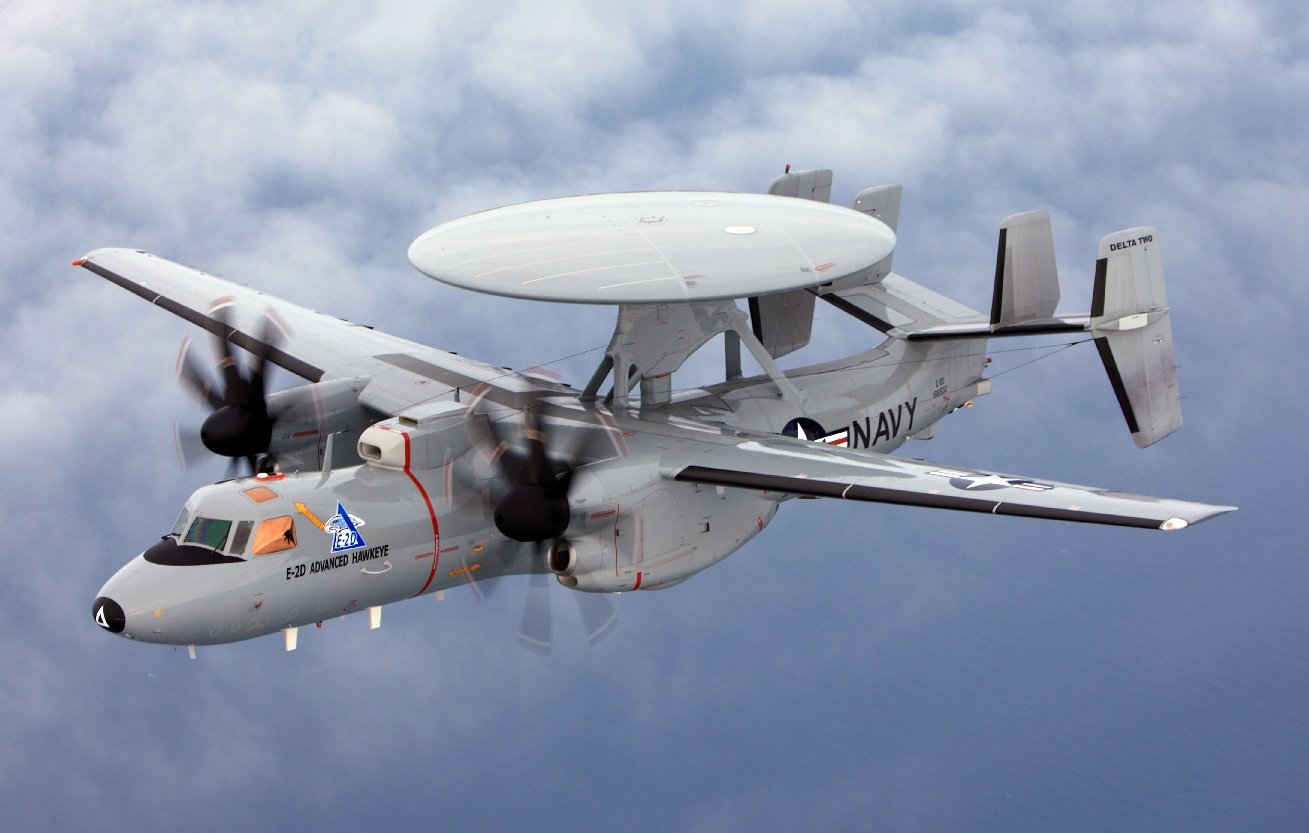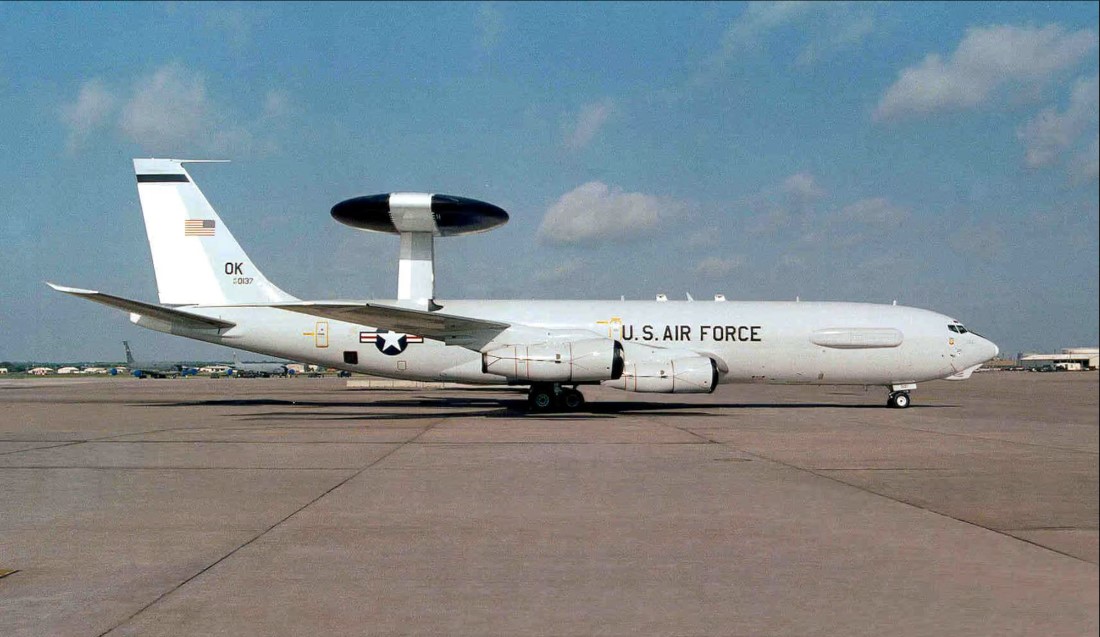
Middle East : The United States Air Force (USAF) has deployed six E-3G Sentry Airborne Warning and Control System (AWACS) aircraft from the continental United States and Alaska to Europe over the past 24 hours, according to flight tracking data and defense observers. The movement is assessed as a staging step before the aircraft proceed to bases under U.S. Central Command (CENTCOM) in the Middle East.
Two E-3G aircraft, operating under the callsigns DENALI 01 and DENALI 02, departed from Elmendorf Air Force Base in Alaska and arrived at RAF Mildenhall in the United Kingdom. Four additional E-3Gs, identified as SHUCK 83, SHUCK 84, SHUCK 85, and SHUCK 86, flew from Tinker Air Force Base in Oklahoma to Ramstein Air Base in Germany.
The scale and timing of the deployment indicate a shift in U.S. force posture as the broader military buildup linked to the Middle East accelerates. Historically, large AWACS deployments of this size have served as late-stage indicators preceding sustained air operations, as these aircraft provide the airborne command-and-control structure required to manage complex, high-tempo missions.
European Staging as an Operational Step
Routing the aircraft through Europe reflects standard operational logistics for long-distance deployments. Moving large, mission-configured aircraft from North America to the Middle East requires intermediate staging locations to support aerial refueling, maintenance checks, and crew rest cycles. European bases, including RAF Mildenhall and Ramstein Air Base, function as established transit hubs for USAF movements into the CENTCOM area of responsibility.
Temporary staging in Europe also allows planners to sequence the integration of additional aircraft into Middle Eastern bases. This ensures that aerial refueling tankers, fighter squadrons, base infrastructure, and airspace management arrangements are fully prepared before the AWACS arrive. Holding the aircraft in Europe provides flexibility while reception capacity and support elements in theater are aligned.
E-3G Sentry Capabilities
The E-3G Sentry serves as an airborne early warning platform and battle management center. The aircraft features a rotating radar dome mounted above the fuselage and incorporates upgraded computing systems and battle management software under the Block 40/45 modernization program.
Key capabilities include:
-
Wide-area surveillance: The radar system can detect and track more than 600 targets simultaneously at ranges of up to approximately 400 kilometers.
-
Battle management and command: The aircraft directs fighter aircraft, coordinates offensive and defensive counterair missions, manages airspace deconfliction, and integrates data from multiple sensors and platforms.
-
Look-down capability: The pulse-Doppler radar enables detection of targets flying at low altitude by filtering ground clutter, allowing operators to track aircraft and missiles flying close to terrain.
In scenarios involving Iran, the E-3G provides early warning against low-flying threats, including cruise missiles and one-way loitering munitions. Iran’s military doctrine incorporates asymmetric systems that operate at low altitude to reduce detection by ground-based radar limited by terrain masking and the curvature of the earth. Operating at high altitude, the E-3G extends radar coverage and can detect and track low-radar-cross-section targets at extended ranges, cueing interceptors for engagement.
Broader Aircraft Movements
The AWACS deployment forms part of a wider transfer of more than 120 U.S. military aircraft toward the Middle East. The buildup includes F-22 Raptors, F-35A Lightning II fighters, F-16 multirole aircraft, and dozens of KC-135 and KC-46 aerial refueling tankers.
While there is no fixed numerical cap on U.S. force deployments, several operational constraints shape the scale and duration of the buildup.
Base infrastructure limitations: Installations in the region, including Muwaffaq Salti Air Base in Jordan, have finite ramp space, runway throughput, fuel storage, and maintenance facilities. As primary operating bases approach capacity, aircraft must be distributed across additional allied locations, increasing logistical complexity.
Dependence on aerial refueling: Sustained operations by fighters and AWACS rely on continuous support from KC-135 and KC-46 tankers. High sortie rates require coordinated tanker scheduling, airspace management, and fuel supply chains.
Sustainment requirements: Extended high-tempo operations demand steady flows of spare parts, munitions, maintenance personnel, and support equipment. Deployment endurance is influenced by the ability to maintain readiness levels without overextending forward-deployed units.
With the arrival of the six E-3G aircraft in Europe, the United States has positioned the airborne command-and-control assets necessary to manage large numbers of tactical aircraft. Their forward movement would complete the command infrastructure required to oversee coordinated air operations within the CENTCOM theater.
——— End of Article ———