WASHINGTON — The U.S. Air Force has launched a new effort to expand competition for fighter aircraft engines, seeking new manufacturing partners as it works to address production delays, quality control issues, and supply chain challenges affecting several military aviation programs.
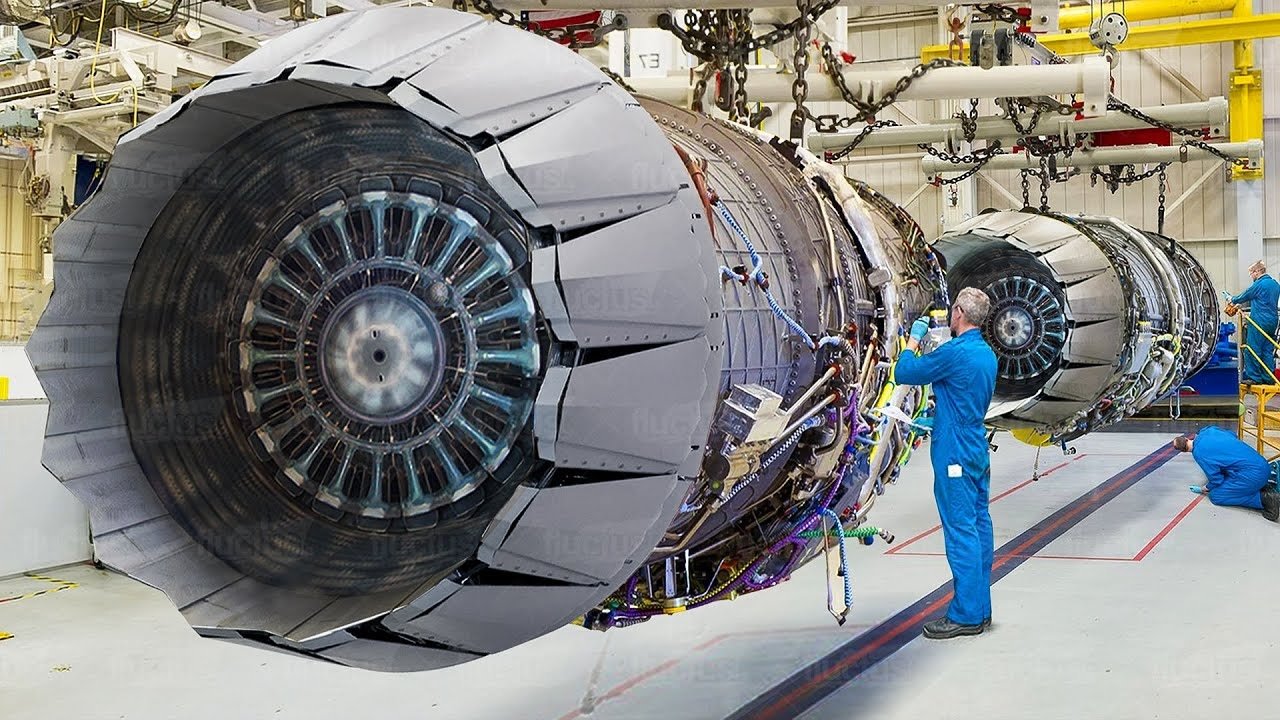
The Air Force recently issued a Request for Information (RFI) inviting industry feedback on future fighter engine production. Responses are due by Aug. 28, and the information gathered will help shape the service's long-term acquisition strategy for engines used in the Boeing F-15EX Eagle II and Lockheed Martin F-16 Fighting Falcon.
According to the RFI, the current defense industrial base is facing significant challenges, including production delays, quality control issues, critical obsolescence, diminishing manufacturing sources, and shortages of raw materials required for key engine components.
"The government will pursue a strategic competition requiring industry to innovate manufacturing and guarantee supply chain resiliency," the RFI states.
Air Force Plans Long-Term Engine Procurement
The Air Force expects demand for more than 180 fighter engines annually by 2034 and is preparing a multiyear procurement strategy designed to strengthen manufacturing capacity and improve long-term supply stability.
The procurement effort covers engines for both U.S. Air Force requirements and Foreign Military Sales (FMS) programs. The F-15EX and F-16 fleets have traditionally used Pratt & Whitney F100 or GE Aerospace F110 engines.
As part of the new approach, the Air Force intends to increase industrial competition while encouraging manufacturers to invest in production capability and supply chain resilience.
Engine Programs Continue to Face Delays
The procurement initiative follows continuing engine-related problems across several major Air Force programs.
A 2025 Government Accountability Office (GAO) report found that the F-35 Lightning II engine contractor continued to miss contract performance requirements after two decades of production.
According to the report, Pratt & Whitney delivered all 123 F-35 engines late in 2024, with an average delivery delay of 155 days, compared with 68 days in 2023. Aircraft deliveries were also delayed by an average of 238 days during 2024.
The Air Force's B-52 Commercial Engine Replacement Program has also experienced significant delays. A July 2026 GAO report stated that the program, which will install Rolls-Royce F130 engines, has seen costs increase by approximately $3 billion. The report also found that initial operational capability has slipped by more than 15 months, while overall engine program costs have increased by more than 38 percent since 2018, with initial operational capability now projected for 2033.
New Procurement Strategy Focuses on Lifecycle Performance
To improve future engine programs, the Air Force has outlined five foundational pillars that will guide its new procurement and sustainment approach.
Rather than focusing primarily on the initial purchase price, future acquisitions will place greater emphasis on an engine's total lifecycle cost, including reliability, maintenance requirements, long-term support, and operational performance.
The Air Force said future suppliers will be expected to deliver propulsion systems that are more capable, more reliable, and lower in cost while supporting a stronger industrial base.
"We will implement an acquisition strategy that prioritizes ease of maintenance and establishes a resilient, sustainable supply chain from day one," the Air Force said.
Officials said the objective is to reduce maintenance demands, improve logistics efficiency, minimize aircraft downtime, and ensure a steady supply of replacement parts to support flightline readiness.
Industry Must Demonstrate Production Capacity
The RFI requires prospective suppliers to demonstrate that they can meet stringent producibility requirements and rapidly increase production to support both U.S. military requirements and Foreign Military Sales customers.
Companies have been asked to provide information on engine development and manufacturing timelines, along with the minimum production volume needed to justify private investment in advanced automation, facility expansion, and tooling modernization.
The Air Force is also seeking details on how these investments could reduce long-term unit costs while improving manufacturing efficiency.
Supply Chain Risks Remain a Key Concern
The Air Force is placing particular emphasis on supply chain resilience as global competition for critical materials continues to grow.
Manufacturers responding to the RFI have been asked to identify major production bottlenecks that could limit future engine output, including dependence on specialized titanium and nickel alloys and limitations in advanced casting and forging capacity.
The RFI also requests information on material constraints associated with critical raw materials, including the impact of restrictions on rare earth elements, as the Air Force evaluates the long-term capacity of the U.S. defense industrial base to support future fighter engine production.
Industry responses will help inform the Air Force's next steps as it develops its future fighter engine acquisition strategy for the F-15EX, F-16, and related programs.
Source : Defense News
——— End of Article ———