BARKSDALE AIR FORCE BASE, La., : Air Force Global Strike Command confirmed it retains the technical capability to reconfigure the U.S. land-based intercontinental ballistic missile force to carry multiple nuclear warheads, following the expiration of the New Strategic Arms Reduction Treaty (New START) on Feb. 5, 2026.
The confirmation indicates that the U.S. Air Force is prepared, pending direction from the U.S. government, to restore Multiple Independently-targetable Reentry Vehicle (MIRV) configurations on the LGM-30G Minuteman III fleet. The move would mark a return to a posture that has not been operationally employed for more than a decade.
Treaty Context and Expiration
New START, signed in 2010 by the United States and Russia, entered into force in 2011 and was extended once, remaining in effect until Feb. 5, 2026. The agreement limited each country to 1,550 deployed strategic warheads and 700 deployed strategic delivery systems, including intercontinental ballistic missiles (ICBMs), submarine-launched ballistic missiles (SLBMs), and heavy bombers.
Under the treaty’s implementation, the United States maintained its 400 deployed Minuteman III ICBMs in a “de-MIRVed” configuration, restricting each missile to a single nuclear warhead. The transition to single-warhead deployment began in 2001 and was completed in 2014 to align with treaty requirements and broader strategic stability objectives.
With the treaty’s expiration, there are no longer legally binding caps on deployed strategic warheads or launchers between the two countries.
Technical Basis of the MIRV Capability
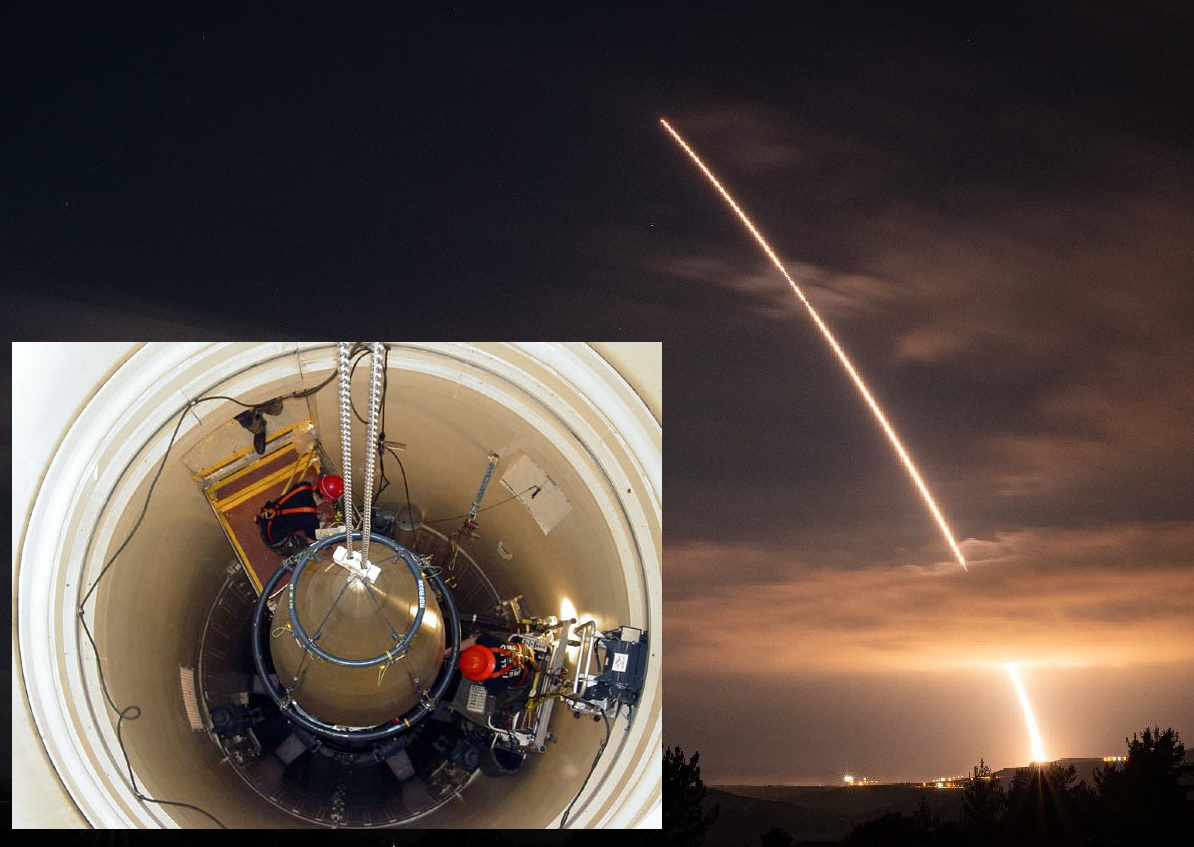
The Minuteman III, first deployed in 1970, was the world’s first operational ICBM equipped with MIRV technology. The system was originally designed to carry up to three independently targetable reentry vehicles mounted on a post-boost vehicle, commonly referred to as the “bus.”
The bus allows warheads to be released sequentially along different trajectories, enabling a single missile to strike multiple geographically separated targets. Although the missiles were reconfigured to carry a single warhead under arms control commitments, the core architecture — including guidance systems and post-boost vehicles — remains compatible with multi-warhead configurations.
According to AFGSC, the technical expertise, maintenance procedures, and infrastructure required to support a MIRVed configuration have been preserved. Any decision to re-MIRV the force would require policy direction, warhead allocation decisions, and potential adjustments to operational planning.
Strategic Force Structure and Warhead Capacity
The United States currently deploys 400 Minuteman III missiles across three missile wings:
-
F.E. Warren Air Force Base
-
Malmstrom Air Force Base
-
Minot Air Force Base
Each missile is presently configured with a single warhead. Restoring the original MIRV capacity of up to three warheads per missile would increase the potential number of ICBM-delivered warheads from approximately 400 to as many as 1,200, assuming sufficient warhead inventory and policy authorization.
Such a shift would not require additional missiles or new silos, as it would rely on existing launch infrastructure. However, it would alter the distribution of warheads within the U.S. nuclear triad, which also includes ballistic missile submarines and strategic bombers.
Operational Considerations
From a military planning perspective, deploying multiple warheads per missile increases the number of aimpoints covered by the land-based deterrent. Each reentry vehicle can be assigned a distinct target, expanding the range of potential strike options without increasing launcher numbers.
In terms of missile defense, MIRVed systems present additional complexity for interceptors. Anti-ballistic missile (ABM) systems are typically designed to engage individual incoming reentry vehicles. Multiple warheads from a single booster increase the number of objects that must be tracked and potentially intercepted.
Supporters of MIRV configurations state that such a posture strengthens second-strike capability, ensuring that even a reduced number of surviving missiles could deliver multiple warheads against separate targets. Critics in previous arms control discussions have noted that MIRVed land-based missiles concentrate multiple warheads in a single silo, which could influence strategic stability calculations during a crisis.
Transition to the Sentinel Program
The Minuteman III remains the sole land-based leg of the U.S. nuclear triad and has undergone successive life-extension programs to maintain operational viability. The Department of Defense is developing the LGM-35A Sentinel to replace the Minuteman III beginning in the early 2030s.
Until the Sentinel reaches initial operational capability, the existing Minuteman III force will continue to provide the land-based strategic deterrent. Any decision to re-equip the missiles with multiple warheads would apply to the current fleet during this interim period.
Policy Path Forward
AFGSC has stated that while the technical capacity exists, implementation would require formal direction from national leadership. Decisions would involve coordination across the Department of Defense, the Department of Energy’s National Nuclear Security Administration, and U.S. Strategic Command to address warhead allocation, force posture, and operational doctrine.
With the expiration of New START, the strategic environment now operates without the bilateral verification mechanisms and numerical limits that governed U.S.–Russian strategic arsenals for more than a decade. Whether the United States proceeds with restoring MIRV capability on its land-based missiles remains subject to policy deliberations in Washington.
——— End of Article ———