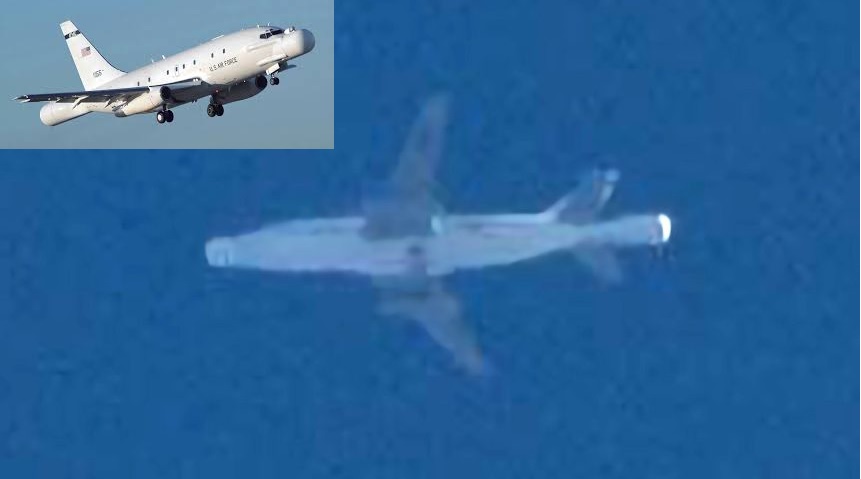
KENNEDY SPACE CENTER, FL — April 1, 2026 : A highly specialized and rarely observed U.S. Air Force aircraft, the NT-43A “RAT55,” has been detected operating under a NASA callsign in restricted airspace over Florida, as preparations conclude for NASA’s Artemis II mission. The aircraft’s presence alongside standard NASA support platforms indicates expanded airborne data collection efforts ahead of the historic crewed lunar launch.
The Artemis II mission is scheduled for liftoff on April 1, 2026, at 6:24 p.m. EDT from Launch Complex 39B at Kennedy Space Center. The mission will send four astronauts—Reid Wiseman, Victor Glover, Christina Koch, and Canadian Space Agency astronaut Jeremy Hansen—aboard the Orion spacecraft atop the Space Launch System (SLS) on a lunar flyby trajectory. It will mark the first crewed mission to the Moon since Apollo 17 in 1972.
Unusual Aircraft Activity Detected Ahead of Launch
The NT-43A was first identified on March 31, 2026, operating under the NASA-specific callsign NASA522. Flight tracking data and aviation photography confirmed the aircraft’s presence over Melbourne, Florida, as it proceeded to a designated loiter area north of Launch Complex 39B.
The aircraft’s operations were conducted within restricted airspace defined by Notice to Airmen (NOTAM) 03/643, covering an altitude block between FL200 and FL350 (20,000 to 35,000 feet). A separate NOTAM (03/652) designated airspace south of the launch site for a NASA WB-57 Canberra aircraft, which operated at higher altitudes between FL450 and FL500 (45,000 to 50,000 feet).
Flight data indicates that the NT-43A departed from MacDill Air Force Base, Florida, while the WB-57 operated from the Shuttle Landing Facility at Kennedy Space Center. Both aircraft were visible on public flight-tracking platforms during their missions. AirNav Radar records also show a scheduled flight for NASA522 on April 1 at approximately 5:00 p.m. EDT, shortly before the Artemis II launch window.
Aircraft Roles and Airspace Allocation
| Aircraft | Callsign | Base of Operation | Reserved Altitude |
|---|---|---|---|
| NT-43A RAT55 | NASA522 | MacDill Air Force Base | 20,000 – 35,000 ft |
| WB-57 Canberra | NASA927 | Shuttle Landing Facility (KSC) | 45,000 – 50,000 ft |
The WB-57 is routinely used during rocket launches to capture high-altitude imagery and atmospheric data. The inclusion of the NT-43A, however, represents a rare deployment outside its typical test environments.
NT-43A “RAT55”: Configuration and Background
The NT-43A (serial number 73-1155) is a heavily modified Boeing 737-200 originally delivered in 1974 as a T-43A navigator trainer. Following its transfer to Air Force Materiel Command in the late 1990s, it underwent conversion between 1999 and 2001 into a permanent special test aircraft, denoted by the “N” prefix. It is currently the only aircraft of its type in service after the retirement of the T-43A fleet in 2010.
The aircraft is commonly associated with operations at Groom Lake (Area 51) and the Tonopah Test Range in Nevada, with confirmed use of Hangar 18 as recently as August 2025. It may also operate from Edwards Air Force Base when required.
Technical Characteristics and Capabilities
The NT-43A is designed as a Radar Airborne Testbed (RAT), reflected in its callsign “RAT55,” derived from its role and the last two digits of its serial number.
Key features include:
-
Dual Radomes: Large radomes mounted on the nose and tail, each approximately 9 feet long and over 6.5 feet in diameter, enabling 360-degree radar data collection
-
Sensor Suite: Electro-optical and infrared (EO/IR) sensors mounted atop both radomes for thermal and visual tracking
-
Modular Systems: Dorsal fairings allow installation of additional mission-specific equipment
-
Engines: Two Pratt & Whitney JT8D-9A turbofan engines
Dimensions:
-
Length: ~100 feet
-
Wingspan: ~93 feet
-
Height: ~37 feet
-
Maximum Takeoff Weight: ~115,000 pounds
Primary Mission Profile
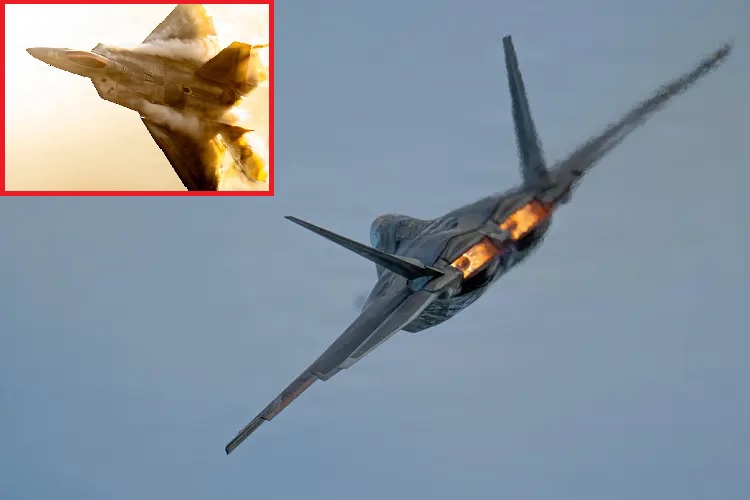
The NT-43A’s principal function is the measurement and analysis of radar cross-section (RCS) and infrared signatures of airborne platforms. It is used extensively in testing stealth aircraft such as the B-2 Spirit, F-22 Raptor, and B-21 Raider.
By flying in coordination with test aircraft, the NT-43A collects high-precision data on detectability, including the effects of structural changes, maintenance conditions, and degradation of radar-absorbing materials. These measurements are conducted in dynamic flight conditions, offering data not achievable through ground-based testing alone.
Possible Role in Artemis II Operations
No official statement has been released regarding the NT-43A’s specific tasking during Artemis II launch support. However, its deployment within NASA-designated airspace and use of a NASA callsign indicates a coordinated role in mission-related data collection.
Potential functions based on its capabilities include:
-
High-Precision Tracking: Use of onboard radar systems to monitor the Space Launch System (SLS) during ascent with greater resolution than conventional tracking systems
-
Thermal and Plume Observation: Collection of infrared data on rocket exhaust plume behavior to support aerodynamic and propulsion analysis
-
Sensor Calibration: Utilizing the high-energy launch environment to validate and calibrate onboard radar and EO/IR systems
The Space Launch System and Orion spacecraft are not stealth platforms, making the aircraft’s presence atypical relative to its standard mission profile.
Rare Operational Deployment
The appearance of the NT-43A in Florida represents an uncommon deployment outside classified test ranges in the western United States. Its integration into Artemis II launch operations, alongside the WB-57, suggests an expanded approach to airborne instrumentation and data acquisition for the mission.
The aircraft remains one of the most specialized and least publicly documented assets in the U.S. Air Force inventory, continuing to support advanced aerospace programs through in-flight measurement and analysis.
——— End of Article ———