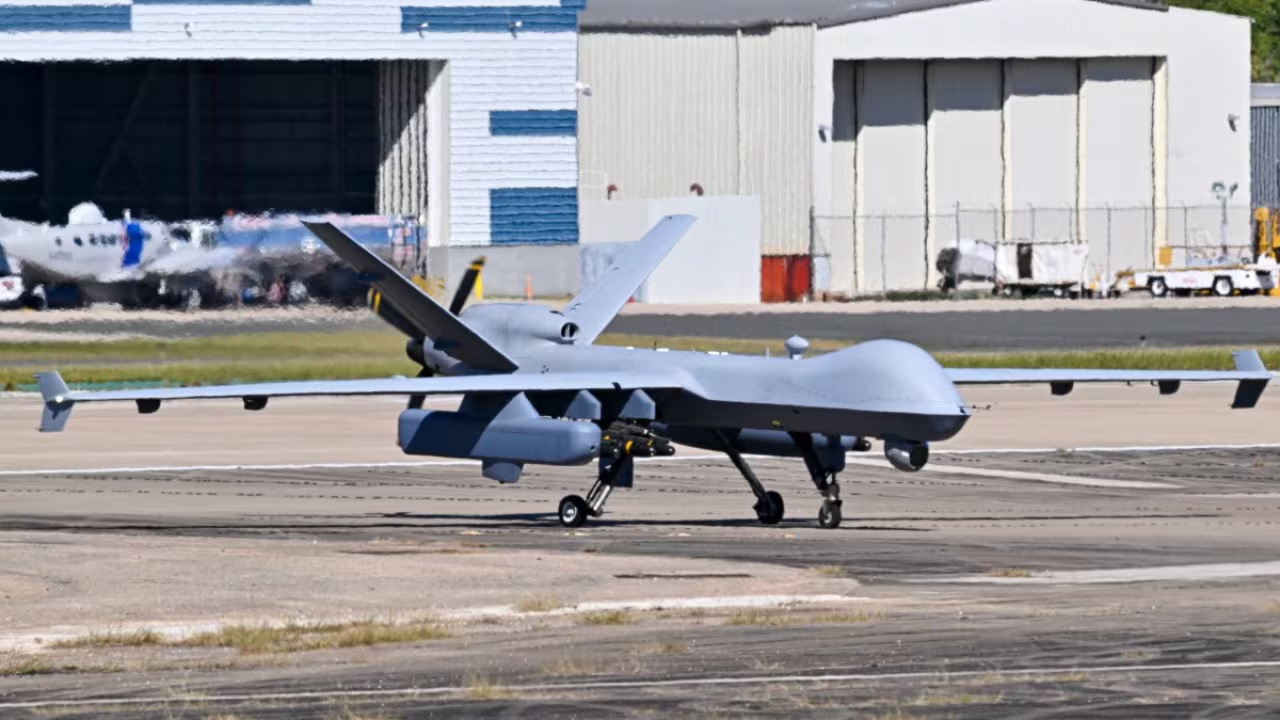
WASHINGTON, — June 15, 2026 : The United States Air Force is moving to rebuild its MQ-9 Reaper drone fleet after sustaining substantial losses during recent military operations against Iran, highlighting both the importance of unmanned systems in modern warfare and the challenges associated with replacing combat losses.
Senior Air Force officials have described the MQ-9 Reaper as one of the most important assets used during Operation Epic Fury, the U.S. military campaign against Iran. However, the extensive employment of the platform also resulted in significant attrition, reducing the size of the Air Force’s active drone inventory and prompting legislative efforts to preserve and expand the fleet.
MQ-9 Reaper Played Central Role in Iran Campaign
U.S. Air Force Chief of Staff General Kenneth S. Wilsbach recently referred to the MQ-9 Reaper as the “most valuable player” of Operation Epic Fury, emphasizing its extensive use across the conflict.
According to Wilsbach, the MQ-9 supported operations against more than 13,000 targets during the campaign, including over 4,000 dynamic targets such as mobile missile launchers and other time-sensitive battlefield assets that required immediate engagement. The aircraft conducted intelligence, surveillance, reconnaissance, target acquisition, and precision strike missions throughout the operation.
“We’ve made many, many strikes,” Wilsbach said. “No other platform is even close to the MQ-9 in terms of the number of strikes against Iran. It’s an unmanned platform, so we get a lot of utility out of them, and don’t put our folks at risk.”
A key advantage of the MQ-9 is its ability to remain airborne for more than 24 hours, enabling continuous monitoring of contested areas. This endurance allows commanders to maintain persistent surveillance and rapidly engage emerging threats without exposing pilots to high-risk air defense environments.
Significant Fleet Losses During Operations
Despite its operational success, the MQ-9 fleet experienced notable losses during the conflict. Reports indicate that between 24 and 30 Reaper drones were lost during Operation Epic Fury, with the total value of destroyed aircraft estimated at more than $720 million.
The losses contributed to a decline in the Air Force’s active MQ-9 inventory from approximately 165 aircraft at the beginning of Fiscal Year 2026 to around 135 aircraft today.
The reduction follows earlier losses sustained during operations against Ansarullah Coalition forces in Yemen, which began in late 2024. Defense analysts estimate that a total of 52 MQ-9 drones have been shot down across both the Iran and Yemen theaters, pushing the fleet below traditional operational levels and creating concerns about long-term readiness.
Military observers note that the Reaper’s effectiveness in surveillance and strike missions has often required it to operate within range of increasingly sophisticated air defense systems. While the platform offers substantial operational advantages, recent combat experience has also highlighted its vulnerability in heavily contested environments.
Challenges in Replacing Lost Aircraft
Replenishing the fleet presents a significant challenge for the Air Force due to limitations in production capacity and the end of MQ-9A manufacturing.
Production of the original MQ-9A Reaper variant concluded in 2025, reducing the availability of direct replacement aircraft. At the same time, the Air Force’s next-generation unmanned aircraft system intended to succeed the Reaper is not expected to enter service until the late 2030s at the earliest.
The situation has drawn attention to broader questions regarding the U.S. defense industrial base and its ability to rapidly replace equipment lost during high-intensity conflicts. Analysts have noted that rebuilding specialized military capabilities can take years, particularly when production lines have already closed.
General Atomics Offers MQ-9B Solution
In response to the shortfall, General Atomics Aeronautical Systems, the manufacturer of the MQ-9, has proposed supplying the newer MQ-9B variant to replenish losses.
Although the MQ-9B was originally developed with significant emphasis on maritime and long-endurance operations, the company argues that it represents the most practical near-term solution for restoring fleet numbers.
A company representative stated that the MQ-9B production line remains active, with approximately 100 aircraft on order from 10 nations. General Atomics has described the aircraft as a more capable platform than the MQ-9A and has indicated its readiness to support U.S. Air Force requirements.
The MQ-9B incorporates several upgrades over earlier models, including improved endurance, enhanced avionics, expanded operating capabilities, and compliance with modern airspace requirements, making it suitable for a wider range of missions.
Congress Moves to Preserve and Expand Fleet
Recognizing the platform’s continued importance, the Senate Armed Services Committee included provisions related to the MQ-9 in the Fiscal Year 2027 National Defense Authorization Act approved on June 11, 2026.
The legislation directs the Secretary of the Air Force to limit further divestment of MQ-9 aircraft, provide reports and briefings on the fleet’s status, and take steps to increase inventory levels by 2028.
The congressional action reflects growing recognition that unmanned systems remain a critical component of U.S. military operations, particularly for intelligence gathering, persistent surveillance, target tracking, and precision strike missions.
Broader Implications for U.S. Military Readiness
The rapid depletion of MQ-9 aircraft during a relatively short but intense period of combat has also raised broader concerns about U.S. military resilience in the event of a prolonged conflict.
Defense analysts have pointed to the challenges of replacing advanced military equipment after heavy operational use, noting that shortages can affect force availability and place additional pressure on procurement budgets. The need to redirect resources toward replacing lost systems has also highlighted the importance of maintaining sufficient industrial capacity to sustain military operations over extended periods.
Some observers argue that the strain on inventories has temporarily affected aspects of the United States’ global force posture and complicated support planning for key allies and partners, including nations in the Indo-Pacific region such as Japan.
As the Pentagon evaluates future procurement options, restarting drone acquisitions and rebuilding the MQ-9 force are expected to remain key priorities. Until a next-generation replacement enters service, the Reaper is likely to continue serving as a central element of the U.S. reconnaissance-strike network and a vital asset for military operations in contested environments.
——— End of Article ———