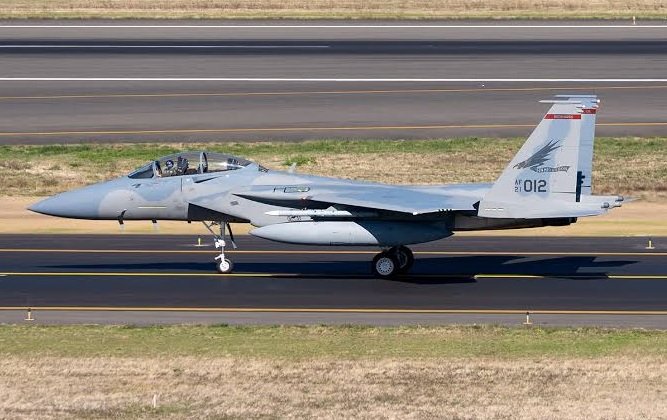
WASHINGTON — March 10, 2026 : The U.S. Air Force has formally identified the forthcoming F-47 Next-Generation Air Dominance (NGAD) fighter as a future launch platform for the Stand-In Attack Weapon (SiAW), according to a procurement notice issued on SAM.gov on March 4, 2026. The sources-sought notice was released by the Air Force Life Cycle Management Center’s Weapons Directorate at Eglin Air Force Base as part of an effort to expand industrial capacity for the SiAW program and assess potential suppliers capable of supporting large-scale production.
The document lists the F-47 alongside several existing and planned U.S. strike platforms, including the F-35, F-16, and B-21, as aircraft expected to integrate the new weapon. The reference to the F-47 represents the most direct public indication so far that the Air Force intends for its sixth-generation fighter to perform penetrating strike missions against heavily defended targets, in addition to traditional air-superiority roles.
Stand-In Attack Weapon Development
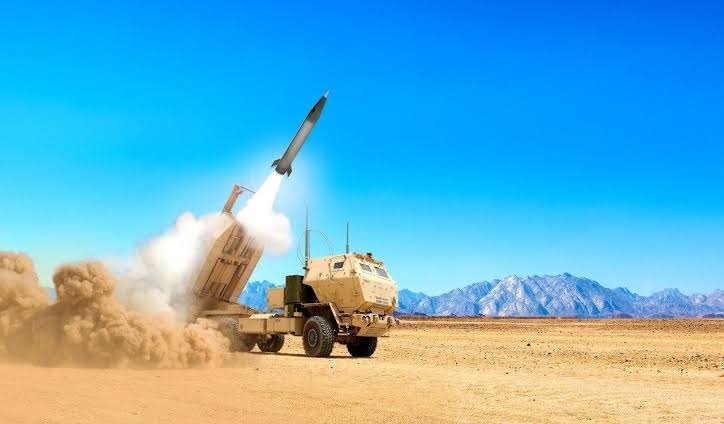
The Stand-In Attack Weapon program is intended to equip advanced aircraft with a capability to strike rapidly relocatable and time-sensitive targets located inside heavily defended anti-access and area-denial environments. The missile was initially designed for internal carriage by the F-35A, allowing stealth aircraft to maintain low observability while carrying precision strike munitions.
Program documentation from the Department of the Air Force indicates that the SiAW is being developed under the Middle Tier of Acquisition rapid prototyping pathway, a procurement framework intended to accelerate the development and fielding of new capabilities. The program incorporates digital engineering techniques and an open-architecture weapons system design to support rapid integration, upgrades, and compatibility with multiple aircraft types.
According to testing reports from the Air Force Operational Test and Evaluation Center (AFOTEC) and procurement documents for fiscal year 2026, the missile’s target set focuses on systems that enable an adversary’s anti-access and area-denial architecture. These include integrated air defense systems and high-value emitters, theater ballistic missile launchers, land-attack and anti-ship cruise missile launchers, anti-ship and anti-satellite systems, and electronic warfare assets such as GPS jammers and electronic denial platforms.
The weapon is intended to provide fifth- and sixth-generation aircraft with the ability to attack these critical nodes from within contested airspace, disrupting an opponent’s defensive network and enabling follow-on operations by other joint forces.
Integration With the F-47 NGAD Fighter
The association of the SiAW with the F-47 clarifies several aspects of the operational concept for the Air Force’s Next-Generation Air Dominance program. While the F-22 Raptor was primarily developed as an air-superiority fighter, the F-47 is being designed as a broader multi-role platform capable of both air dominance and deep strike missions inside defended airspace.
Air Force descriptions of the NGAD system emphasize a manned-unmanned operational architecture in which the F-47 operates alongside Collaborative Combat Aircraft (CCA), a class of autonomous or semi-autonomous drones designed to accompany crewed fighters. Within this structure, the F-47 is expected to function as a central node that integrates sensor data, manages distributed assets, and delivers precision weapons such as the SiAW against high-priority targets.
The aircraft’s low-observable design, combined with sensor fusion and long-range networking, is intended to shorten the sensor-to-shooter timeline against mobile or relocatable targets. By carrying stand-in weapons internally, the aircraft can penetrate defended airspace and engage critical components of an adversary’s layered air defense and missile systems while maintaining stealth.
Procurement Plans and Budget Details
U.S. Air Force budget documentation shows that the SiAW program is moving beyond its early demonstration phase and into procurement and inventory development. The fiscal year 2026 missile procurement justification book outlines the purchase of 99 SiAW rounds, supported by $185.324 million in total obligation authority.
Earlier budget materials indicate that procurement quantities were also included in fiscal years 2024 and 2025, confirming that the program is progressing through a structured acquisition pathway. The creation of a sizable inventory is intended to support operational testing, aircraft integration, and eventual deployment with frontline units.
Maintaining adequate stockpiles of stand-in weapons is considered necessary to support the operational concept of the F-47 and other advanced aircraft, particularly in scenarios involving sustained operations in contested environments.
Industrial Base Expansion
The March 4 sources-sought notice highlights the Air Force’s broader effort to strengthen the munitions industrial base supporting the SiAW program. The notice requests information from defense companies capable of producing systems with capabilities comparable to or exceeding those of the SiAW while maintaining compatibility with the aircraft platforms identified in the solicitation.
The Air Force is assessing potential suppliers able to deliver production rates of up to 600 All-Up-Rounds per year, reflecting the scale required to support future operational demands. The anticipated period of performance for the production contract is approximately 48 months from contract award, with delivery of the first production lot targeted around 2030.
In addition to missile production, the notice also covers supporting elements such as training systems, flyout models for testing, system verification activities, and lifecycle logistics support.
Technical requirements referenced in the solicitation include compliance with MIL-STD-1760 and the Universal Armament Interface, as well as adherence to cybersecurity standards and open-architecture design principles. These specifications are intended to ensure interoperability across multiple aircraft platforms and facilitate future upgrades.
Strategic Implications
By linking the SiAW to both current and future aircraft platforms, the Air Force is seeking to create a weapons ecosystem capable of supporting advanced combat operations across multiple generations of aircraft. The approach reduces reliance on a single platform-specific munition and encourages cross-platform integration.
For the NGAD program, this strategy ensures that the F-47 will enter service supported by a scalable weapons inventory capable of targeting the key components of modern anti-access and area-denial networks. Air Force planners have emphasized that future air dominance will rely not only on the capabilities of stealth aircraft but also on the availability and production capacity of precision stand-in weapons designed to operate inside contested airspace.
——— End of Article ———