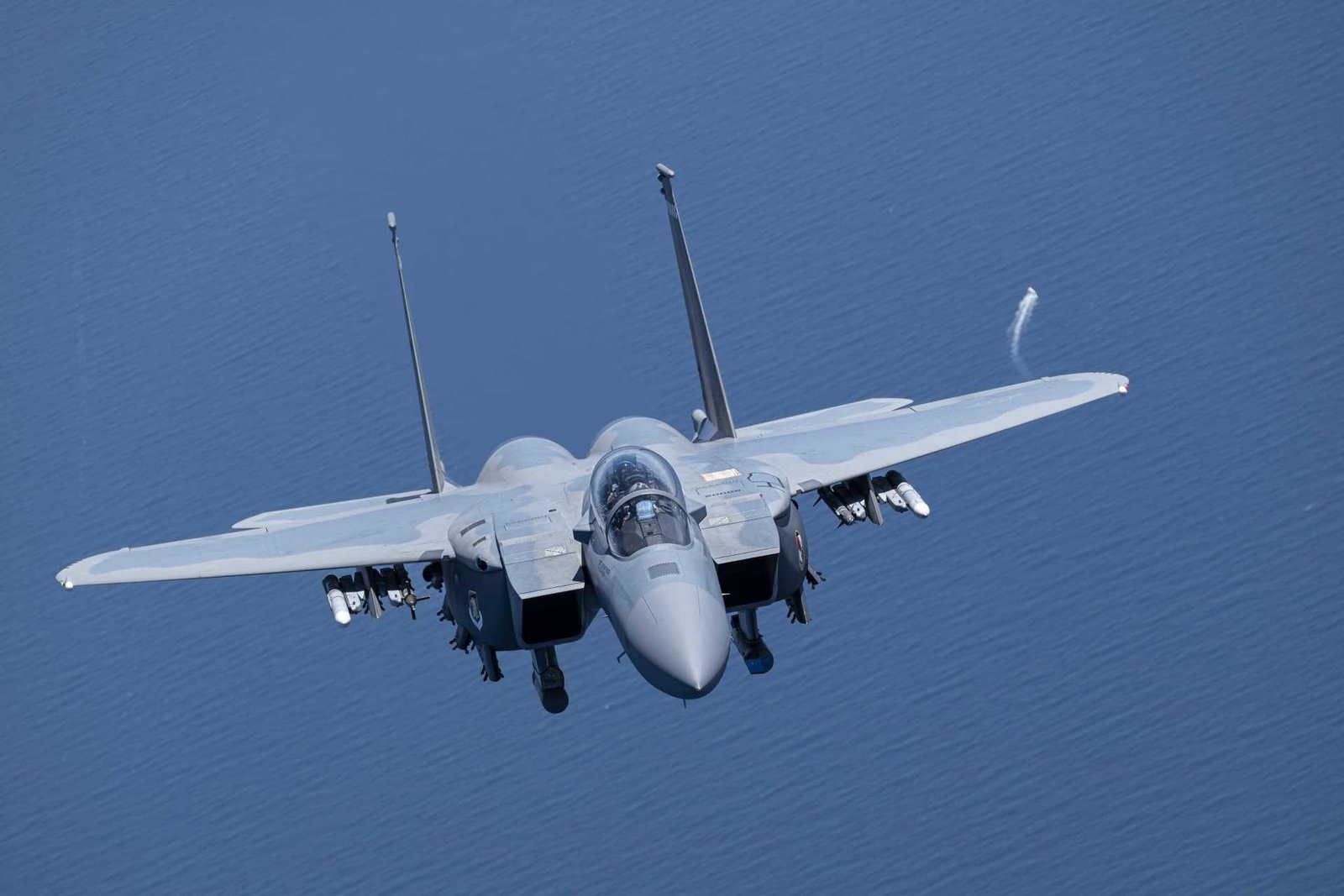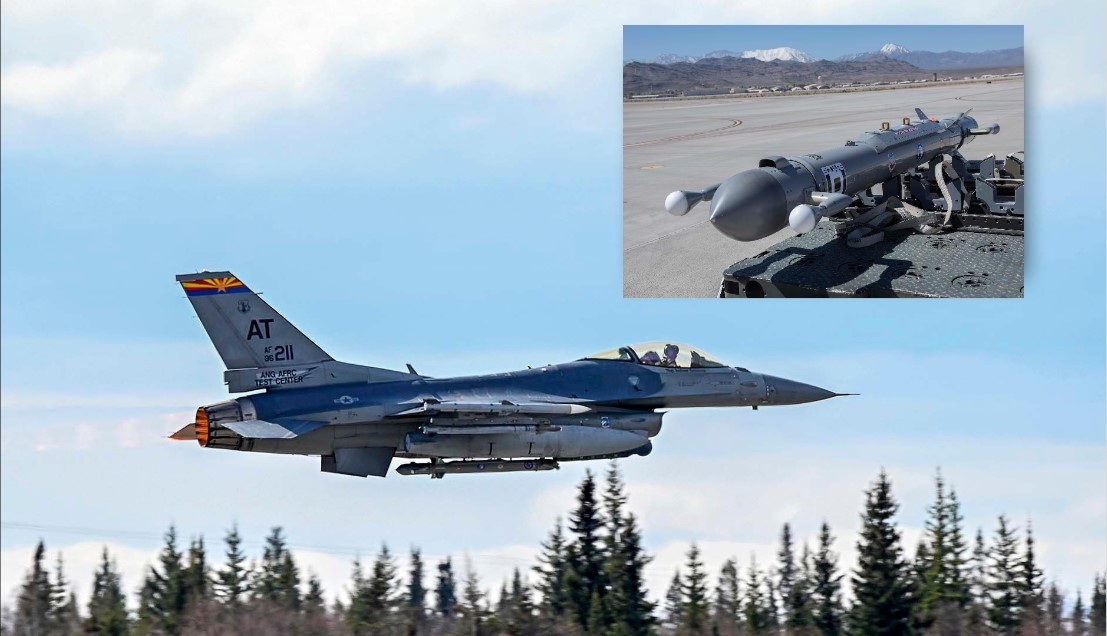
WASHINGTON : The United States Air Force has deployed approximately 36 F-16 fighter aircraft, including specialized F-16CJ “Wild Weasel” variants, to bases within the U.S. Central Command (CENTCOM) area of responsibility in the Middle East. The deployment includes aircraft from the South Carolina Air National Guard’s 169th Fighter Wing and features the integration of the AN/ALQ-167 “Angry Kitten” electronic warfare pod, a system designed to enhance survivability and effectiveness during Suppression of Enemy Air Defenses (SEAD) operations.
The movement of these aircraft, confirmed through deployment tracking data and military reporting, reinforces the Air Force’s dedicated capability to operate in contested airspace environments where integrated air defense systems present layered threats.
Dedicated SEAD Platform
The F-16CJ variant differs from standard F-16 configurations due to its specialized mission set focused on neutralizing surface-to-air missile (SAM) systems and associated radar infrastructure. Central to this role is the AN/ASQ-213 HARM Targeting System (HTS), mounted on the aircraft’s engine intake.
The HTS pod enables passive detection, identification, and geolocation of hostile radar emissions. By operating without activating the aircraft’s own radar, pilots can maintain a reduced emission profile while tracking adversary systems. Once radar sources are mapped, targeting data is transmitted to AGM-88 High-Speed Anti-Radiation Missiles (HARM), which home in on specific radar frequencies to destroy emitting sites.
Although fifth-generation F-35 aircraft are also operating in the region, full integration of the AGM-88 missile on those platforms is pending future software updates. As a result, the fourth-generation F-16CJ remains the Air Force’s primary dedicated platform for radar suppression missions.
Integration of AN/ALQ-167 “Angry Kitten”
To enhance survivability against modern air defense networks, deployed F-16CJs are equipped with the AN/ALQ-167 “Angry Kitten” electronic warfare pod. Originally developed by the Georgia Tech Research Institute in the early 2010s, the system was initially fielded with U.S. Air Force aggressor squadrons to simulate advanced enemy jamming capabilities during training exercises.
Following demonstrated performance in training environments, the Air Force adapted the pod for operational deployment. The system incorporates Digital Radio Frequency Memory (DRFM) technology, allowing it to detect, capture, and manipulate incoming radio frequency signals from enemy radars and missile seekers.
The pod also integrates machine-learning algorithms designed to autonomously evaluate unfamiliar threats and select appropriate jamming techniques. Unlike earlier electronic warfare systems that relied primarily on pre-programmed mission data files, the AN/ALQ-167 can adjust jamming and signal spoofing responses in real time as adversary radar behaviors change.
This cognitive electronic warfare capability is intended to improve survivability for fourth-generation aircraft operating in complex electromagnetic environments.
Operational Context in the Middle East
Defense analysts assess that the concentration of SEAD-capable aircraft and advanced electronic warfare systems aligns with the requirement to address Iran’s multi-layered ground-based air defense network.
That network includes foreign-supplied long-range systems such as the Russian-made S-300PMU-2 and, according to intelligence reporting in 2025, newly acquired Chinese HQ-9B long-range surface-to-air missile systems. Domestically produced platforms including the Bavar-373 and Khordad-15 form part of Iran’s high-altitude defense architecture.
In addition, mobile short-to-medium range systems—including the Russian-designed Tor series and the indigenous 3rd of Khordad system—provide lower-altitude coverage. The combination of fixed and mobile systems creates overlapping engagement zones designed to complicate air operations.
In a potential contingency, F-16CJ aircraft would be tasked with identifying and suppressing early warning radars and fire-control systems to degrade the effectiveness of this integrated air defense network. The pairing of AGM-88 anti-radiation missiles with adaptive electronic jamming from the AN/ALQ-167 is intended to disrupt detection and targeting functions, thereby enabling follow-on air operations.
The deployment underscores the continued reliance on specialized SEAD platforms within the Air Force inventory as part of broader operational planning in contested theaters.
——— End of Article ———