WASHINGTON, — June 22, 2026 : The U.S. Air Force has awarded Shield AI a production contract to deploy its Hivemind mission autonomy software within the Collaborative Combat Aircraft (CCA) program, supporting the service’s effort to separate artificial intelligence capabilities from aircraft hardware and accelerate the deployment of autonomous combat systems.
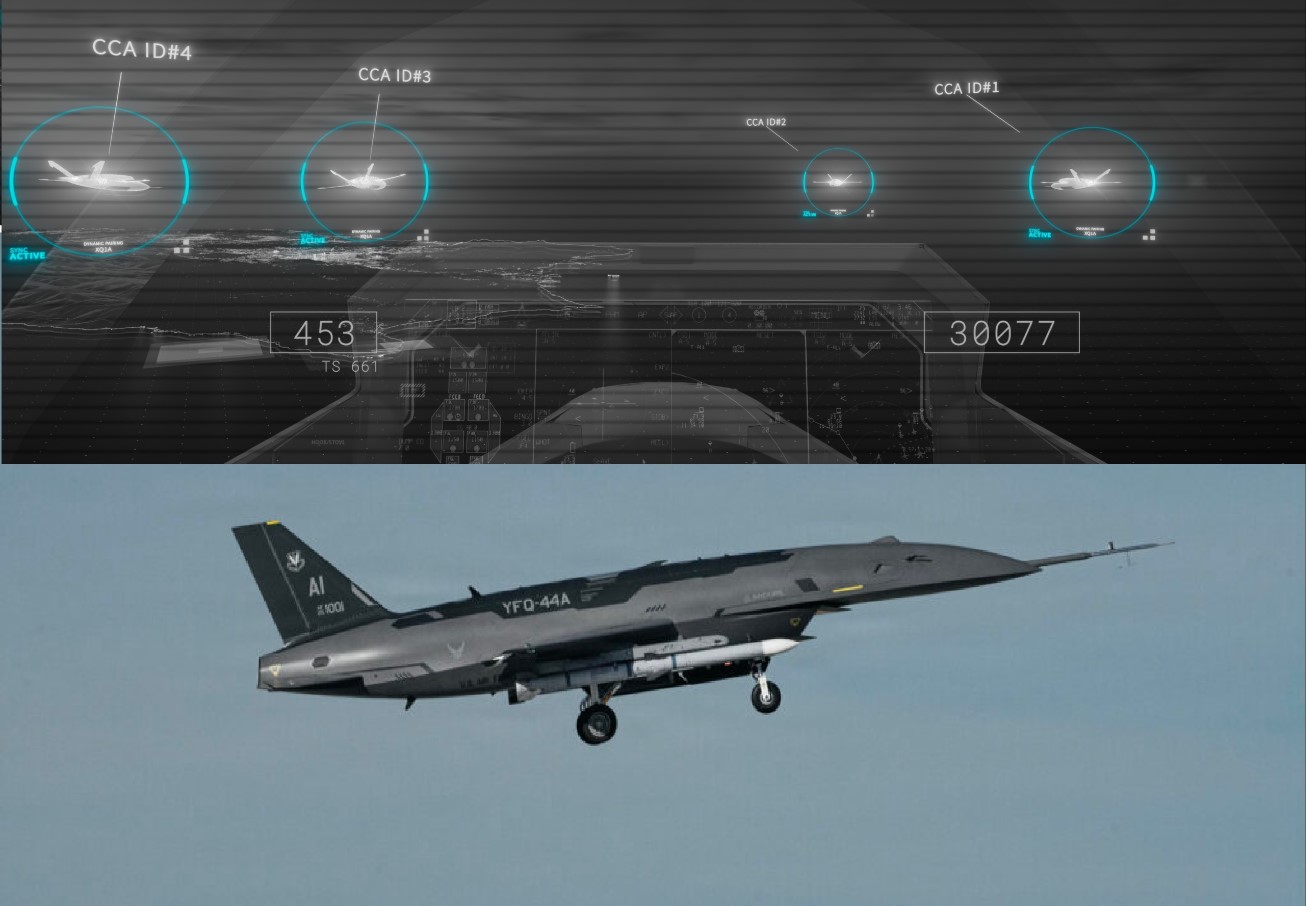
The contract follows Shield AI’s earlier selection as a mission autonomy provider during the Technology Maturation and Risk Reduction (TMRR) phase of the CCA program. Hivemind is currently integrated and undergoing flight testing aboard Anduril Industries’ YFQ-44A Fury aircraft.
Shield AI’s Hivemind software enables multiple uncrewed aircraft to operate collaboratively under human supervision, improving coordination between autonomous systems while reducing operator workload during complex missions.
Software-First Acquisition Strategy
The Air Force is adopting a software-first approach by procuring mission autonomy software separately from aircraft hardware. This strategy is enabled by the Autonomy Government Reference Architecture (A-GRA), a government-owned open-systems framework that allows autonomy software to operate across different aircraft platforms.
By using A-GRA standards, the Air Force aims to accelerate software updates, simplify integration, reduce vendor dependency, and increase competition among autonomy providers.
According to Christian Gutierrez, Senior Vice President of Hivemind at Shield AI, mission autonomy is becoming a foundational capability for future airpower and will support faster innovation and capability deployment.
Hivemind Capabilities
Hivemind functions as an AI pilot capable of making real-time mission decisions in dynamic environments. Key capabilities include:
- Autonomous navigation around threats and obstacles.
- Operations in GPS-denied and communications-jammed environments.
- Human-machine teaming with crewed and uncrewed platforms.
- Multi-aircraft collaboration under human supervision.
- Platform-agnostic integration through A-GRA compliance.
The software has also been tested on platforms including the MQ-20 Avenger, BQM-177 target drone, and Airbus H145 helicopter.
CCA Program Expansion
The Collaborative Combat Aircraft program is a key part of the Air Force’s future force structure. The service plans to field approximately 1,000 semi-autonomous aircraft designed to operate alongside crewed fighters in missions such as reconnaissance, electronic warfare, strike support, and air combat.
The Air Force has awarded Increment 1 aircraft development contracts to General Atomics Aeronautical Systems and Anduril Industries, with plans to field more than 150 combat-capable CCA aircraft before the end of the decade.
Competition Among Autonomy Providers
In addition to Shield AI, the Air Force has awarded autonomy software production options to Anduril and Collins Aerospace. The competitive approach is intended to encourage innovation, reduce costs, and ensure rapid adoption of the most effective autonomy technologies.
The contract marks an important step in the Air Force’s effort to integrate AI-powered autonomy into future combat aircraft while maintaining flexibility through open-architecture systems and multi-vendor competition.
——— End of Article ———