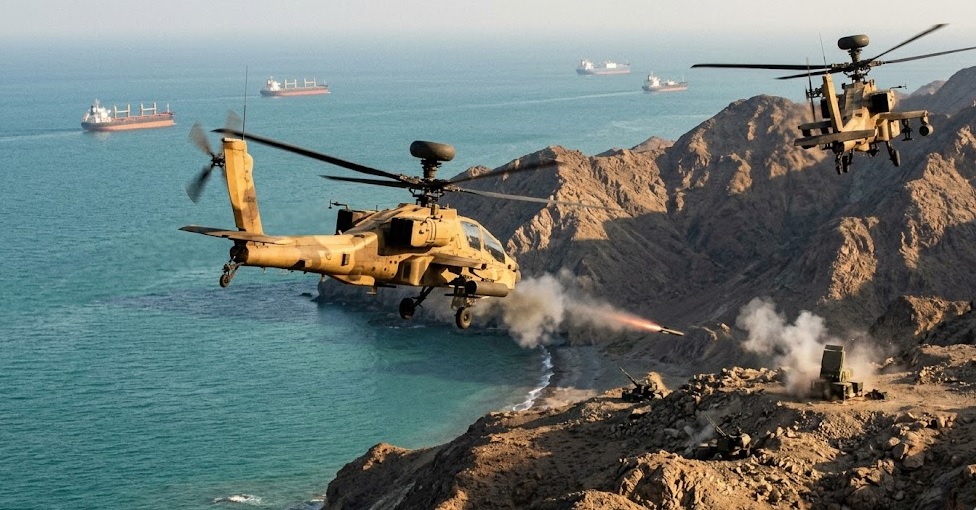
Strait of Hormuz / Washington — April 1, 2026 : U.S. Army AH-64 Apache attack helicopters are actively conducting combat missions against Iranian air defense systems linked to underground missile infrastructure, commonly referred to as “Missile City,” as part of ongoing operations under Operation Epic Fury in the Strait of Hormuz region.
According to defense reporting and operational assessments, the helicopters are engaging targets with consistent effectiveness despite inherent limitations in speed and altitude. The missions are focused on suppressing air defense assets associated with Iran’s underground missile tunnel complexes, while supporting broader efforts to secure maritime navigation through one of the world’s most strategically significant waterways.
Operational Tactics and Engagement Profile
U.S. AH-64 Apaches are operating at low altitude using “nap-of-the-earth” flight techniques, leveraging terrain masking to reduce radar exposure. Iranian radar systems have reportedly detected the helicopters at distances of approximately 10 miles. However, detection has not consistently translated into successful engagement.
Upon detection, Apache crews rapidly execute attack sequences by launching AGM-114 Hellfire missiles and immediately maneuvering back into cover behind terrain features. This minimizes exposure to enemy air defense systems and reduces vulnerability to counterfire.
The helicopters are conducting repeated sorties targeting a range of threats, including mobile air defense units, unmanned aerial systems, and fast-attack boats positioned along the Iranian coastline. These missions are being carried out alongside U.S. Air Force A-10 Thunderbolt II aircraft, forming a coordinated effort to counter coastal and maritime threats.
Fire-and-Forget Missile Capability
A key factor in the Apache’s operational effectiveness is the use of advanced fire-and-forget munitions, particularly the AGM-114L Longbow Hellfire missile and the newer Joint Air-to-Ground Missile (JAGM).
Unlike earlier semi-active laser-guided Hellfire variants, which required continuous target illumination for 15 to 20 seconds, the radar-guided AGM-114L operates autonomously after launch. The missile uses its onboard millimeter-wave radar seeker to track and engage targets independently.
This capability allows Apache crews to break line of sight immediately after firing, eliminating the need to remain exposed during the missile’s flight. The transition to these “smart” munitions significantly reduces engagement time and enhances survivability in contested environments.
Longbow Radar and Targeting Systems
The AH-64E Apache Guardian variant deployed in the region is equipped with the AN/APG-78 Longbow fire control radar, mounted above the rotor. This system provides automatic target detection, classification, and prioritization in complex battlefield environments.
The radar integrates directly with Longbow Hellfire missiles, enabling rapid target acquisition and engagement without requiring continuous tracking. Once a target is identified, the system cues the missile, allowing the aircraft to reposition immediately after launch.
In addition to radar systems, the Apache is equipped with advanced electro-optical and infrared sensors, including the Modernized Target Acquisition Designation Sight and Pilot Night Vision Sensor (M-TADS/PNVS). These systems provide high-resolution forward-looking infrared (FLIR) capability, enabling detection and targeting of ground-based threats in low-visibility conditions.
This sensor advantage allows Apache crews to identify and engage Iranian air defense assets at distances where opposing forces have limited visibility, particularly during night operations or adverse weather conditions.
Iranian “Missile City” Infrastructure and Air Defenses
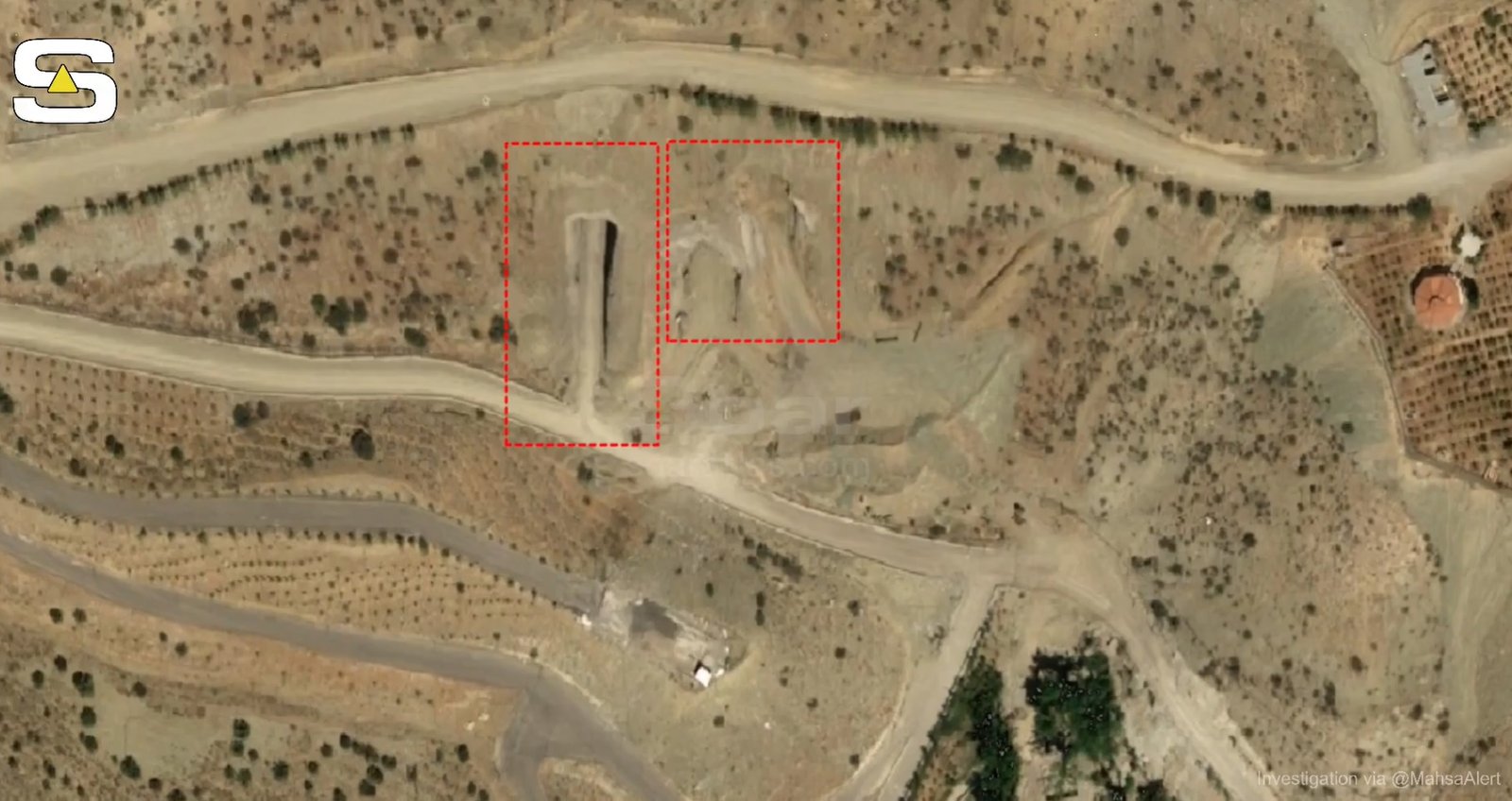
The targets of these operations include Iranian Islamic Revolutionary Guard Corps underground facilities known as “Missile Cities.” These complexes consist of extensive tunnel networks used for the storage, maintenance, and launch of ballistic missiles.
Facilities such as the Imam Ali Missile Base in Lorestan Province include hardened underground galleries and pre-surveyed launch positions for missile systems such as the Emad and Qadr series. These installations are integrated into a layered air defense network.
Iran’s defensive systems protecting these sites include platforms such as the S-300PMU2, Bavar-373, and Khordad-15 surface-to-air missile systems. Despite the presence of these systems, reports indicate that their effectiveness has been reduced following earlier strikes that degraded both fixed and mobile air defense components in the region.
Platform Capabilities and Combat Loadout
The AH-64E Apache Guardian has a maximum speed of approximately 160 knots but typically operates at lower speeds during low-level missions to maintain terrain masking and optimize sensor performance. The helicopter has a maximum takeoff weight exceeding 10,000 kilograms.
Its standard combat configuration includes up to 16 Hellfire missiles mounted on stub wings, along with a 30 mm M230 chain gun and Hydra 70 rocket pods. The aircraft is designed with survivability features, including armored crew compartments and redundant flight systems.
These characteristics enable sustained operations in high-threat environments, even against layered and fortified air defense networks.
Tactical Assessment and Operational Impact
Defense analysis indicates that the integration of advanced sensors and fire-and-forget weaponry has offset traditional vulnerabilities associated with rotary-wing aircraft, particularly speed and exposure time.
While Iranian radar systems can detect incoming Apaches at moderate distances, the combination of terrain masking, rapid engagement timelines, and autonomous missile guidance reduces the window available for effective counter-engagement.
The Apache’s ability to acquire targets, launch munitions, and reposition within seconds allows it to operate effectively against fortified air defense systems without prolonged exposure. Additionally, superior night vision and thermal imaging capabilities provide a significant operational advantage in low-visibility conditions.
Ongoing Operations and Strategic Context
U.S. Central Command continues to deploy Apache helicopters as part of a broader operational framework that includes suppression of Iranian maritime capabilities and support for regional security efforts in the Strait of Hormuz.
Despite limited official disclosure regarding specific engagement timelines and radar performance data, available reports suggest that Iranian responses to these operations have been constrained following earlier degradation of defensive systems.
The continued use of AH-64 Apache helicopters in repeated sorties underscores their role in maintaining operational pressure on Iranian air defense networks and ensuring the security of critical maritime routes in the region.
——— End of Article ———