LONDON : The United Kingdom is moving to pair its frontline Apache attack helicopters with autonomous combat drones as part of a major effort to reshape how the British Army fights in high-intensity conflicts, the Ministry of Defence (MoD) has announced.
Under Project NYX, the MoD has invited seven defence and technology firms to develop uncrewed aircraft designed to operate alongside the Army’s Apache AH-64E Guardian helicopters, expanding their sensing, targeting and strike reach while reducing risk to human crews. Officials describe the programme as a decisive step toward “crewed–uncrewed teaming,” a concept increasingly seen as central to future land and air warfare.
The initiative centres on the creation of an Autonomous Collaborative Platform (ACP)—a drone system capable of operating with a high degree of independence. Rather than being remotely piloted in real time, the ACP will function on what the MoD calls a “command rather than control” model. Human operators will set mission objectives and boundaries, while onboard artificial intelligence (AI) will allow the system to adapt autonomously to rapidly changing battlefield conditions.
According to defence officials, this approach is intended to overcome the limitations of traditional remotely piloted aircraft in contested environments, where communications can be disrupted by jamming, cyber attack or electronic warfare. By relying on onboard decision-making within predefined rules, the ACP is expected to remain effective even when data links to human controllers are degraded or lost.
Expanding the Apache’s Combat Reach
The British Army operates the Apache AH-64E Guardian, one of the most advanced attack helicopters in the world, optimised for deep strike, close air support and anti-armour missions. Project NYX is designed to multiply the helicopter’s effectiveness by pairing it with autonomous drones that can fly ahead of or alongside crewed aircraft.
The MoD says the ACP is being designed to perform a wide range of missions, including intelligence, surveillance and reconnaissance (ISR), target acquisition, precision strike, and countermeasure defeat. The platform is also expected to integrate with launched effects—small expendable drones or munitions released from aircraft—to operate in heavily defended airspace.
By offloading high-risk tasks such as reconnaissance in contested zones or the initial detection of enemy air defences, the drones could significantly improve the survivability of Apache crews while increasing the speed and accuracy of battlefield decision-making.
Lower Cost, Smaller Footprint
A key selling point of Project NYX is affordability. The MoD says the capabilities delivered by the ACP will come at a fraction of the cost, logistical footprint, and maintenance burden associated with traditional crewed aircraft. Autonomous systems are expected to be cheaper to acquire, easier to deploy forward, and less demanding in terms of training and sustainment.
Defence planners see this cost differential as critical at a time when militaries are preparing for conflicts characterised by attrition, mass, and rapid technological adaptation. By fielding autonomous platforms in greater numbers, the Army aims to retain combat power even in prolonged or high-loss scenarios.
Industry Competition Begins
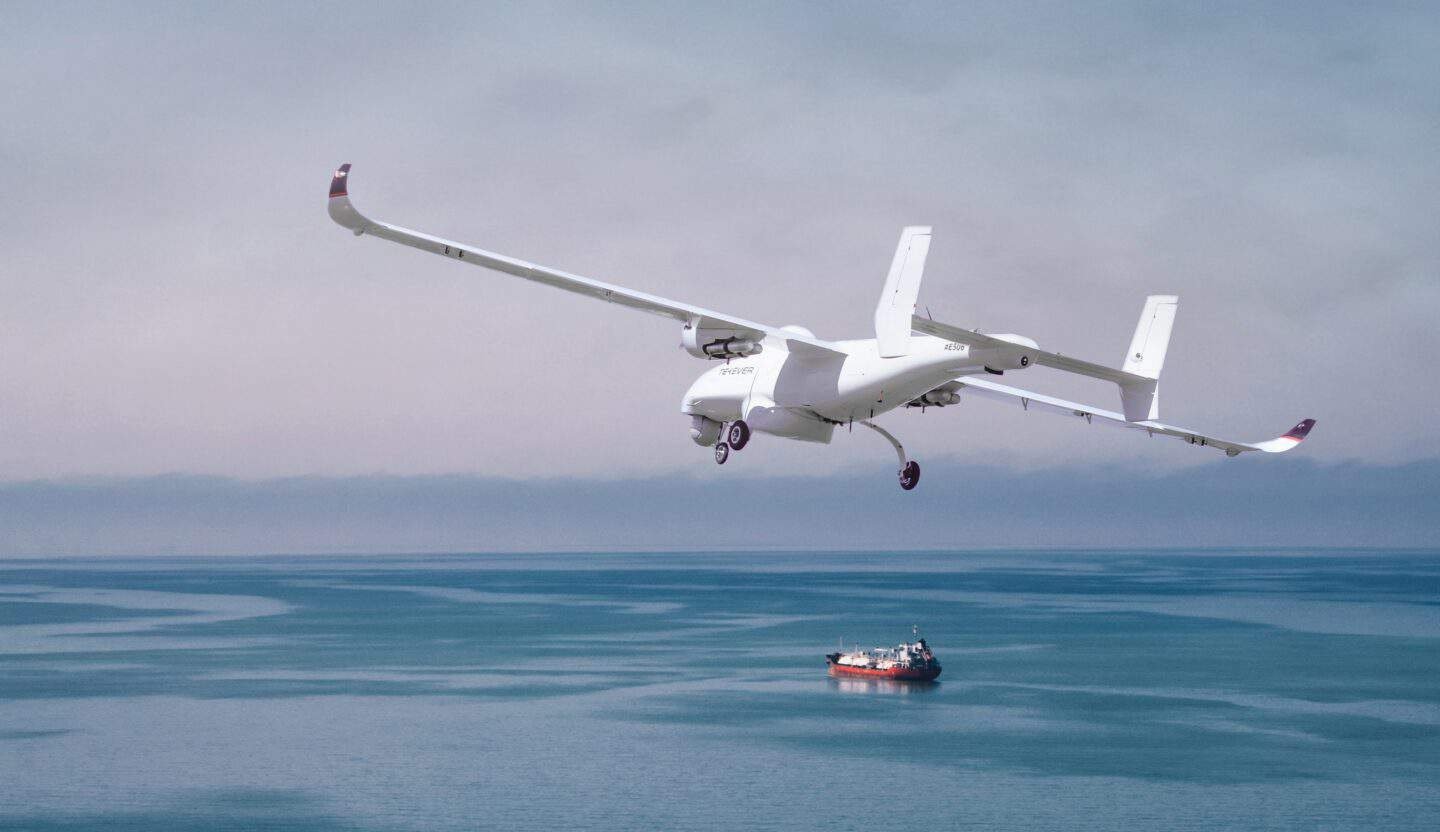
Seven companies have been selected to compete in the initial phase of Project NYX: Anduril UK, BAE Systems, Leonardo, Lockheed Martin UK, Syos, Tekever, and Thales. The group includes a mix of established defence primes and newer technology-focused firms, reflecting the MoD’s effort to blend traditional military engineering with fast-moving software and AI development.
Under the programme’s phased structure, the field will be narrowed to four companies by March for early development and research work. One or more winners are expected to be selected in the third quarter of fiscal year 2026, after which the programme will move toward full-scale capability demonstrations.
Initial demonstrations are scheduled to begin in the second quarter of 2027, with final demonstrations planned for the first quarter of 2028. If the programme remains on schedule, the MoD expects initial operational capability (IOC) around 2030.
Strategic and Ethical Considerations
Project NYX forms part of the UK’s broader Defence Industrial Strategy, which prioritises autonomy, digital integration, and closer collaboration with domestic industry. Officials argue that maintaining leadership in autonomous military systems is essential as rival powers rapidly field AI-enabled drones and uncrewed combat platforms.
At the same time, the MoD has emphasised that autonomous systems will operate within clearly defined mission constraints, with human commanders retaining responsibility for mission intent and rules of engagement. While the ACP is designed to make independent decisions during operations, it is not intended to function outside established legal and ethical frameworks.
Political Backing
UK Minister for Defence Readiness and Industry, Luke Pollard, said the programme would directly enhance the Army’s battlefield effectiveness.
“These drones of the future will make the British Army more effective and lethal by enhancing our ability to strike, survive and win on the battlefield,” Pollard said. “Project NYX represents the cutting edge of the Defence Industrial Strategy, working with leading British industry partners to ensure the UK remains at the forefront of autonomous military technology.”
As Project NYX moves into its competitive development phase, defence analysts say its success could shape not only the future of the British Army’s Apache force, but also how the UK integrates autonomous systems across land, air and joint operations in the decades ahead.
——— End of Article ———