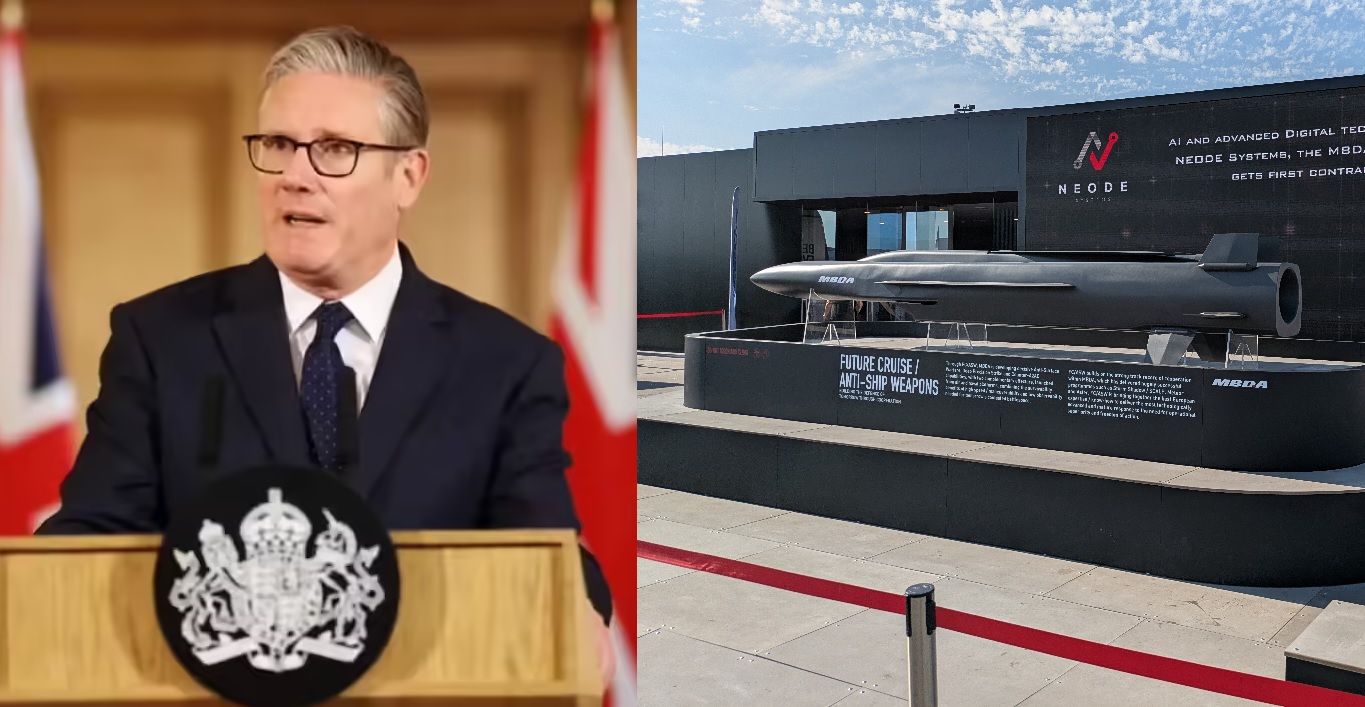
ANKARA, Turkey — The United Kingdom has announced a new multinational initiative to develop advanced long-range precision strike weapons, with around a dozen NATO allies expected to invest more than $50 billion (£37 billion) over the next decade. The announcement was made ahead of the NATO summit in Ankara, where European leaders are meeting to discuss the alliance's future defence priorities.
The programme, known as the Deep Precision Strike (DPS) initiative, aims to strengthen NATO's long-range strike capabilities by developing a new family of precision weapons capable of engaging targets deep behind enemy lines. British Prime Minister Keir Starmer is leading discussions on the project with European allies at the summit.
Long-Range Strike Capability
According to the UK government, the Deep Precision Strike programme will initially focus on ground-launched weapons with a minimum range of 300 kilometres. Future variants, including stealth and hypersonic systems, are expected to exceed 2,000 kilometres while maintaining high levels of precision.
The programme will later expand to include air-launched and sea-launched systems, providing NATO members with long-range strike capabilities across land, air and maritime domains.
British officials said the initiative is intended to improve NATO's deterrence capability by developing weapons capable of targeting high-value military infrastructure and logistics networks at extended ranges.
UK Defence Investment
The Deep Precision Strike initiative complements the UK's broader Defence Investment Plan, under which the government has allocated £3 billion by 2030 specifically for deep precision strike capabilities as part of its wider £300 billion defence investment programme.
The UK is already pursuing several major missile development programmes that will form part of this broader capability.
UK-Germany Deep Precision Strike Programme
The United Kingdom and Germany are jointly developing a new generation of stealth and hypersonic long-range weapons under the Trinity House Agreement, signed in 2024.
The UK plans to invest approximately £770 million over the next four years in the programme. The weapons are expected to have ranges exceeding 2,000 kilometres and are planned to enter service during the 2030s.
Stratus Cruise Missile Programme
Britain is also working with France and Italy on the Stratus programme, which will replace the Storm Shadow/SCALP cruise missile.
The UK government will invest £1.4 billion in the programme over the next four years. According to the UK Ministry of Defence, the project will support more than 1,300 jobs at MBDA UK.
Stratus will include two missile variants:
- Stratus LO – a subsonic low-observable stealth cruise missile.
- Stratus RS – a highly manoeuvrable supersonic missile designed to engage critical military infrastructure, enemy warships and air defence systems.
The UK Ministry of Defence described Stratus as the successor to one of Britain's most battle-proven missile systems.
Stratus is the UK's trilateral programme with France and Italy to develop the successor of Storm Shadow — one of our most battle-proven missiles.
— Ministry of Defence 🇬🇧 (@DefenceHQ) July 8, 2026
The UK will put £1.4 billion into Stratus over the next four years. The project sustains more than 1,300 UK jobs at @MBDA_UK. pic.twitter.com/sSZrDl04I9
Precision Strike Missile (PrSM)
The UK is also joining the Precision Strike Missile (PrSM) programme alongside the United States and Australia.
Britain has committed £190 million (about $252 million) to the programme, which will equip the British Army with a supersonic ballistic missile capable of striking targets at ranges of up to 500 kilometres.
Together, these programmes are expected to provide the UK with a family of long-range strike weapons deployable from land, sea and air.
Lessons from the Ukraine War
British officials said the Deep Precision Strike initiative has been shaped by lessons from the war in Ukraine, where long-range precision strikes against logistics hubs, command centres and military infrastructure have played an important role in disrupting Russian operations.
The UK and its European partners believe similar capabilities will be increasingly important in future conflicts and will strengthen NATO's overall deterrence posture.
Starmer Calls for a "Stronger, More European NATO"
Speaking ahead of the summit, Prime Minister Keir Starmer said the initiative would help build a "stronger, more European NATO" by increasing cooperation on advanced defence technologies and expanding Europe's defence industrial base.
He said the UK is already investing heavily in long-range strike capabilities and that cooperation with allied nations would accelerate technology development and industrial collaboration.
Security Environment
The announcement comes as European NATO members increase defence cooperation amid continued concerns over Russia's military activities and ongoing calls from the United States for European allies to assume a greater share of the alliance's security responsibilities.
According to the UK government, NATO fighter aircraft have intercepted Russian military aircraft more than 700 times near allied airspace during the past two years. The government also said Russian military activity around UK waters has increased by 30 percent.
UK Foreign Secretary Yvette Cooper said the new capability would enable the UK and its allies to strike high-value military targets and critical logistics networks deep behind enemy lines, strengthening NATO's collective deterrence.
Defence Spending Targets
The launch of the Deep Precision Strike initiative comes as NATO members continue working toward the alliance's defence spending goals.
Following an agreement reached at last year's NATO summit, member states are aiming to spend 5 percent of GDP on defence and security by 2035, including an interim target of 3.5 percent of GDP for core defence spending.
Starmer is expected to face questions during the summit regarding the UK's timetable for meeting that interim target.
——— End of Article ———