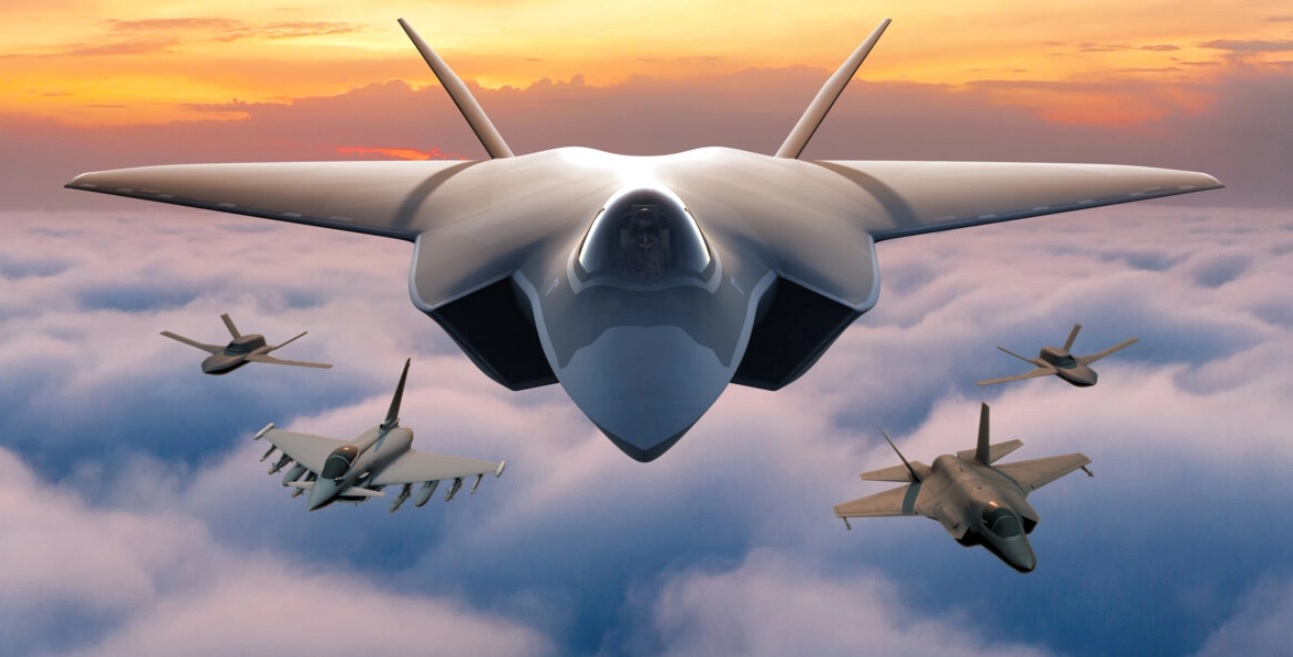
LONDON — The United Kingdom has officially named its new autonomous Collaborative Combat Aircraft (CCA) programme StormFighter, marking a significant step in the Royal Air Force (RAF)’s future air combat strategy.
The announcement was made by Minister for Defence Readiness and Industry Luke Pollard during his keynote speech at the Global Air and Space Chiefs’ Conference in London on July 16.
StormFighter is part of a £300 million investment in collaborative combat aircraft outlined in the UK's Defence Investment Plan, published on July 2, 2026. The programme aims to develop autonomous aircraft capable of operating alongside the RAF's crewed fighter fleet, including the Eurofighter Typhoon, F-35 Lightning II, and the future Tempest fighter under the Global Combat Air Programme (GCAP).
Autonomous Aircraft to Support Crewed Fighters
According to Luke Pollard, StormFighter will be designed to work in close coordination with crewed combat aircraft, providing additional protection and offensive capabilities during future air operations.
"We are maximising our air power in the eye of the storm of future combat," Pollard said during the conference. He added that the programme is intended to help transform the Royal Air Force into Europe's first sixth-generation air force.
He also described the autonomous aircraft as serving as both a "guardian angel" and an "attack dog" for crewed fighters, supporting operations in increasingly complex combat environments where drones, sixth-generation aircraft, and advanced electronic warfare systems are expected to operate together.
Builds on Earlier UK Autonomous Programmes
StormFighter expands on previous UK efforts to integrate autonomous systems into air operations.
One of these is Storm Shroud, an uncrewed electronic warfare system introduced in 2025 to operate alongside Typhoon aircraft by disrupting and suppressing enemy radar systems.
The programme also follows Project Vanquish, which has been testing jet-powered autonomous aircraft in support of F-35B operations. These projects are part of the UK's broader effort to develop Collaborative Combat Aircraft capable of working as force multipliers for crewed platforms.
Several defence companies, including BAE Systems and Boeing, have already expressed interest in participating in the StormFighter programme. A formal set of programme requirements is expected to be issued by the UK government.
Part of Wider Defence Investment Plan
StormFighter forms part of the UK's £298 billion Defence Investment Plan, which includes £31 billion for air and space capabilities over the next four years.
Within that investment, the government has increased overall funding for drones and advanced uncrewed systems to £5 billion, reflecting a greater focus on autonomous military technologies.
Other major air and space investments announced under the plan include:
- £8.6 billion for the design and testing phase of the Global Combat Air Programme (GCAP).
- £1.1 billion to upgrade and sustain the Typhoon fleet into the 2040s.
- Funding to support future F-35A capabilities.
- More than £4.5 billion for transport aircraft fleets, including the A400M Atlas, Voyager, and C-17 Globemaster III.
- £360 million to modernise the UK's military jet training system, including future aircraft for the Red Arrows.
Pollard said the investments are intended to build a hybrid, digitally integrated and AI-enabled air force, combining crewed and autonomous aircraft to strengthen future operational capabilities.
Focus on Future Air Combat
Collaborative Combat Aircraft (CCA) are increasingly becoming a priority for several air forces as they seek to integrate autonomous systems with manned aircraft. These aircraft are designed to perform missions such as reconnaissance, electronic warfare, decoy operations, and strike support while remaining under the supervision of human operators.
The United Kingdom's StormFighter programme reflects this approach by developing autonomous aircraft that can operate as part of a networked force alongside existing and next-generation fighter aircraft.
The announcement was made during the Global Air and Space Chiefs' Conference, which brings together military leaders, defence industry representatives, and experts to discuss developments in air and space power. This year's conference focused on topics including space operations, nuclear capabilities, integrated air and missile defence, and future air combat technologies.
——— End of Article ———