BRUSSELS : The United Kingdom on February 12, 2026, unveiled a new military assistance package for Ukraine valued at more than £500 million during the 33rd Ukraine Defence Contact Group meeting at NATO headquarters. The package is structured to strengthen Ukraine’s short-range air defence network amid sustained Russian drone and missile strikes targeting energy infrastructure and populated areas.
The announcement was made as the UK Defence Secretary co-chaired the meeting alongside German officials. Representatives from 50 nations attended the session in Brussels, including Ukrainian Defence Minister Mykhailo Fedorov, NATO Secretary General Mark Rutte, and Australian Deputy Prime Minister Richard Marles.
Structure of the Assistance Package
The package consists of three principal financial and materiel components:
-
Delivery of 1,000 Martlet Lightweight Multirole Missiles (LMM).
-
A £150 million allocation to NATO’s Prioritised Ukraine Requirements List (PURL) mechanism.
-
Provision of 200,000 artillery rounds.
In addition, follow-on transfers are scheduled through the Air Defence Consortium, including 1,200 further air defence missiles of unspecified types intended to replenish interceptor inventories.
The overall structure reflects a combination of direct UK production, multinational procurement coordination, and expanded logistics and maintenance support arrangements.
Martlet Lightweight Multirole Missile (LMM)
The central element of the package is the supply of 1,000 additional Martlet missiles, manufactured by Thales Air Defence in Belfast, Northern Ireland. The missiles form part of a broader £390 million industrial agreement aimed at expanding production capacity and reinforcing long-term UK–Ukraine defence cooperation.
The Martlet, formally designated the Lightweight Multirole Missile (LMM), has a mass of 13 kilograms and is powered by a dual-stage solid propellant motor capable of speeds exceeding Mach 1.5. The missile has an operational range of up to 8 kilometres and carries a 3-kilogram high-explosive warhead.
Guidance is provided through laser beam riding technology, with additional infrared and GPS configurations available depending on operational requirements. The system is designed for engagement of unmanned aerial systems (UAS), helicopters, and fast inshore attack craft.
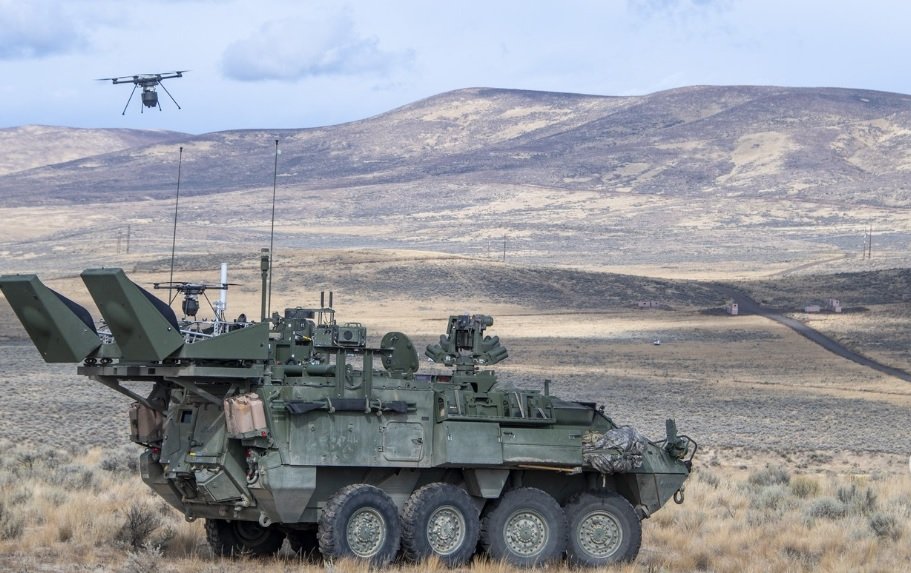
Operational reporting indicates that Ukrainian forces have deployed the Martlet in ground-based configurations, including on Alvis Stormer vehicles and shoulder-launched platforms. Documented engagements include the interception of Russian surveillance drones and rotary-wing aircraft such as the Kamov Ka-52.
The UK previously committed 650 Martlet missiles in September 2024 and placed a £1.6 billion order for 5,000 additional missiles in March 2025. According to the Ministry of Defence, deliveries from earlier commitments progressed ahead of schedule, with several hundred units delivered by October 2025.
NATO PURL Allocation
For the first time, the UK will channel £150 million directly into NATO’s Prioritised Ukraine Requirements List (PURL). The mechanism enables rapid procurement of priority defence equipment, including air defence interceptors, from suppliers such as the United States.
The funding is intended to accelerate acquisition timelines through pooled multinational financing arrangements, reducing delays associated with bilateral contracting and enabling faster delivery of air defence systems to Ukraine.
Artillery and Additional Air Defence Missiles
The package includes 200,000 artillery rounds to address sustainment requirements for ground operations. The artillery ammunition component complements the air defence focus by supporting broader battlefield resilience.
In parallel, 1,200 additional air defence missiles of unspecified types will be transferred in the coming months. These are intended to replenish interceptor stocks and maintain continuity of air defence coverage into 2026.
Industrial and Logistical Arrangements
The February 12 package incorporates expanded industrial cooperation measures beyond missile production. Support arrangements for Rapid Ranger launcher systems and associated command-and-control vehicles will be transferred directly to Ukrainian control.
This transition is designed to establish maintenance and servicing capacity within Ukraine, shortening repair timelines and improving system availability near operational zones. The approach represents a shift toward longer-term sustainment planning rather than discrete equipment transfers.
By integrating domestic UK manufacturing, NATO-coordinated procurement, and localised maintenance structures, the assistance package seeks to address both immediate interceptor requirements and medium-term operational sustainability.
Strategic Context
The UK’s latest commitment aligns with its increasing emphasis on air defence support. The trajectory includes the 650-missile pledge in September 2024 and the March 2025 order for 5,000 missiles valued at £1.6 billion.
According to UK defence officials, the February 2026 tranche is intended to address identified capability gaps for the 2026 operational cycle. The measures focus on maintaining Ukraine’s capacity to counter evolving aerial threats targeting critical national infrastructure and urban areas, while ensuring sufficient ammunition stocks for sustained ground operations.
The assistance was formally presented during the 33rd Ukraine Defence Contact Group meeting at NATO headquarters in Brussels, reinforcing the multinational framework underpinning ongoing support efforts.
——— End of Article ———