PARIS, — April 4, 2026 : The French government has confirmed it will independently finance the development of the Rafale F5 fighter aircraft standard after negotiations with the United Arab Emirates (UAE) over a co-funding arrangement ended without agreement in December 2025. The decision requires France to absorb the full estimated €5 billion cost of the next-generation upgrade programme.
The proposed partnership had envisioned the UAE contributing approximately €3.5 billion—more than 70 percent of the total development budget—in exchange for expanded industrial participation and access to advanced technologies. However, discussions broke down over disagreements related to technology transfer, intellectual property access, and supply chain involvement.
Dispute Over Technology Access and Industrial Role
According to officials familiar with the negotiations, Emirati representatives sought access to sensitive components of the Rafale ecosystem, including advanced optronics systems, mission system architectures, and radar processing source codes. Abu Dhabi also aimed to secure joint intellectual property rights and integrate its domestic aerospace sector into high-value segments of the programme’s industrial base.
France declined these requests, citing the need to maintain sovereign control over critical technologies, particularly those linked to electronic warfare systems and nuclear deterrence capabilities. French authorities also refused to grant access to certain “black box” optronics technologies, which remain tightly restricted due to their strategic importance.
The impasse persisted through multiple rounds of discussions, including exchanges during a visit by President Emmanuel Macron to Abu Dhabi in late December 2025, after which the talks were formally concluded without agreement.
Rafale F5 Programme Scope and Capabilities
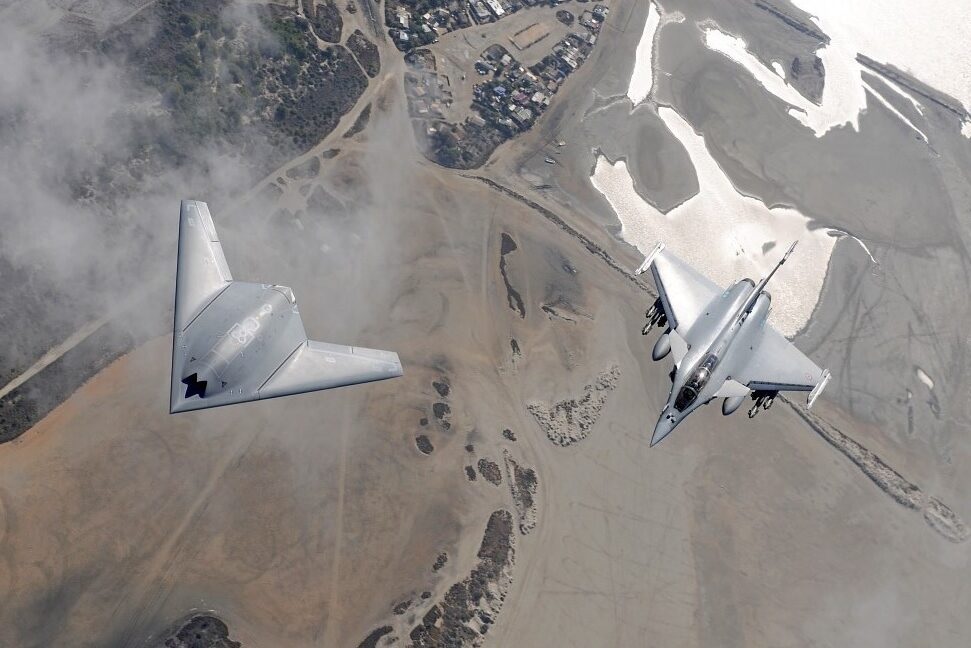
The Rafale F5 standard represents a major evolution of the Dassault Aviation Rafale platform rather than a routine upgrade. It is designed as a “system of systems” capable of operating in conjunction with unmanned collaborative combat aircraft, often described as “loyal wingman” drones derived from the nEUROn demonstrator programme.
Key planned enhancements include:
-
A next-generation RBE2-XG active electronically scanned array (AESA) radar incorporating Gallium Nitride (GaN) technology
-
Upgraded avionics with enhanced data links, connectivity, and processing capabilities
-
Integration of a more powerful Safran M88 engine variant, delivering approximately 20 percent increased thrust
-
Expanded manned-unmanned teaming capabilities
-
Compatibility with the future ASN4G hypersonic nuclear missile for France’s airborne deterrent
Development contracts for the F5 standard already exceed €4 billion and have been notified by the French Directorate General of Armaments (DGA) to Dassault Aviation and its key partners, including Safran, Thales, and MBDA.
The aircraft’s entry into service is currently targeted for the 2030–2035 timeframe.
Budgetary Impact and Programme Timeline
With the withdrawal of Emirati funding, the French Ministry of the Armed Forces will incorporate the full programme cost into a revised Military Programming Law (LPM), scheduled for review by the Council of Ministers in April 2026. The adjustment comes at a time when France is already managing increased defence expenditures linked to broader European rearmament efforts.
Officials have indicated that while the programme will proceed to preserve strategic autonomy, the loss of external financing may require a redistribution of spending over a longer period. This “spreading of costs” approach could introduce delays to the development schedule and potentially shift the planned entry-into-service timeline.
The broader Rafale programme, including earlier standards such as F2, F3, and F4, is estimated to have cost approximately €11.7 billion to date.
Strategic and Industrial Implications
The outcome highlights differing strategic priorities between France and the UAE. While France continues to emphasize sovereign control over defence technologies and systems integration, the UAE has increasingly pursued a model focused on co-development, technology access, and domestic industrial growth rather than traditional procurement roles.
Despite the breakdown in this specific programme, defence cooperation between the two countries remains ongoing. France continues to act as a key security partner for the UAE, including recent operational support in regional air defence activities.
For France, proceeding independently with the Rafale F5 reinforces its commitment to maintaining a fully sovereign combat aviation capability. The F5 standard is also viewed as a critical bridge capability as the separate Franco-German-Spanish Future Combat Air System (FCAS) programme continues to face industrial and political challenges.
The Rafale remains in service with the French Air and Space Force and the French Navy and has been exported to multiple countries, including India, Egypt, Qatar, Greece, and Croatia. The F5 standard is expected to represent the final major evolution of the current Rafale airframe before the introduction of future combat air systems beyond the 2030s.
Further updates on programme funding, timelines, and industrial participation are expected following the French government’s review of the revised defence budget framework in April 2026.
——— End of Article ———