ABU DHABI — March 8, 2026 : The United Arab Emirates (UAE) has reportedly carried out its first direct military strike on Iranian territory during the ongoing regional conflict, according to reports published Sunday by Israeli media outlets. The reported attack targeted an Iranian desalination facility along the Persian Gulf coast, marking a potential escalation in the widening war that began on February 28.
The initial report was published by the Israeli news outlet Ynet, which cited Israeli officials who said the Emirati Air Force conducted a precision strike against the facility as a response to repeated Iranian missile and drone attacks on the UAE. According to the report, the strike was intended as a limited retaliatory action and a strategic signal rather than the start of a sustained Emirati offensive campaign.
Reported Target and Location
Some reports circulating in Israeli media, including references to Yediot Ahronot—Ynet’s parent publication—identified the targeted installation as a desalination plant located on Qeshm Island in Iran’s Hormozgan Province. Qeshm Island sits in the Persian Gulf near the Strait of Hormuz and hosts several desalination facilities that provide potable water to local communities in southern Iran.
Israeli officials cited by Ynet stated that the strike was intended to demonstrate the UAE’s ability to reach strategic infrastructure inside Iran after days of Iranian attacks against Gulf states hosting U.S. military installations.
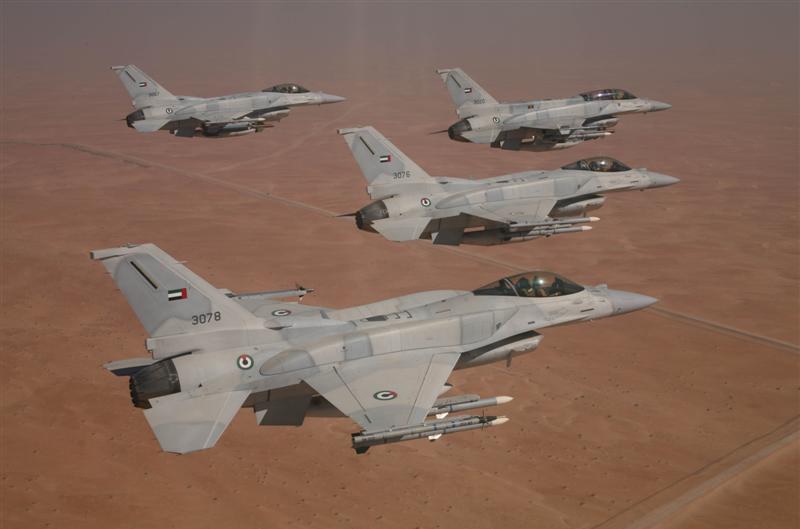
No details were provided regarding the specific aircraft or weapons used in the reported strike. The UAE Air Force operates several aircraft capable of long-range precision attacks, including F-16 Fighting Falcon fighter jets and Mirage 2000 aircraft.
UAE Officials Deny Reports
Despite the Israeli reports, officials in the UAE have denied that the country carried out a strike on Iranian civilian infrastructure.
According to The Jerusalem Post and The Times of Israel, Emirati officials rejected claims that the UAE targeted a desalination facility. A UAE official told journalists that while the country reserves the right to defend itself against Iranian attacks, it would not strike civilian infrastructure.
“We categorically deny this nonsense. The UAE would never target a civilian facility,” one Emirati source said, according to diplomatic correspondent Lazar Berman.
The UAE Ministry of Defence also issued statements on social media indicating that its military operations remain defensive in nature and are focused on intercepting incoming threats rather than conducting offensive strikes inside Iranian territory.
Iranian authorities have not issued specific statements regarding a strike on desalination infrastructure at the time of publication.
Iranian Missile and Drone Attacks on the UAE
The reported Emirati action comes after several days of Iranian missile and drone attacks against Gulf states.
On Sunday, UAE officials reported that Iran launched a new wave of attacks targeting Emirati territory. According to the UAE Ministry of Defence, the barrage consisted of 16 ballistic missiles and 117 unmanned aerial vehicles (UAVs).
The ministry also confirmed that the death toll from recent Iranian strikes on the country has risen to four.
Air defense systems across the UAE have been actively intercepting incoming projectiles since the conflict escalated. Officials said that sounds heard across several areas were linked to air defense operations engaging incoming missiles and drones.
Reports indicate that since the start of the war, the UAE has faced hundreds of missile and drone threats launched by Iranian forces and allied groups.
Regional War and Military Campaign
The conflict began on February 28, 2026, when the United States and Israel launched a coordinated campaign against Iranian military infrastructure, missile systems, and strategic assets.
The military campaign, which includes large-scale airstrikes across Iran, is aimed at weakening Tehran’s missile capabilities and military networks. In response, Iran has launched retaliatory strikes targeting U.S. military installations and allied countries in the region.
Missiles and drones have been fired at several Gulf states hosting American bases, including the UAE, Qatar, Bahrain, Kuwait, and Saudi Arabia.
Across the region, thousands of targets have reportedly been struck since the start of the conflict.
Desalination Infrastructure as Strategic Targets
The reported strike on a desalination facility has drawn attention because water infrastructure is considered a critical vulnerability in the Middle East.
Countries across the Gulf region depend heavily on desalination plants for drinking water. The Gulf Cooperation Council (GCC) region accounts for roughly 40 percent of global desalinated water production and operates more than 400 desalination facilities.
In the UAE, desalination provides approximately 42 percent of the country’s drinking water. Other regional states rely on the technology even more heavily, including Saudi Arabia (70 percent), Oman (86 percent), and Kuwait (around 90 percent).
Because these plants supply essential drinking water and industrial needs, damage to desalination facilities could disrupt water supply for large populations and critical economic sectors.
Earlier Strikes Near UAE Water Infrastructure
Iranian attacks earlier in the conflict have already raised concerns about water infrastructure in the Gulf.
A previous Iranian strike targeted the Jebel Ali port area in Dubai, with debris landing about 12 miles from one of the world’s largest desalination complexes. The complex contains 43 desalination units capable of producing more than 160 billion gallons of potable water annually.
Similar incidents involving nearby strikes or debris have been reported near other regional facilities, including the Fujairah F1 power and water plant in the UAE and the Doha West power and desalination complex in Kuwait.
Gulf States Coordinate Response
The escalating attacks have prompted increased coordination among Gulf states.
The Gulf Cooperation Council (GCC) held an emergency meeting in recent days and issued a statement affirming member states’ right to individual and collective self-defense under Article 51 of the United Nations Charter.
As part of the response, GCC countries have increased joint air defense coordination and surveillance flights across the region.
Western diplomats say that several Gulf states—including Saudi Arabia, the UAE, and Qatar—are considering limited or symbolic participation in strikes against Iranian targets if attacks on their territory continue.
Uncertainty Surrounds the Reported Strike
Despite the Israeli reports, there remains no independent confirmation that the UAE conducted a strike inside Iran.
UAE officials continue to emphasize that their military operations remain focused on defense and interception of incoming threats. Iranian authorities have also not publicly acknowledged any strike on a desalination facility.
As the conflict continues to expand across the region, the question of whether Gulf states will move from defensive operations to direct strikes against Iranian territory remains a significant factor in the evolving military situation.
——— End of Article ———