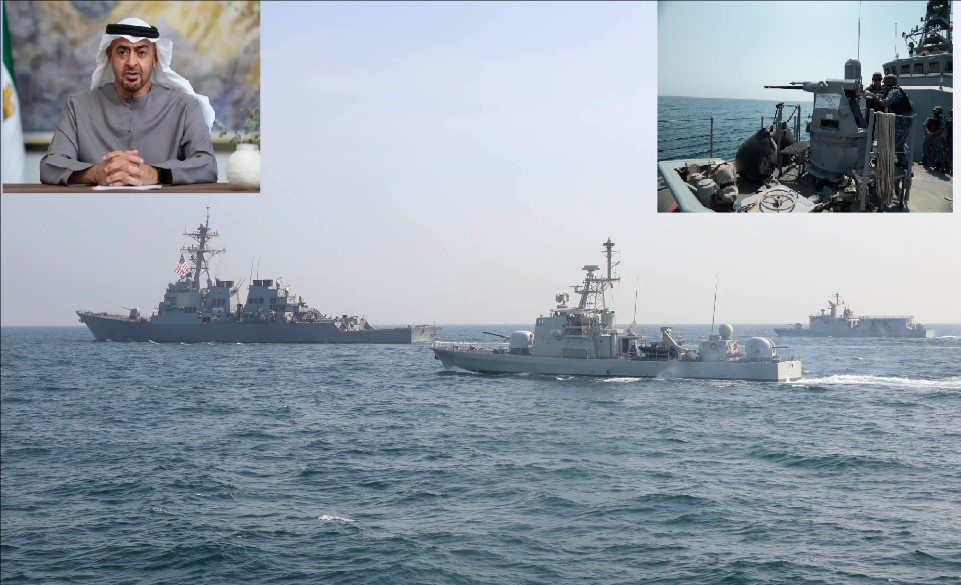
ABU DHABI — March 27, 2026 : The United Arab Emirates has announced plans to deploy its naval forces to help secure and reopen the Strait of Hormuz, while simultaneously pushing for the creation of a multinational “Hormuz Security Force” to safeguard commercial shipping in one of the world’s most critical energy corridors.
The initiative marks a shift in regional security dynamics, with Abu Dhabi stepping forward after weeks of limited response from Western allies. Emirati officials have confirmed that the proposal has been communicated to the United States and other partner nations, alongside an active diplomatic campaign to recruit broad international participation.
Diplomatic Initiative and UN Efforts
As part of its strategy to formalize the mission, the UAE is working closely with Bahrain to draft a United Nations Security Council resolution that would provide legal authorization for maritime operations in the strait. The proposed resolution includes language permitting the use of “all necessary means” to protect commercial shipping under Chapter VII of the UN Charter.
Diplomatic sources indicate that the resolution faces significant obstacles. Russia and China, both permanent members of the Security Council with veto power and established ties with Iran, are expected to oppose the measure. Despite this, Gulf states are continuing parallel efforts to build a coalition framework outside the UN process if required.
A joint statement issued by 22 countries, including the UAE, Bahrain, and several NATO members, has already expressed readiness to contribute to maritime security efforts in the region, although specific commitments remain limited.
Limited NATO Response and UAE Position
The UAE’s decision follows repeated requests by U.S. President Donald Trump for NATO and allied nations to deploy naval assets to ensure the continued operation of the strait. Responses from key partners have varied.
Germany and Japan declined to participate in naval deployments. France indicated it had consulted with approximately 35 countries regarding a potential demining and escort mission but has not committed forces, linking any action to the status of ongoing U.S.-Israeli military operations against Iran. The United Kingdom has offered surveillance drones but has not committed surface combatants.
In the absence of a coordinated Western deployment, the UAE has moved forward with plans to utilize its own naval capabilities to support maritime security operations and restore commercial transit through the waterway.
Escalation and Domestic Impact
The UAE’s decision comes amid sustained attacks linked to the ongoing conflict involving Iran. Since February 28, 2026, following U.S. and Israeli strikes on Iranian targets, the UAE has faced more than 2,000 aerial threats.
According to the UAE Ministry of Defence, air defense systems have intercepted approximately 378 ballistic missiles, 15 cruise missiles, and over 1,835 unmanned aerial vehicles (UAVs). Targets have included civilian infrastructure, energy facilities, and port installations, including the Shah gas field and the port of Fujairah.
The attacks have resulted in eight fatalities and more than 160 injuries, affecting both civilians and military personnel, including members of the expatriate workforce.
Economic Impact and Global Energy Concerns
Disruptions in the Strait of Hormuz have significantly reduced maritime traffic, raising concerns about global energy supply chains. The strait is a key transit route for nearly one-fifth of the world’s oil and liquefied natural gas shipments.
During recent discussions in Washington with U.S. Vice President JD Vance, UAE Minister of Industry and Advanced Technology Sultan al-Jaber addressed the economic implications of the situation. Al-Jaber, who also serves as CEO of the Abu Dhabi National Oil Company (ADNOC), stated that restrictions on maritime traffic in the strait are affecting global markets and consumer prices.
He described the situation as one in which the disruption of shipping routes is directly influencing fuel costs and broader economic conditions worldwide.
UAE Naval Capabilities and Operational Considerations
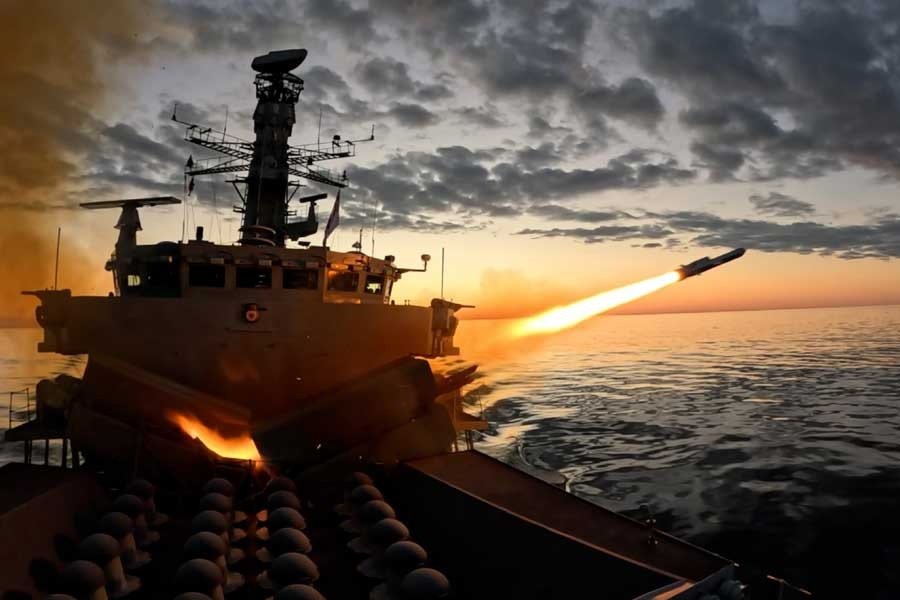
The UAE Navy is expected to play a central role in any Hormuz Security Force deployment. Its fleet includes six Baynunah-class corvettes equipped with MM40 Exocet Block 3 anti-ship missiles, with an approximate range of 180 kilometers, and RIM-162 Evolved SeaSparrow Missiles (ESSM) for air defense.
Additional assets include Abu Dhabi-class corvettes, Falaj 2-class stealth patrol vessels, and newer Falaj 3-class missile boats, including the lead ship Al Taf, commissioned in 2025. These vessels are configured for operations in coastal and contested maritime environments and are equipped for both surface warfare and escort missions.
The UAE has also entered into agreements to procure Brazilian MANSUP extended-range anti-ship missiles, further expanding its naval strike capabilities.
Strategic Environment in the Strait
Any deployment in the Strait of Hormuz will involve operating in a complex threat environment. The primary maritime challenge is posed by Iran’s Islamic Revolutionary Guard Corps Navy (IRGCN), which relies on a large number of fast-attack craft, estimated at over 1,500 vessels.
These units are typically equipped with short-range missiles, naval mines, and unmanned systems, and are designed to conduct asymmetric operations in confined waterways. The narrow width of the strait—approximately 33 kilometers at its narrowest point—adds to the operational complexity for escort missions and maritime security patrols.
The UAE’s approach is expected to focus on convoy protection, surveillance, and deterrence, utilizing onboard radar systems, missile defenses, and rapid-response capabilities to counter potential threats.
——— End of Article ———