ISTANBUL / JERUSALEM : A series of quiet but highly consequential moves by Turkey and Israel on Tuesday have intensified speculation that regional powers are bracing for a potentially historic rupture involving Iran, with intelligence-driven preparations suggesting expectations of far-reaching instability rather than a contained crisis.
Turkey Anticipates Regional Rupture With Buffer Zone Planning
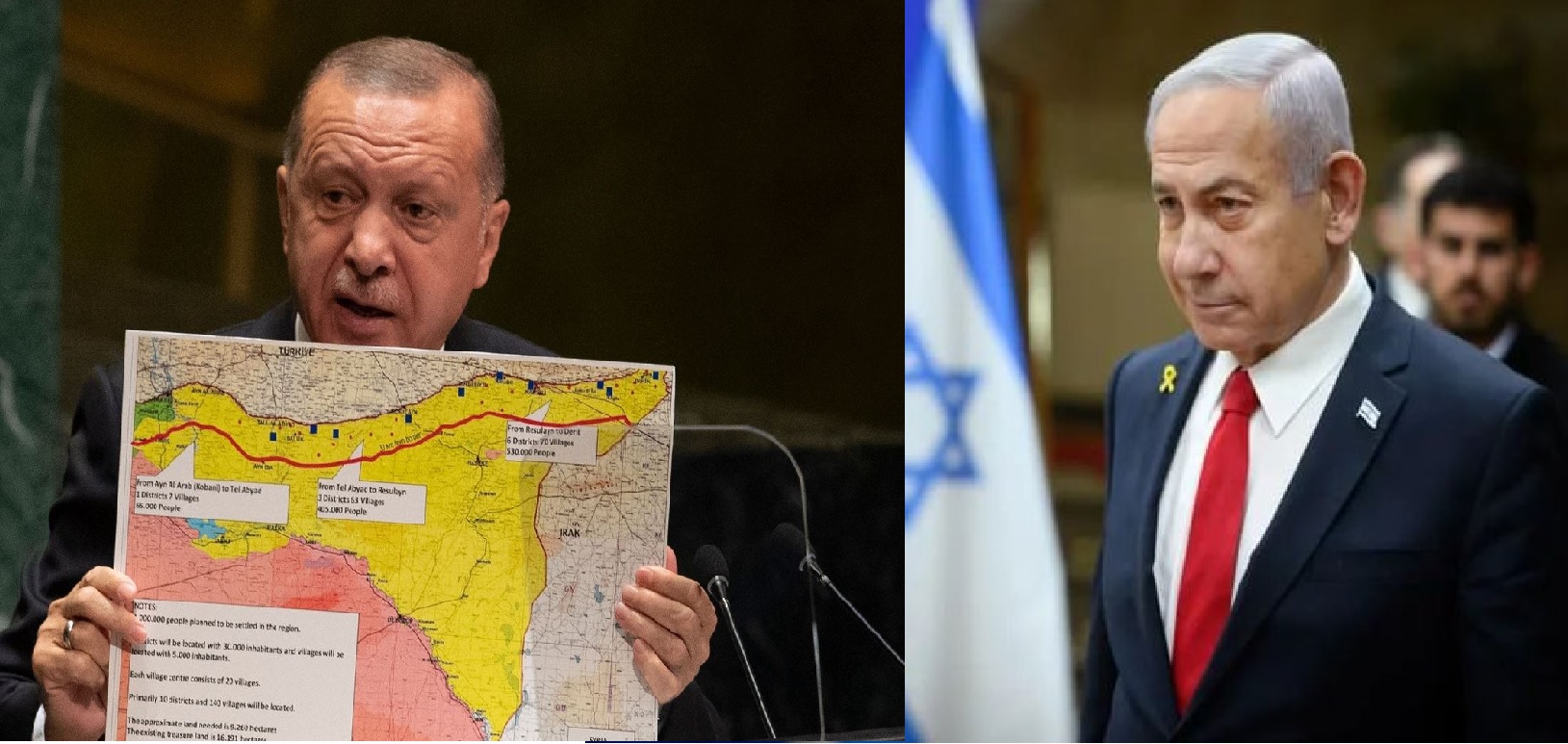
Turkish authorities are moving forward with contingency plans to establish an extensive buffer zone along their eastern frontier, a step that regional analysts describe as one of Ankara’s most serious strategic signals in years. According to briefings delivered to lawmakers and security officials, the plans envision a security and humanitarian corridor stretching across approximately 560 kilometers, paired with preparations for a massive refugee influx.
The scale of the planning has drawn particular attention. Regional security experts note that states do not prepare deep buffer zones and large-scale refugee infrastructure in response to a limited air strike or short-duration conflict. Instead, such measures are typically associated with expectations of state failure, civil war, or prolonged internal collapse in a neighboring country.
Turkish Intelligence (MIT) assessments reportedly underpin the move, with scenario planning focused on the possibility that Iran could face widespread internal chaos following external military pressure or a major strategic shock. Officials familiar with the discussions describe multiple contingency frameworks designed to address outcomes ranging from severe unrest to a full breakdown of central authority in Tehran.
Publicly, Ankara continues to stress its opposition to regional destabilization and foreign intervention. Privately, however, the depth of the preparations suggests that Turkish planners are preparing for what some analysts describe as a post-crisis Iran, marked by population displacement, border volatility, and long-term security risks.
Turkey’s experience during the Syrian civil war — when millions of refugees crossed its borders amid state collapse — is widely seen as shaping current policy. Officials are determined to avoid being strategically unprepared should Iran experience a comparable rupture.
Netanyahu’s Testimony Canceled as Security Takes Priority
At the same time, developments in Israel have added to the sense of an accelerating strategic timetable. The Jerusalem District Court has canceled Prime Minister Benjamin Netanyahu’s scheduled testimony in his ongoing corruption trial, following a request by the government citing urgent national security considerations.
Such cancellations are exceedingly rare in Israel’s judicial system, particularly in a case of this magnitude. Netanyahu, Israel’s longest-serving prime minister, faces charges including bribery, fraud, and breach of trust, and his testimony has been a central element of the proceedings.
Court officials confirmed that the decision followed the submission of classified material outlining the security rationale. Prosecutors did not oppose the request, reinforcing the perception that the matter rose to the level of force majeure — a threshold typically reserved for moments of direct and immediate national concern.
Political and security analysts interpret the move as a clear signal that Israel’s leadership has shifted into full operational mode, with the prime minister’s schedule being cleared for intensive security management rather than legal proceedings. In Israel, such judicial interruptions are widely understood to reflect the primacy of wartime or near-wartime decision-making.
Strategic Convergence and Regional Implications
Taken together, Ankara’s buffer zone preparations and Jerusalem’s judicial reprioritization point to a shared assessment among key regional actors: that the coming period could bring rapid, destabilizing change rather than incremental escalation.
Turkey’s actions suggest an expectation of systemic fallout from events inside Iran, including refugee flows and border insecurity. Israel’s moves, meanwhile, indicate that senior leadership is focused on immediate operational planning, potentially linked to broader regional contingencies involving Iran and its allies.
While no government has publicly declared imminent military action, the convergence of these signals has heightened concern among diplomats, intelligence officials, and security analysts that the region may be approaching a decisive inflection point.
Outlook
The next 24 to 72 hours are expected to be critical. Whether Turkey’s buffer zone planning and Israel’s courtroom pause prove precautionary or prophetic remains to be seen. What is increasingly clear, however, is that both countries are acting on intelligence assessments that assume worst-case scenarios are plausible — and that the Middle East may be on the brink of a profound strategic shift
——— End of Article ———