BERLIN / WASHINGTON — March 29, 2026 : The future of the United States military presence in Germany is under renewed scrutiny following parallel developments in Washington and Berlin, where both the administration of President Donald Trump and Germany’s opposition Alternative for Germany (AfD) party have raised calls for reducing or ending the long-standing deployment of American forces on German soil.
According to reports published on March 28, President Trump is considering a permanent withdrawal of US troops from Germany, including from key installations such as Ramstein Air Base, as part of broader efforts to reduce defense expenditures and advance the administration’s “America First” policy framework. The move is also linked to continued US pressure on NATO allies to significantly increase their defense spending contributions.
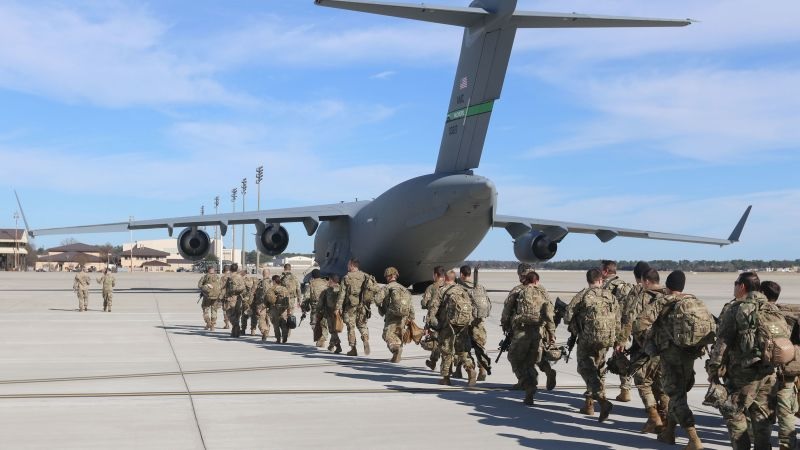
At present, approximately 35,000 US active-duty troops are stationed in Germany, representing the largest American military footprint in Europe. When including civilian personnel and contractors, total US presence is estimated to exceed 50,000 personnel. These forces are distributed across multiple bases that support NATO operations and broader US strategic interests.
Strategic Role of US Bases in Germany
Ramstein Air Base, located in the state of Rhineland-Palatinate, serves as a central hub for US Air Force operations in Europe, hosting around 9,000 military personnel. The base plays a critical role in logistics, airlift, command, and coordination functions that extend beyond Europe into regions such as the Middle East and Africa.
The United States maintains several additional military facilities across Germany as part of its NATO commitments. These installations collectively support training, deterrence, and rapid deployment capabilities under the alliance’s collective defense framework.
From a financial perspective, US overseas military operations in Europe have been regularly cited in discussions involving annual costs exceeding tens of billions of dollars. Estimates referenced in policy debates indicate that maintaining the broader European posture may cost over $30 billion annually. Germany contributes to these arrangements through financial and infrastructure support, with previous figures indicating annual contributions in the hundreds of millions of euros.
President Trump has repeatedly emphasized that NATO members are not meeting agreed defense spending targets, particularly the benchmark of allocating 2% of GDP to defense, established in 2014. Reports suggest the administration is now considering pushing allies toward a 5% GDP target, alongside proposals that could potentially limit voting rights within NATO structures for members failing to meet spending thresholds.
AfD Advocates Full Withdrawal of Allied Forces
On the same day, Tino Chrupalla, co-leader of the AfD, addressed a party congress in the German state of Saxony, calling for a complete withdrawal of all foreign military forces from Germany, beginning with US troops.
Chrupalla stated that Germany should pursue a more independent foreign policy, arguing that the continued presence of foreign troops is incompatible with full national sovereignty more than eight decades after the end of World War II. He further proposed that the withdrawal process should include all allied forces and associated nuclear weapons stationed in Germany.
Under NATO’s nuclear-sharing arrangement, the United States is estimated to store approximately 20 B61 nuclear gravity bombs at Büchel Air Base. AfD representatives have characterized these deployments as limiting Germany’s strategic autonomy and exposing the country to external conflicts.
The AfD’s position extends beyond the US-focused discussions in Washington. The party has incorporated the removal of all foreign military elements into its broader political platform, with Chrupalla outlining a goal of achieving greater policy independence by 2029. However, the AfD remains an opposition party and does not currently hold federal government authority to implement such policies.
Diverging Motivations Behind Similar Outcomes
While both the US administration and the AfD are advocating reductions in the American military presence, their motivations differ significantly.
The Trump administration’s approach is driven primarily by financial considerations and burden-sharing concerns, aiming to reduce costs for US taxpayers and encourage European allies to assume greater responsibility for regional defense.
In contrast, the AfD frames the issue as one of national sovereignty and strategic independence, arguing that foreign troop deployments constrain Germany’s decision-making and increase the risk of involvement in international conflicts. Party officials have also pointed to examples such as Spain’s historical restrictions on foreign base usage as a potential model.
Implications for NATO and European Security
Germany hosts the largest concentration of US forces in Europe, making any potential withdrawal a matter of significant importance for NATO’s operational structure. US bases in Germany serve not only European defense needs but also function as forward-operating hubs for global missions, including logistics and command support across multiple theaters.
Analysts note that any substantial change in troop levels would require extensive coordination within NATO, potentially affecting command structures, logistics networks, and deterrence posture across the alliance.
Discussions regarding US force posture in Europe have occurred periodically in recent years, including earlier proposals to reduce or redeploy troops, though large-scale permanent withdrawals have not yet been implemented in the current cycle. The Pentagon has conducted multiple posture reviews, but no final decision has been confirmed regarding the latest reports.
Meanwhile, European NATO members, including Germany, have in recent years increased defense spending commitments, reflecting ongoing debates over burden-sharing within the alliance.
No Final Decision Yet
As of March 29, 2026, no official confirmation has been issued regarding a finalized US decision to withdraw troops from Germany. The developments reflect separate national policy discussions rather than a coordinated initiative between Washington and Berlin.
The convergence of these positions has nevertheless intensified debate over the future of NATO’s structure, transatlantic defense responsibilities, and the long-term presence of foreign forces in Germany, which has remained a cornerstone of European security architecture for decades.
——— End of Article ———