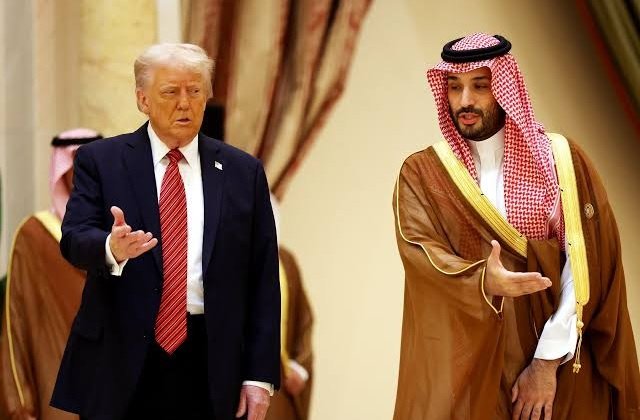
President Donald Trump jolted reporters at the White House this week with an unusually blunt public warning about the trajectory of the Russia-Ukraine war, saying roughly “25,000” people — which he described as “mostly soldiers” — died in a single recent month and that the conflict risks spiralling into World War III if European governments do not act. His remarks, delivered in a terse exchange with journalists, were framed as both a humanitarian plea and a hard strategic ultimatum: Europe must dramatically increase defence spending or face still greater costs.
The president’s tone was deliberately stark. He urged an immediate end to the killing while warning that diplomatic indecision and continued battlefield attrition could produce catastrophic spill-over. At the same time, he used the moment to press his long-running demand that NATO allies raise defence spending to 5 percent of GDP, arguing that only a major and rapid shift in European military investment could reduce U.S. exposure and blunt the war’s momentum. Trump also asserted that even with higher European spending, much of the procurement would still benefit American industry, a reference to U.S. defence manufacturers supplying weapons, munitions and systems.
The president’s casualty figure — 25,000 in a single month — intensified the sense of urgency but is difficult to independently verify. Open-source trackers, think tanks and Western agencies offer widely differing totals for cumulative and recent battlefield losses in the nearly four-year conflict, and monthly tallies can vary sharply depending on methodology. Analysts caution that figures cited by political leaders often compress a range of estimates, though there is broad agreement among security experts that casualty levels have been exceptionally high during recent phases of fighting.
Trump’s intervention came against the backdrop of NATO commitments made earlier this year. At the Hague summit, allies agreed a pathway toward investing 5 percent of GDP in defence by 2035 and pledged to submit audited, multi-year plans to show credible progress. Washington’s public push, however, has tightened political pressure, with some governments privately describing the target as aspirational and politically fraught, while others — particularly in Eastern Europe — have signalled readiness to move faster.
Reaction across European capitals was swift and mixed. Several governments welcomed the sense of urgency but warned that a sudden shift to 5 percent spending would be economically disruptive and politically contentious amid inflation, energy transition costs and domestic budget pressures. Others echoed Trump’s call to strengthen munitions production, air defences and logistics resilience, even as diplomats cautioned that alliance cohesion depends on tone as well as targets.
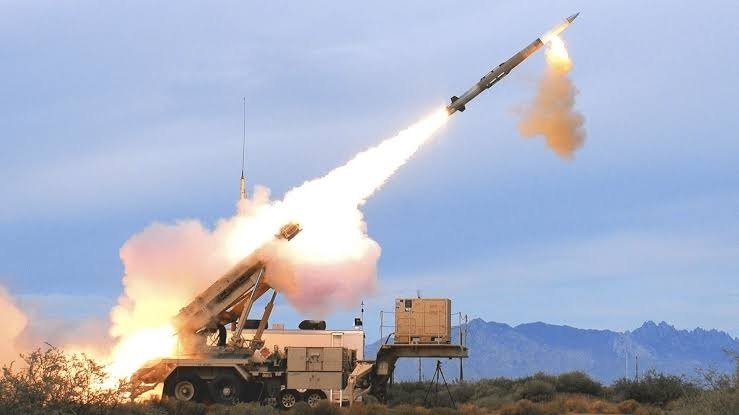
Beyond budgets, military planners say the immediate priorities are practical: boosting ammunition stockpiles, expanding domestic production, accelerating air-defence and electronic-warfare capabilities, and hardening command-and-control and logistics networks to withstand sustained attack. Officials stress that such measures require predictable, long-term funding, not just headline increases.
On the diplomatic front, Trump framed his remarks as a final warning. Without a credible ceasefire and enforcement mechanism, he said, allies must prepare for a prolonged, attritional conflict. U.S. and European mediators acknowledge that talks remain fragile, with Moscow and Kyiv far apart on territory and security guarantees.
What comes next will hinge on whether European governments turn rhetorical commitments into concrete defence plans, whether industrial mobilisation accelerates, and whether Washington shifts toward coordinated diplomacy or continues its high-pressure approach. For now, the picture Trump painted — that “the body bags keep coming” — has sharpened debate across Europe about risk, readiness, and the cost of delay in a war that shows no sign of winding down.
——— End of Article ———