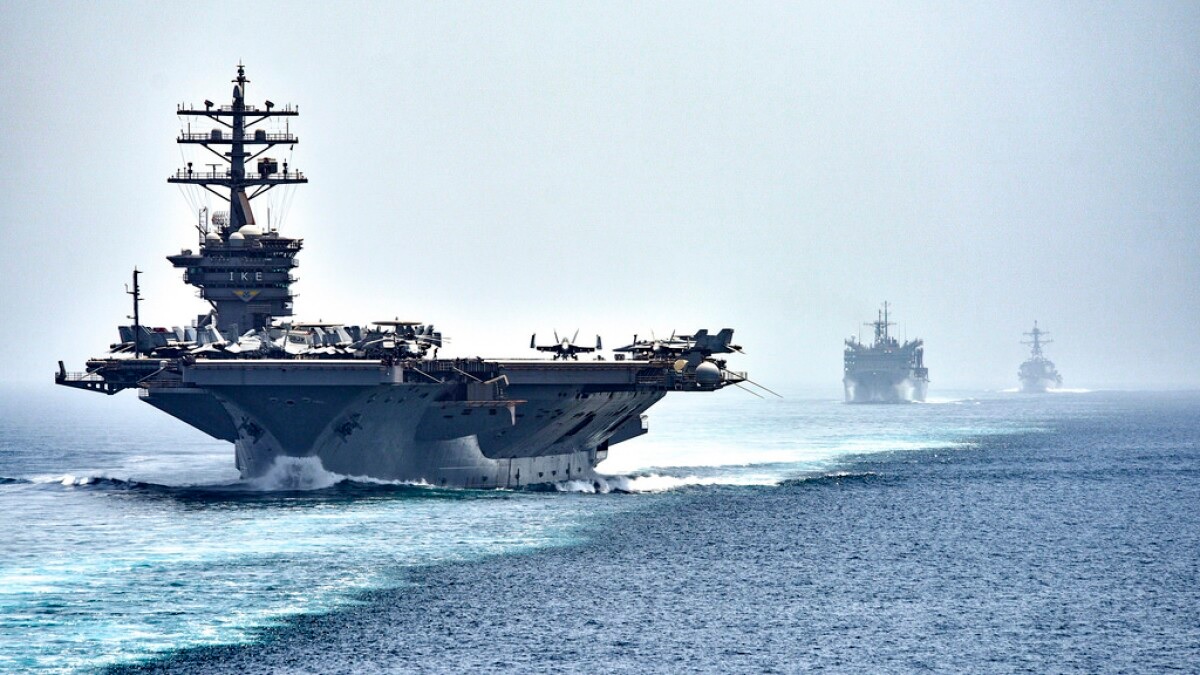
West Palm Beach, Florida — May 3, 2026 : Donald Trump has indicated that the United States may reposition the USS Abraham Lincoln (CVN-72) near Cuba after its current deployment in the Middle East, outlining a potential shift in U.S. military posture toward the Caribbean.
The remarks were delivered on May 1 during an address to the Forum Club of the Palm Beaches in West Palm Beach, Florida. According to reporting by Fox News, the president described a scenario in which the aircraft carrier could be positioned approximately 100 yards from the Cuban coastline as it transits back from ongoing operations in the Persian Gulf.
“We’ll bring it in, have it stop roughly 100 yards off the shore, and they’ll say, ‘Thank you very much, we surrender,’” Trump stated during the speech. He further added that the United States would be “taking over” the island “almost immediately” following the conclusion of current military operations elsewhere.
As of May 3, neither the White House nor the United States Department of Defense has issued clarification on whether the comments represent a formal directive or a hypothetical scenario discussed in a political context.
Current Deployment of USS Abraham Lincoln
The USS Abraham Lincoln (CVN-72), a Nimitz-class nuclear-powered aircraft carrier, is currently deployed in the Arabian Sea and Persian Gulf. The vessel is part of a U.S.–Israel joint military mission targeting Iran, widely referred to as Operation “Epic Fury.”
The carrier strike group includes advanced aviation capabilities. On February 12, 2026, U.S. Navy records confirmed that F-35C Lightning II aircraft assigned to Marine Fighter Attack Squadron 314 conducted flight operations from the carrier’s deck in the Arabian Sea. These operations highlight the vessel’s capacity for sustained air power projection in high-intensity environments.
During his remarks, Trump noted that the carrier’s return route from the Middle East could allow for a diversion toward the Caribbean, making a deployment near Cuba logistically feasible without requiring a separate redeployment order.
Escalation in U.S. Policy Toward Cuba
The president’s statements follow a series of policy measures aimed at increasing pressure on Cuba since the start of his current term.
On May 1, 2026, the administration signed a new executive order expanding sanctions against Cuba. The order targets individuals and entities associated with the Cuban government, including those operating in the energy, defense, mining, metals, financial services, and security sectors. It also authorizes the blocking of U.S.-based assets linked to entities conducting business with Havana.
The latest measures build on earlier actions taken in January 2026, when the administration declared a national emergency concerning Cuba. That decision introduced a framework for secondary sanctions, including tariffs on foreign governments and companies supplying oil to the island. The policy has contributed to fuel shortages and power disruptions within Cuba.
These actions were implemented under authorities granted by the International Emergency Economic Powers Act, which enables the U.S. government to regulate commerce in response to national security threats.
Pentagon Planning and Strategic Considerations
Reports indicate that the Pentagon has been developing contingency plans for a potential military intervention in Cuba amid rising tensions between Washington and Havana. Defense sources cited in international reporting suggest that planning efforts have accelerated in anticipation of possible executive direction.
Trump had previously referenced the timeline for potential action during remarks at the White House on April 13, 2026. At that time, he stated that the United States could consider measures against Cuba following the conclusion of operations related to Iran, asserting that he holds executive authority to take necessary steps to establish control over the island.
No official military orders related to Cuba have been publicly announced. Defense officials have not confirmed any deployment timelines or operational parameters beyond standard contingency planning processes.
Response from Cuban Leadership
Cuban officials have publicly rejected recent U.S. actions. Miguel Díaz-Canel described the May 1 sanctions as coercive, stating that they inflict significant economic harm due to what he characterized as aggressive U.S. policies.
Bruno Rodríguez Parrilla criticized the measures as “illegal and abusive,” describing the sanctions and associated tariffs as a form of collective punishment affecting the Cuban population.
Cuba continues to face economic challenges, including fuel shortages and electricity disruptions, which have intensified following the implementation of oil-related restrictions earlier in the year.
Ongoing Developments
The situation remains fluid, with no additional operational details released by U.S. authorities. The USS Abraham Lincoln continues its mission in the Middle East, and any decision regarding redeployment toward the Caribbean has not been formally confirmed.
The administration’s recent statements and policy actions indicate a continued focus on Cuba as part of broader U.S. strategic considerations following ongoing military operations involving Iran.
——— End of Article ———