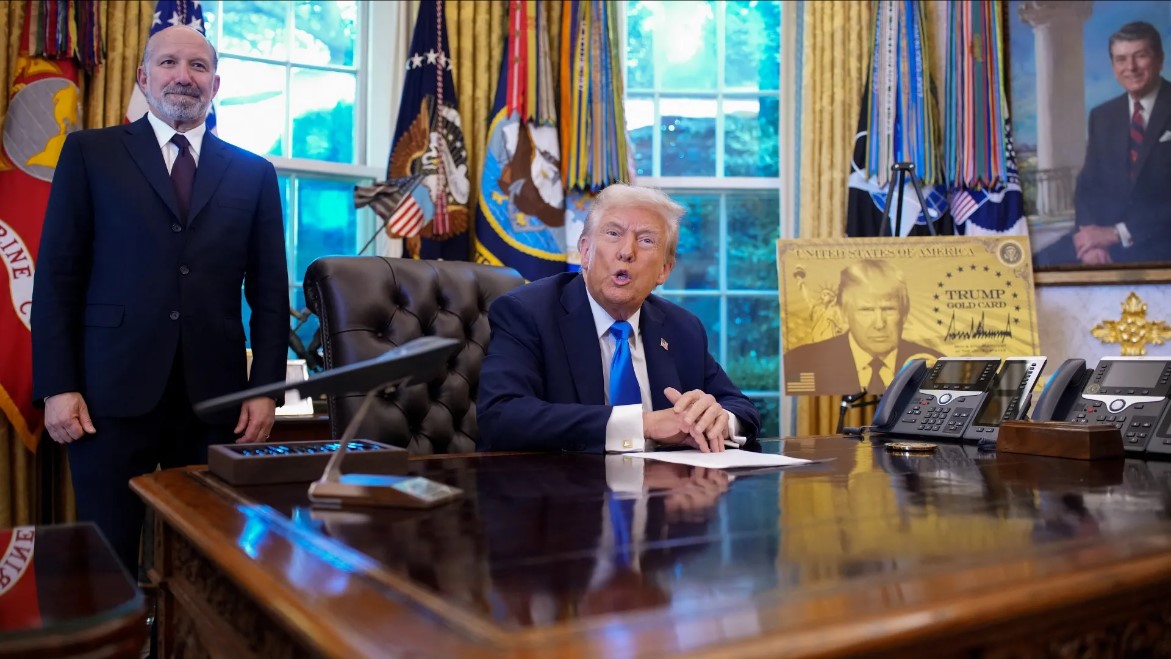
Washington, D.C. – In one of the most sweeping changes to U.S. immigration in decades, President Donald J. Trump has signed a new proclamation that dramatically overhauls the H-1B visa program. Beginning September 21, 2025, employers sponsoring foreign professionals will be required to pay a massive USD 100,000 annual fee per worker.
The administration describes the move as a corrective against “systemic abuse” of the H-1B route, which it claims has shifted from a program for elite talent into a low-cost labor pipeline dominated by IT and outsourcing firms.
Key Provisions
The proclamation directs the Department of Homeland Security and the State Department to deny entry to any H-1B worker whose employer fails to pay the new fee. Employers must maintain proof of payment, and violations could result in visa denials or cancellations.
The new order:
-
Applies to new H-1B petitions for workers abroad.
-
Exempts current H-1B holders already inside the U.S. seeking extensions or changes of employer.
-
Remains in force for 12 months, with the option for extension.
-
Allows rare, case-by-case exemptions if deemed in the national interest and free from security risks.
-
Calls for a revamp of prevailing wage rules, prioritizing high-wage, high-skill foreign workers.
Administration’s Rationale
According to the White House, the H-1B program has been exploited at the expense of American workers.
-
The share of foreign workers in computer and mathematics fields grew from 17.7% in 2000 to over 26% in 2019.
-
IT firms’ approvals for H-1B visas rose from 32% in 2003 to nearly 65% in recent years.
-
Studies show that entry-level H-1B positions cost employers 36% less than hiring U.S. citizens in equivalent roles.
-
Reports highlight American employees being laid off, forced to train replacements, and bound by restrictive contracts.
-
Officials also cite national security risks, noting cases of visa fraud, money laundering, and corporate misconduct linked to heavy H-1B users.
Expected Impact
Experts warn the policy could send shockwaves through the tech industry, where firms rely heavily on skilled foreign talent.
-
Big tech companies may face steep new costs, forcing changes in hiring strategies.
-
Outsourcing giants that bring thousands of workers annually are expected to be hit the hardest.
-
Innovation hubs in countries like Canada, Australia, and the United Kingdom may benefit as global talent shifts away from the U.S.
-
Legal experts predict court challenges, questioning whether the President can impose such a fee without Congressional approval.
-
For foreign professionals — especially from India, which accounts for nearly 70% of H-1B visas — the uncertainty is already creating anxiety.
A Political Gamble
Supporters argue the change will protect American jobs, raise wages, and restore the H-1B’s focus on top-tier talent. Critics counter that the policy could undermine competitiveness, drive talent abroad, and erode the U.S. lead in critical fields like artificial intelligence and biotechnology.
For now, the $100,000 fee marks one of the most dramatic overhauls in the H-1B program’s history — a bold gamble to favor domestic workers, even if it risks talent flight and corporate restructuring across the global tech economy.
——— End of Article ———