WASHINGTON : The Trump administration has advanced a proposed civil nuclear cooperation agreement with Saudi Arabia that excludes several long-standing U.S. non-proliferation conditions, according to a draft document transmitted to Congress. The agreement, negotiated under Section 123 of the U.S. Atomic Energy Act, would establish a multi-decade framework for American participation in the kingdom’s planned nuclear energy program.
The draft 123 Agreement, which governs peaceful nuclear cooperation between the United States and foreign governments, outlines a broad commercial partnership intended to position U.S. companies as central participants in Saudi Arabia’s anticipated nuclear power expansion. The initiative aligns with the administration’s wider policy objective of expanding U.S. nuclear exports globally, with a stated target of securing 20 international nuclear business agreements.
Removal of Enrichment and Reprocessing Restrictions
Previous U.S. civil nuclear agreements with certain partner countries have incorporated what is informally referred to as the “Gold Standard.” Under this framework, partner states formally renounce the domestic enrichment of uranium and the reprocessing of spent nuclear fuel—two processes that can be used to produce fissile material suitable for nuclear weapons.
The draft agreement with Saudi Arabia does not include these explicit prohibitions. Instead, it allows for the possibility of Saudi domestic activities in uranium enrichment, fuel fabrication, and reprocessing under a defined oversight structure.
In addition, the proposed agreement does not require Saudi Arabia to adopt the International Atomic Energy Agency (IAEA) Additional Protocol. The Additional Protocol supplements a country’s standard safeguards agreement with the IAEA and grants the agency expanded authority to conduct short-notice inspections, including at undeclared sites, to verify that nuclear materials are not diverted for non-peaceful purposes.
Alternative Oversight Structure
Rather than mandating adherence to the Additional Protocol, the draft framework calls for Saudi Arabia to maintain a basic safeguards agreement with the IAEA. This standard safeguards arrangement enables the U.N. nuclear watchdog to monitor declared nuclear facilities and materials.
The document also outlines the creation of a separate Bilateral Safeguards Agreement between the United States and Saudi Arabia. According to the materials sent to Congress, this bilateral mechanism would apply specifically to sensitive aspects of U.S.-origin nuclear technology and materials transferred under the agreement.
The bilateral framework is intended to establish procedures for monitoring and verification in areas including uranium enrichment, fuel fabrication, and reprocessing, should such activities proceed within Saudi Arabia’s civil nuclear program.
Context and Regional Considerations
Saudi Arabia has publicly stated its intention to develop a civilian nuclear energy program as part of broader efforts to diversify its energy mix and expand domestic power generation capacity. Riyadh has also previously indicated that it seeks the right to enrich uranium domestically as part of a complete nuclear fuel cycle.
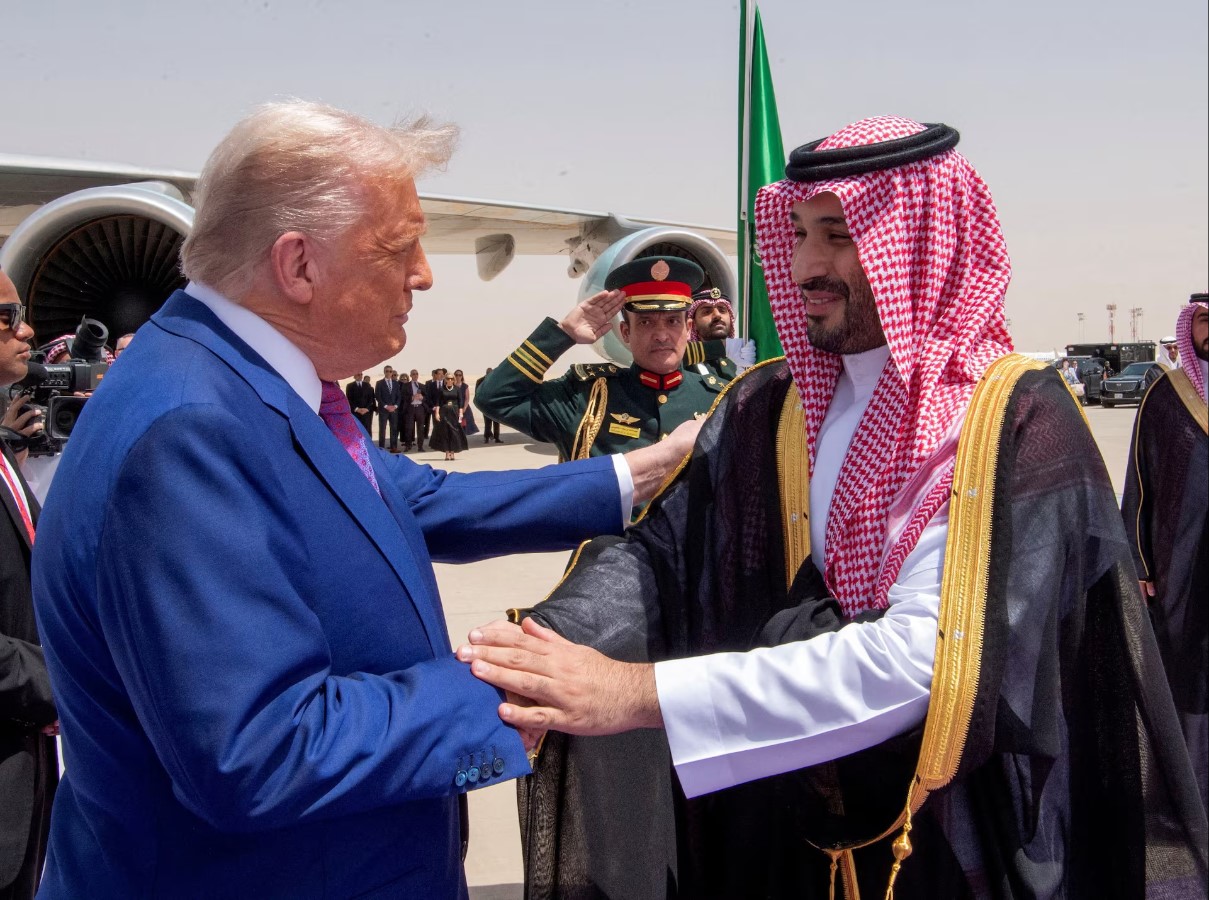
Statements made in prior years by Saudi Crown Prince Mohammed bin Salman have drawn attention from policymakers. In interviews conducted in 2018 and 2023, he stated that if Iran were to acquire a nuclear weapon, Saudi Arabia would pursue similar capabilities for security reasons. Those comments have been cited by analysts and lawmakers during discussions of nuclear cooperation with the kingdom.
Iran’s nuclear activities remain a central factor in regional security calculations. The United States and other international actors continue to monitor Tehran’s nuclear program under existing international frameworks.
Congressional Review and Approval Process
Under Section 123 of the Atomic Energy Act, any agreement for significant U.S. civilian nuclear cooperation must be formally submitted to Congress for review. Once transmitted, Congress is granted a 90-day continuous session period to examine the agreement.
If Congress does not pass a joint resolution of disapproval within that review window, the agreement automatically enters into force at the conclusion of the period. Both the House of Representatives and the Senate must approve a resolution of disapproval to block the agreement.
The administration is expected to submit the finalized version of the agreement in late February or early March. Lawmakers from both parties have previously expressed scrutiny regarding nuclear cooperation with Saudi Arabia, particularly in relation to enrichment rights and verification standards.
The outcome of the congressional review will determine whether the proposed framework becomes the governing structure for U.S.–Saudi civil nuclear cooperation in the coming decades.
——— End of Article ———