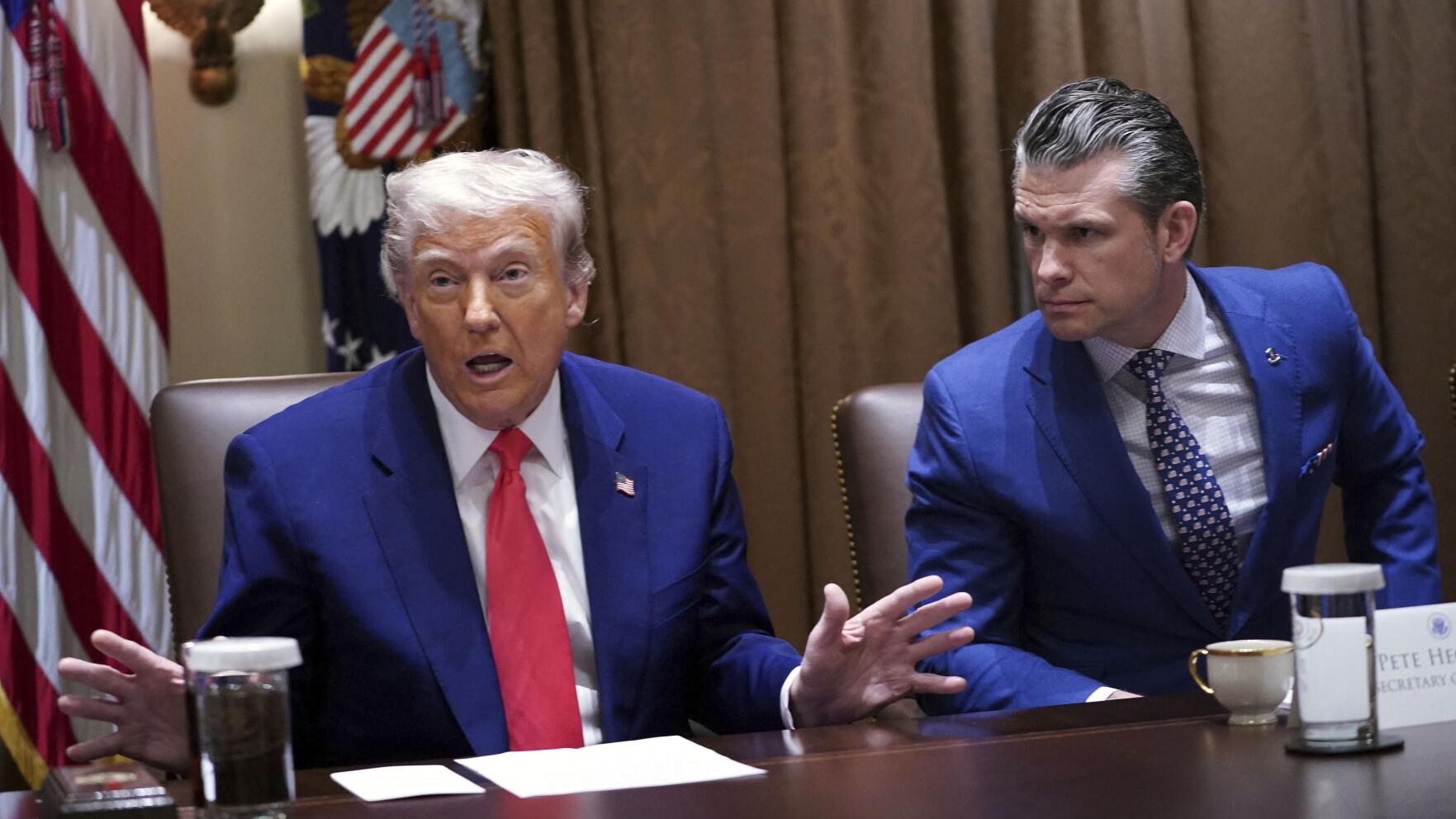
WASHINGTON, February 22, 2026 : The Trump administration has missed the statutory deadline for submitting its federal budget proposal to Congress after President Donald Trump approved plans to increase annual defense spending by approximately $500 billion, bringing the proposed fiscal year 2027 military budget to nearly $1.5 trillion.
The proposal represents a roughly 50 percent increase over the $901 billion defense allocation approved by Congress for fiscal year 2026. President Trump first announced the $1.5 trillion target on January 7, 2026, in a post on Truth Social, stating that the expanded budget was necessary to build what he described as a “Dream Military” during what he called “troubled and dangerous times.” He said the additional spending would be financed through revenues generated by tariffs imposed on various countries.
Missed Deadline and Internal Deliberations
Under federal law, the administration was required to submit its budget request to Congress by February 3. As of February 21, the proposal had not been formally delivered, marking a delay of more than two weeks.
Administration and defense officials indicated that the delay stems from ongoing discussions within the White House and the Pentagon over how to distribute the additional $500 billion effectively. The scale of the increase has presented logistical and planning challenges, particularly as officials seek to allocate the funds without exacerbating long-standing concerns about financial oversight within the Department of Defense.
White House budget officials reportedly raised objections to aspects of the Defense Secretary’s preliminary spending framework. Defense Secretary Pete Hegseth has emphasized a strategic focus on “lethality” and readiness rather than detailed budgetary breakdowns, directing a shift toward combat capability and force modernization.
The Pentagon has never passed a comprehensive agency-wide audit, and budget analysts have cautioned that a rapid expansion of funding could heighten the risk of inefficiencies if not structured carefully. In fiscal year 2025, the department identified nearly $30 billion in efficiencies and reductions, including contract caps and grant savings through the Department of Government Efficiency, which officials say could help offset or reallocate resources toward higher-priority programs.
Structure of Recent Defense Budgets
The fiscal year 2026 defense budget, signed by President Trump, totals $1.01 trillion. That figure includes $848.3 billion in discretionary funding and $113.3 billion in mandatory spending approved through congressional reconciliation. The 2026 package reflected a 13 percent increase from fiscal year 2025 levels and followed a February 20, 2025 directive from Secretary Hegseth to refocus the department on lethality and operational readiness.
If enacted, the proposed fiscal year 2027 allocation of nearly $1.5 trillion would represent the largest single-year increase in defense spending since the Korean War. The proposed total would exceed the military budgets of any other nation and surpass the combined defense expenditures of China, Russia, and Iran.
The administration is considering pursuing approximately $600 billion of the proposed increase through the congressional reconciliation process.
Fiscal Impact and Debt Projections
Budget analysts have raised concerns about the long-term fiscal implications of the proposed increase. The Committee for a Responsible Federal Budget estimates that maintaining a $1.5 trillion annual defense budget could raise defense outlays by approximately $5 trillion through 2035. When interest costs are included, the total addition to the national debt could reach $5.8 trillion.
The analysis references an alternative scenario suggested by President Trump in which a $1 trillion defense budget would be pursued if tariff revenues fall short. That figure contrasts with the $175 billion appropriated under the One Big Beautiful Bill Act.
The Congressional Budget Office projects the federal budget deficit for fiscal year 2026 at $1.9 trillion, increasing to $3.1 trillion by 2036. Over the 2027–2036 period, deficits are expected to average 7.3 percent of gross domestic product.
While the administration has argued that increased tariff revenue and higher corporate tax receipts tied to employment growth could offset some of the costs, independent fiscal groups have questioned whether projected revenues would fully cover the proposed spending expansion.
Contractor Oversight and Executive Action
In parallel with the proposed spending increase, President Trump signed an executive order titled “Prioritizing the Warfighter in Defense Contracting.” The order directs the Department of Defense to strengthen oversight of defense contractors and to ensure funds are directed toward manufacturing capacity, weapons production, and maintenance of existing systems.
The administration has warned that companies engaging in stock buybacks or prioritizing executive dividends over production investment could face penalties, including potential limits on future federal contracts. RTX, formerly known as Raytheon, was publicly referenced in discussions surrounding contractor accountability measures.
Market and Public Response
Following the announcement of the proposed increase, defense sector stocks rose amid expectations of expanded procurement and production contracts. At the same time, policy analysts and public commentators have debated the broader budgetary priorities, drawing comparisons to federal spending on healthcare, food assistance, and foreign aid. U.S. security assistance to Israel for fiscal year 2026 includes $4 billion in support.
As of February 22, the White House had not provided further details regarding the final allocation framework or a revised timeline for submitting the budget proposal to Congress. Lawmakers will be required to review and authorize the request before any funding changes can take effect.
——— End of Article ———