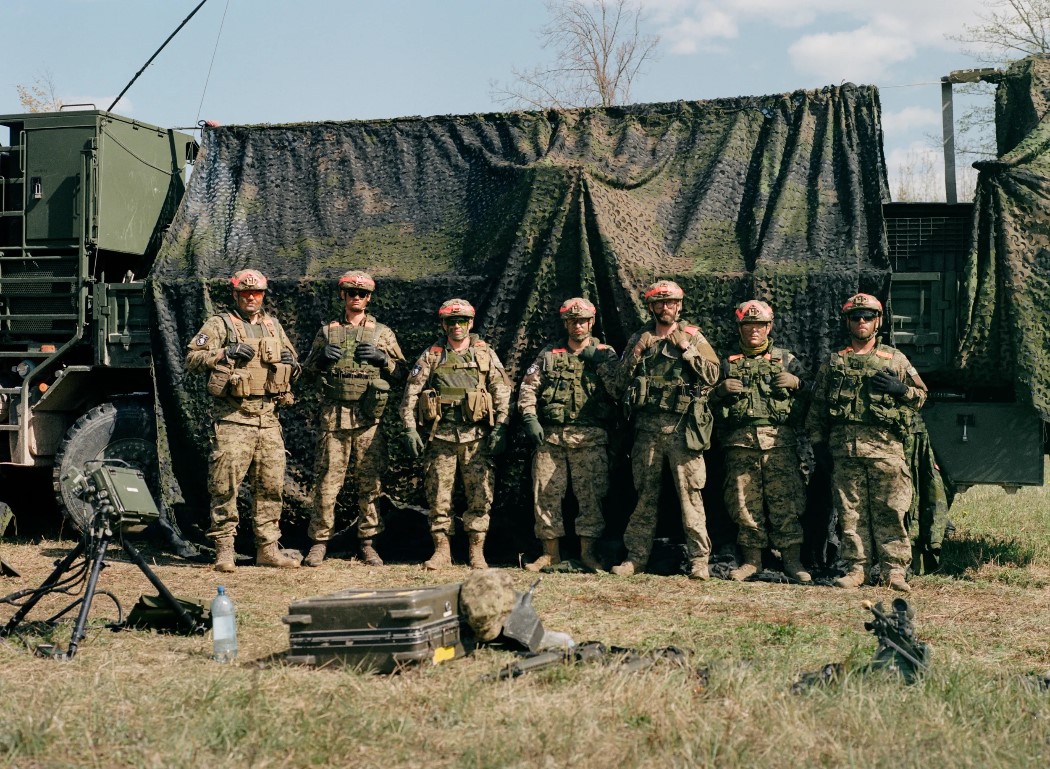
TALLINN : A large-scale NATO military drill in Estonia involving more than 16,000 troops exposed significant operational vulnerabilities when confronted with modern drone-centric warfare tactics refined on the battlefield in Ukraine.
The exercise, known as “Exercise Hedgehog 2025,” was conducted in May 2025 and included forces from 12 NATO member states. Designed to test allied readiness in a high-intensity conflict scenario, the drill incorporated Ukrainian frontline drone specialists as a simulated adversary force. The results prompted detailed internal assessments regarding NATO’s preparedness for drone-saturated combat environments.
Large-Scale Offensive Meets Dense Drone Surveillance
One of the central scenarios involved a NATO battle group composed of several thousand personnel, including a British brigade and an Estonian division, conducting a mechanized offensive in a simulated contested battlefield environment.
The exercise area covered less than four square miles (approximately 10 square kilometers). Ukrainian specialists deployed more than 30 drones across that zone, creating a persistent aerial surveillance and strike network. According to Estonian unmanned systems coordinator Aivar Hanniotti, who led a joint Estonian-Ukrainian mock adversary unit of roughly 100 personnel, the drone density used in the drill was only about half of what is currently observed on active front lines in Ukraine.
Advancing NATO units reportedly operated without sufficient camouflage or dispersion. Armored vehicles and logistical elements were positioned in ways that allowed drone operators to detect and track them quickly. Exercise participants noted that once identified, targets were engaged within minutes, demonstrating the speed of modern sensor-to-shooter cycles.
Ten-Person Drone Cell Neutralizes Two Battalions
A specialized Ukrainian drone team consisting of approximately 10 personnel was central to the simulated counteroffensive. Using an integrated battlefield management platform known as “Delta,” the team coordinated surveillance, targeting, and strike operations in near real time.
The Delta system aggregates intelligence from multiple sensors, applies artificial intelligence tools for target identification, and distributes strike data across units. This enabled what military planners describe as a rapid “kill chain,” reducing the time between detection and simulated engagement.
Within half a day, the 10-person Ukrainian team mock-destroyed 17 armored vehicles and conducted 30 additional simulated strikes. Over the course of a single day, the drone teams eliminated two NATO battalions in the exercise scenario. According to participants, those battalions were rendered unable to continue combat operations under the exercise conditions.
Hanniotti described the outcome for the conventional units as severe, stating that the NATO forces were unable to effectively counter the drone teams during the scenario.
Structural and Doctrinal Challenges Identified
Observers of the exercise pointed to broader structural issues, including slower strike coordination processes and limitations in real-time data sharing between units. These factors reduced the ability of conventional formations to respond effectively in a highly transparent battlefield environment.
Lt. Col. Arbo Probal of the Estonian Defence Forces said the purpose of the exercise was to create operational friction and cognitive overload in order to test adaptability. The scenario was structured to reflect the realities of contemporary warfare, where constant aerial observation and rapid targeting cycles are common.
Retired U.S. Gen. David Petraeus commented separately on the broader implications of such exercises, noting that identifying lessons is only the first step. Meaningful adaptation requires changes in doctrine, organizational structures, training systems, and procurement priorities.
Combat Experience Versus Training-Based Preparedness
The results of Exercise Hedgehog 2025 underscored the operational advantages developed by forces actively engaged in sustained combat operations. Ukrainian drone operators participating in the drill brought frontline experience from a war environment where rapid innovation, decentralized decision-making, and continuous adaptation are required.
Military analysts observing the exercise noted that soldiers operating in an active conflict zone often develop practical battlefield efficiencies that cannot be fully replicated through standard peacetime training exercises alone. The simulation demonstrated how a small, combat-experienced drone unit could disrupt and neutralize significantly larger conventional formations under certain conditions.
Estonia has begun adjusting its training frameworks, procurement plans, and doctrinal structures to reflect these realities. Ukrainian representatives affiliated with the NATO-Ukraine Joint Analysis, Training, and Education Centre (JATEC) have increasingly participated in allied planning and war-gaming efforts, including strategic exercises such as “Red Hyena 45” in the United Kingdom.
In February 2026, the U.S. Department of Defense announced the inclusion of Ukrainian drone firms in a major military modernization program aimed at closing capability gaps exposed by recent exercises.
Reassessment of Operational Assumptions
Exercise Hedgehog 2025 demonstrated that large troop formations and traditional mechanized units can face significant vulnerabilities in environments dominated by persistent surveillance, networked strike systems, and high drone density. The simulation showed that a small, highly coordinated drone unit with recent combat experience could effectively halt larger advancing forces within a compressed timeframe.
For NATO planners, the drill served as a data-driven assessment of evolving battlefield conditions and highlighted the need for accelerated adaptation to the realities of drone-era warfare.
——— End of Article ———